Wednesday, April 29, 2009

Could new Miro biz model work for games?

Cory at BoingBoing points us to Miro's new initiative to fund their next project.


Miro is an open & free Internet TV service, and the model their using for their next round of fund-raising is "adopt a line of code".

Similar, I guess, to the 'adopt a highway' model, Miro's letting people subscribe (remember, it's a service, not just an application) for $4/month. In exchange, they get the warm vibes that come from helping the project happen, and also a custom page and widget for displaying your love and your very own line of code. It's the NPR bumper sticker for the linux generation!


The question is, would this work for funding a game project? How about a sequel or a mod for a popular title? Hmm....

Casey's video lectures

A couple years back I'd pointed out that Casey Muratori had posted an interesting tech-talk video on his website, along the lines of a GDC programming lecture without the $1000 entry fee :-)


Anyhow, I just noted from his interview with Gamasutra that he's posted a number of others since that time. covering a good number of topics. 

Friday, April 24, 2009

New infectious Scrabble ads

The new series of Scrabble ads from Mattel are awesome. They are aiming to reinvigorate the brand, and are certainly enough to get a heads up from people that might not otherwise get it.


Ultimately though, it'll take more than ads to get people to play. Interesting variants to the rule might help (speed scrabble, or themed games might make for good party debates "spelunk is NOT a dirty word!")

Wednesday, April 22, 2009

Commissioned games

Alice has a post up describing what she's been up to at Channel 4 in the UK. Well worth reading, but here's the short version cut and pasted:

I work for Channel 4, commissioning educational stuff for teenagers (snip)
Most of what I commission is games, for the simple fact that teenagers love games. If that's what they love, then let's put the good stuff in there, goes the reasoning (snip)
Our mission: to get educational stuff to UK teens aged 14-19, stuff that'll help them get from puberty to adulthood, and to get on in life (snip)
Public service gaming is fantastic. There should be more of it. There will be more of it! (snip)
She goes on to list some samples of what they've been working on and I agree, it's great.

Developers should take note of a funding model that shouldn't be balked at. Television's shown us that publicly funded productions can be every bit as good and successful as commercial products. The BBC (Alice's former employer) has funded many significant works ranging from Planet Earth to Doctor Who to Monty Python. (this won't stop me from making Benny Hill references over drinks when I bump into Alice at conferences though).

There's a lot to think about here. For developers, it's another avenue of funding that may grow larger over time. For publishers and distributors, it's competition with their commercial products. And for gamers (or parents of wee gamers) it's potentially a source of games that aren't just trying to sell your kids something.

Tuesday, April 21, 2009

Della Rocca hangs up his shingle

Jason's new consulting venture is open for business. I can think of any number of people that could benefit from his expertise, but for starters, if you are a regional government looking to design a program to attract game industry businesses, or if you are a studio looking for the most incentive-rich location in which to set up shop, you'd do well to invest a little money in getting some help from Perimeter Partners.

Wednesday, April 15, 2009

Book Review: Business Stripped Bare

I made an impulse buy a while back, picking up Richard Branson's latest, Business Stripped Bare. I'd really enjoyed his first book, Losing My Virginity, and so thought I'd give the latest a shot.


While I highly recommend Losing My Virginity, I have mixed feelings about his latest.

On the plus side:
  • The wide variety of Virgin's businesses lets this be a business book that is both 1st hand from the CEO, and yet also looks a wide variety of business case examples. Other than Jack Welch, I've not run into too many of these.
  • It's plain to see that Branson is just plain passionate about the businesses he goes after, and it's infectious as a result. It's a basic formula too: Look for businesses ripe for disruption, put customer first, have fun doing it.
  • It's quite current, and so it's interesting to peek into the mind of a business leader writing in the middle of the financial meltdown (at least as of late last year).
On the down side: 
  • Far less of the head tales of early startup days for Virgin than the first book had
  • Less romping adventures ballooning around the world and such, which really made the first book a fun read.
  • He does come off as being a little out of touch with the common man, at least when compared to the first book. (e.g. there's a part where he laments about how important it is to find time to take care of ones self and exercise, then complains about how on a recent busy travel jaunt, it was all he could do to squeeze in a couple hours for surfing off the coast of Bali. Jeez, I'm supposed to feel bad for you Richard? :-)
Anyhow, recommended if the above points don't throw you, but start with the first book first.

PC Version of Braid gets a level editor


that popping sound you hear is aspiring developers brains the world round exploding in rapid succession.

Oh, and it got a trailer too:


Braid trailer from David Hellman on Vimeo.

Tuesday, April 14, 2009

Introversion giving a peek into the XLBA process

For those that haven't been pointed to this, and who might be considering doing an XLBA title, the folks at Introversion are really giving a decent peek inside the process, including the background on email threads from their initial contact with XBLA bizdev (back in 2006) through to the most recent bug reports and the like. The playtest & usability reports for example, are a really good insight into some of the services MS can provide when working with XBLA devs. Would be nice to see someone comment on whether Sony & Nintendo are comparable.


Sunday, April 12, 2009

Brains are high in cholesterol

Joining the ranks of the Portal song and You Have To Burn The Rope...


The video from Popcap's new game, Plants vs Zombies:


Bunch'o'Game mini-reviews

I've played a bunch of stuff recently that I haven't posted on. Here goes:

  • Mirror's Edge (360): I picked it up on a whim, and am liking it much more than I expected. If Portal is a 1st person puzzle game, then ME is the 1st person platformer. Recommended.
  • Guitar Hero: Aerosmith (360): It's Guitar Hero, so you know what to expect, and can check the song list online. I do think the mixing in of video interviews with the band kind of breaks the fiction of the game, but the fiction was always only a thin glaze over top of the game itself, so not a big deal. Recommended only for die-hard GH fans. I do like the latest GH: Metallica ad though!


  • Tomb Raider: Legend (360): It's tomb raider. You know what to expect. It's fairly well done as far as TR goes. C'est tout. I wouldn't recommend unless you are a die-hard TR fan or have never played any of the TR games, in which case you should play at least one.
  • Shawn White Snowboarding (360): Controls a little finicky, but I rather enjoyed it once I got the hang of it. Multiplayer is fun as well but a bit non-intuitive as to how you initiate events and the like. Only recommended for fans of finicky extreme sports titles like SSX or Tony Hawk, etc.
  • Sway (iPhone): A fun little physics-driven touch-interface platformer. I've spent a surprising amount of time playing it. Recommended.
  • Half Life 2 (360): I went back and played through the game since I'd never played Episodes 1,2. Amazing how ground breaking a title it was at the time of it's launch. Highly recommended.
  • Wii Sports (Wii): Fun for the kids. Recommended
  • Wii Play (Wii): Pretty crappy. Got it for the extra controller, but the mini-games in it are really aweful with only a couple exceptions. Not Recommended.

[update: Forgot to add two titles]

  • Peggle (360 arcade): Every bit the fun of the PC original with two plusses and one minus: Multiplayer modes and achievements are great adds, but the controller is a step backward for those that have played it with a mouse before, making that decathalon challenge pretty tricky. Recommended.
  • Biology Battle (360 Community games): I spent some time playing some of the community games at GDC and afterward. I have to do a lengthier post about community games in general, but for now I'll just recommend the trial of this game to decide if it's for you. It's a great little shooter along the lines of Geowars but with differences enough to make it distinctive. Recommended.

Putting the toothpaste back in the tube


GamePolitics has this post about how EA sent reviewers a press kit for The Godfather II. The press kit included a set of brass knuckles.
Kind of a nifty piece of schwag, but also an illegal one. As GP points, out brass knuckles are illegal in a number of states, and so EA's trying to put the toothpaste back in the tube but mailing out return mailers to get the contraband weapons back.
If there's a lesson here, its that EA's delicately worded efforts to get the items back are generating more news than if they were straight-up about it. The comments to the press are along the lines of:
"I hope you're enjoying our Godfather II press kit, including the
novelty brass knuckles. To help you take proper care to dispose of the item,
we're sending you a pre-paid shipping package"
And then replying "no comment" to any further questions about it.
'Proper care to dispose of the item'? Please.
What they really should have said was "oops, we fucked up. We thought this would be a good novelty item in keeping with the game's theme, but didn't realize these were illegal in some states. We're making best efforts to make sure we get these all back, and would really appreciate it if our friends in the press could help us out here. We'll send you an even more awesome, but completely legal, piece of schwag afterward for your efforts."

Braid finally ships on PC

Braid has finally shipped on PC. Jon's shipping on a number of distribution services, so you get your pick. It's up on Steam (Valve), Impulse (Stardock), GreenHouse (Penny Arcade dudes), and GamersGate.

Bob's game update

I posted a while back about Bob's Game, the one-man project from Bob Pelloni who was staging a sort of shut-in/coding-binge to try and force Nintendo's hand into looking at the title.

Kotaku posted a response from Nintendo where they politely but firmly said 'we looked at it, we don't like it.' or something to that effect.

Guess Bob should have had a plan B.

I'm old!

Sorry for the lack of posting recently. Busy week at work and I haven't had time.

In other news, I turned 40 yesterday. Ugh. I'm old.

My darling wife arranged for us to go hot air ballooning (have wanted to go for some time) but Oregon weather predictability being what it is, we couldn't go and had to take a raincheck. Oh well.

She also got me a Wii, so I'll be catching up on a bunch of games on the to-play list (Boom Blox, Galaxies, World of Goo, etc) over the coming weeks.

Thursday, April 2, 2009

GDC '09: Creating Value for Video Game Companies

Good presentation on valuation fundamentals & trends in the video game space, from Mitch Lasky at Benchmark Capital.

Tuesday, March 31, 2009

Casual Connect Content online

Jessica and the gang over at Casual Connect (the spry little casual games conference that's been growing in size and depth while also touring all of Europe's red light districts) has posted a TON of content from past conferences over at their website here.

Well worth perusing if you are interested in learning about trends in this part of the games industry.

Saturday, March 28, 2009

GDC09: My Favorite Things

I have a ton of stuff to blog about this year's GDC, but a couple quick ones while I have a few moments.


Every year, despite all the ranting about games and gdc getting too Korporate, too crowded, etc, there are always a couple things that make me giddy, and that give us all a smack in the face and remind us just how fun, awe-inspiring, and uplifting games can be. Here are a couple examples:

  • Top Secret Dance Off: An ARG/MMO/SocialNetwork/InsertBuzzWordHere where players replace the clicking-grind of most MMOs by instead upleveling through the accomplishment of Top Secret Dance Quests, usually involving dancing in disguise in a specific way and/or place. For example, let us look at top secret dance quest #3: Dancing in a Crosswalk, and then acknowledge that Jane's just added a little pinch of awesomesauce added to the universe.


  • Miegakure: An EGW entry by Marc Ten Bosh, this was a prototype of a game taking place in four dimensions, and it broke the brain of about half the audience members. Tricky to explain without a video, but here's my attempt: The Kuju PSP game Crush (video) is a game taking place in a 3D world, but where players can play the world as a 2D game along a choice of axis (e.g. XY, XZ, or YZ). Miegakure takes the concept a step further by taking place in a FOUR dimensional world, but allowing the player to at any time play along three of these axis (e.g. XYZ, XYW, XZW, YZW). Rotating between spaces would cause the 3D world to sort of fold in upon itself before displaying the other view, and at that point my brain snapped. As Marc pointed out, the math for programming this kind of thing is kind of trivial, but I'd imagine getting your level designers to grok it would be trickier. I should note that both Jon Blow and Chris Hecker appeared absolutely giddy when Marc was demoing his game. Schoolgirl giddy.
  • Musaic Box: An IGF entry that at first glance looks like well-polished but generic casual puzzle game. However, it involves matching patterns, colors, shapes AND MUSIC. That last element makes it unique, and shows that there's plenty of room for innovation in the spaces where established genres meet.
  • OnLive: Lots of talk about this subscription-based, cloud-computed console entry. There's a bunch of reasons why I'm skeptical of their chances. A lengthy post on this in the future. However, I'm listing it as one of my favorite things because it's great that a startup can come out of stealth mode and surprise everyone with a credible entry into the console space. A great example of how there is always room for disruptive tech to shakeup a market.
More GDC posts on these subjects and others when I get some time...

Monday, March 23, 2009

Larrabee at GDC

I'm off to GDC this morning. This is my 16th one. I feel old. Still, I'm excited!


I'll post some thoughts if I get a few minutes between meetings & sessions this week, but wanted to quickly give a pointer to a couple sessions in which we'll be revealing a little more detail on our tech:

Mike Abrash is giving a session Friday morning called Rasterization on Larrabee: A First Look at the Larrabee New Instructions in Action. 

Shortly thereafter, Tom Forsyth is giving a follow up session called SIMD Programming with Larrabee: A Second Look at the Larrabee New Instructions in Action.

Be sure to check them out if you are in town for the conference.

Wednesday, March 18, 2009

Akoha: Serious games and 'playing it forward'

Raph had a pointer to a pretty intriguing new game & company called Akoha.


Dubbed a 'social reality game', Akoha centers around the play of cards. On those cards are tasks, like "give someone a book" or "Send drinks to a couple in love". 

You register has having received the cards (by either typing in a code or snapping a pic of the 2D barcode with your phone cam) and then note when/where you accomplished the task in order earn 'karma points' and level up within their game system .

You can track the progress of individual cards as well, making this kind of a MMO meets serious games meets "where's george". This comic explains the whole game pretty well.

I immediately ordered a number of card packs but am worried that they won't arrive before GDC, as I think they'd be awesome to be using there.

As Raph points out, this is pretty close to Cory's Whuffie brought to life. (minus the viewable-by-anyone indicator in Down and Out. Maybe a FB feed? How about bad-ass hats, t-shirts, pins, etc for Level 10 bad-ass charity cleric?)

A very cool concept.

What's more, I looked up info on the company, only to find that their based in Montreal, right near Deluth. (If anyone at Akoha ends up reading this, how about a special edition card for "buy someone at Akoha a smoked meat at Schwartz's". I'll play it next time I'm in town!


Tuesday, March 17, 2009

Saturday, March 14, 2009

Awesome peek into the creative process

Several people pointed me to this awesome post about the recent release of a 125-page transcript of the original 1978 story conference between Spielberg, Lucas and Lawrence Kasdan, in which they brainstormed what would turn out to be Raiders of the Lost Ark.


Wow. I haven't gotten through the whole thing yet, but at the very least, do yourself a favor and read the blogger's excepts and analysis, in which he pens a top 10 lessons to take away from it. e.g:
8) Consider their approach to budget.

Keeping the film cheap was a way of testing the idea of Indiana Smith. Lucas said, “Part of it is the energy of making it reasonably low budget. It’s also a test of the idea. If it’s good, then we’ll be okay.”

I wonder how many game project discussions have tested this:

"It's our most awesomest idea ever! We need to go big!"

"If it's that great an idea it should work on a lower budget"

:-)

Sunday, March 8, 2009

Watchmen: Justice is Coming - iPhone MMO

A friend of mine had been working on a title that was all hush-hush until this past week's release. It's a Watchmen license, called Watchmen: Justice is Coming, and is an iPhone game. What's more, it's an MMO, and for the time being, is just 99 cents.


For starters, it's worth the 99 cents just to see the state of the art of 3D rasterization on the iPhone. The intro flythru with it's 8 bit alpha textures, shiny reflective wet streets and point sampling is very retro-early-90's-PC, but is nonetheless impressive. It's also quite a feat that they have a functional MMO, with realtime-ish interaction with other players (see them in the world, turn-based fighting, etc).


I'm not a fan of MMOs, and this certainly is one. There's a lot of walking, and a lot of collecting of stuff. However, I like this better than many, as its a sort of minimalist MMO. No WoW UI craziness here. Beat dudes, level up, get bitchin outfits, c'est tout.

Anyhow, be sure to check it out. It's certainly ground-breaking for an iphone title. I'm not sure what they had to go through to get an MMO working on the platform, but if iTunes were to allow in-game transactions and open the door to item-sales models, this could really be huge.

Saturday, March 7, 2009

Globetrotter XL

Globetrotter XL is a really compelling geography trivia game. Puts up a world map, displays one location name after another, you click where you think it is and are scored by how far off you are.

Easy enough when it displays San Antonio, USA, but when it's a city in Estonia? or China? Anyhow, real fun. I can't seem to get past level 4 (yet).

A new frothy bubbling of the used-game stew

[cross-posted from Gamasutra blog]

I missed the DICE conference this year, but like much of the blogosphere I got a second-hand accounting of the more interesting talks at sites such as Gamasutra & GamesIndustry.biz.

Among the talks getting some coverage was that of Paul Raines, Gamestop's CEO, in which he defended their controversial (within the industry anyway) practice of selling used games. Among those reacting to the talk was a good reaction from Dave Perry on VentureBeat.

This isn't a new debate, of course. (e.g. Here's a thread from back in 2005, when Epic's Mark Rein was on a tear about it). Two things seem to have changed about the debate this time around.

First, the industry seems to have decided that it's in bad taste (or just politics?) to argue against the consumer's right to re-sell their games. Thank goodness we're not the music industry :-). Perry and others are instead arguing against GameStop's practices of promoting the used title over new, while at the same time pulling all the usual retail practices of charging publishers at every turn to promote the very products they are steering consumers away from the new versions of.

The second thing that's changed in this debate, and is really the subject of this post, is that the field just got real crowded for Gamestop, as Best Buy, Toys R Us and *shudder* Amazon are all cannonballing into the used-game pool.

I think this is a good thing.

I share the same concerns that many do, in that I want as much money flowing back to developers & publishers as possible, and that means making the channel as efficient as possible.
If we assume that used game sales aren't going to go away (I don't beleive they should, and they very likely aren't) then it's a question of how we improve the situation for those creating the content.

One way of course, is to leave the retail business, and move to digital distribution, services businesses, etc. That's the subject of another post. For those intent on offering boxed product like today's, what do we do to improve the situation?

The answer, I beleive, is in competition.

Being essentially the only game in town for those looking to trade their games in for new (or used) ones has been part of what's made Gamestop the powerhouse that they are.
Adding competition to the situation will mean a few things:

  • Gamestop may lose market segment share to these other retailers. If that's the case, their negotiation position with the publishers won't be as one sided as it is today, and that may help do something about the promotion of new games. (e.g. maybe a window of time before used games are offered up?)
  • Consumers will get more for their used games. In fact this is already the case with Amazon. At the very least this means the perceived value of games vs other entertainment goes up, and this may translate into more gaming share-of-wallet.
  • Competition may mean that used games need to compete between retailers, not just with new, driving that price down. Versus today, where 1 week after release, a hit title often only has a 3-5% delta between new and used.

The net effect of the latter of the two points above is that if used titles sell for less and the retailer needs to pay the consumers more for them, they won't continue to be the high margin product that they are today - the very thing attracting all these retailers to the used game space!

At that point, retailers will need to compete, and not just on what they pay out to consumers for used titles, but compete for publisher business, allocation, etc. That may amount to a share of used game sales, windows of exclusivity for the new titles, better pricing... who knows.

At the end of the day, it will help if both consumers and suppliers have choice, which is just what competition brings to the table.

Wednesday, March 4, 2009

Edge's "hot 100" list

Edge published their list of the 100 most important people in game development. While it was nice to see some friends make the list, there were also some weird entries and folks missing that should have made the list. Anyhow, congrats to Robin, Trent, John, Clint and everyone else on the list.

Tuesday, March 3, 2009

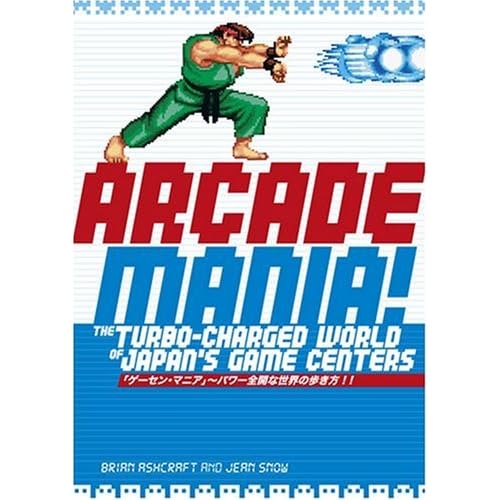
Book Review: Arcade Mania

Over vacation, I finished Brian Ashcraft's little gem on the Japanese arcade scene, Arcade Mania: The Turbo-charged World of Japan's Game Centers.


It's a great little book, despite a few flaws.

On the plus side, Brian gives a perspective on the less well travelled (at least by gaijin) corners of the Japanese arcade scene. Not just the story behind the well known hits from Miyamoto & Suzuki, but the story behind arcade Mahjong, the history & culture behind the sticker-picture machine craze, and more.

In addition, he makes it infinitely more colorful and readable by making it a story about people. Many western gamers have heard of Fatal1ty or other FPS players at the top of their game. In Arcade Mania, Brian introduces us to characters like Yuka Nakajima, queen of the mechanical claw games, whose prize-snatching prowess has netted her 3500 of her favorite stuffed animal and a role a consultant and celeb with the machines' manufacturers. He also introduces us to a pro Mahjong (real and video) player, a retired 2D fighter champ in his 20's, and to some figures from the Doujin software scene in Japan (think indie bands selling casettes from a car trunk, only it's game developers and it's schleping home-created boxes in Akihabara). All of this underscores just how broad a spectrum gaming covers in Japan and how differently it traverses Japanese culture compared to that of the US.

There are also some well researched bits of history behind the technical progression of sticker-booth machines, the history of companies like Sega and others, as well as the influences between genres of arcade machines.

I have two complaints about the book. Neither of which should stop you from purchasing it if the above paragraphs seem up your alley.

First, it felt like some of the latter chapters, while they were ok, weren't nearly as well researched as some of the earlier chapters, and didn't really tap the same kind of cultural vein as the other ones seemed to. In the retro gaming chapter, for example, he mentions G-Front, an Akihabara store that carries old arcade cabinet PCBs and other parts, and profiles one of the employees. He doesn't though, explain whether this is the only one of it's kind, or one of a thousand. How widespread is this retro-gaming trend? [A few years ago, Doug Church dragged me through Super Potato and a handful of other places looking for an old cartridge version of one of his games, so I'd seen that there's apparently a fair number of such stores].

The second complaint is that I really would have liked to have seen Brian wrap up with a chapter speculating on the future of Japanese arcades and arcade games. Instead the book wraps with an interesting chapter on video-game/card-game hybrids, and then leaves us hanging. Given his level of knowledge, he's in a better position than most to give us a hint or two of what might lie in the future. Then again, perhaps he's seen enough of the wacky Japanese video game scene to know that the future holds things more bizarre than he's likely to dream up.

In any case, these are minor flaws. The book is a good read for anyone interested in the Japanese game business and arcade scene, as well as games in general. Go pick it up.

Sunday, February 22, 2009

Game Design and the Geneva Convention

Cory's posted this interesting bit about Hugh Spencer, a parent who's agreed to let his 13-year old play Call of Duty, provided he reads up on the Geneva Conventions and abides by them during the course of play.

Awesome. I can't wait to hear the outcome.

I'm curious whether it's POSSIBLE to successfully finish the game when doing so. I wonder whether the designer(s) read the Geneva Convention and incorporated it into the design.

I wonder whether you can successfully finish Amerca's Army when doing the same?

Saturday, February 21, 2009

If game designers built restaurants...

There's a great thread going over on Raph's blog, continuing off something posted by Sheri Graner Ray , describing restaurants designed by different game designers. Raph's added a few, and then the comment thread's gone a little nuts with it:

If John Carmack created this restaurant, it would be just like his other restaurants, except much prettier.
If Will Wright created this restaurant, we’d have to continually monitor what each employee was doing, instructing them when to cook, when to clean and when to go to the bathroom, but eventually, it would burn down anyway.. and if it didn’t a natural disaster would occur to make sure it was destroyed.

Friday, February 20, 2009

Starting a new game business

Good SlideShare Presentation from Jussi Laakkonen on experience setting up his game studio. (originally presented at Casual Connect Europe, as it states on the cover slide)>

Thursday, February 19, 2009

Crisis of Credit

Good info-graphic take on the credit crisis. Along the lines of the Global Pool of Money, but in 'USA Today' form :-)


Braid PC release announced: Mar 15, $15, no DRM

Jon's announced the first release of the PC version of Braid (he's doing several releases with different distributors). This one is with Stardock, whom you may have heard of from their forward-looking anti-DRM stance. Initially it was announced at $20, but Jon dropped the price to $15 following grumblings on the web. Note the DRM stance:


Where possible, the game will be released without DRM. Some online publishers include their own DRM as a matter of policy, and of those guys, I am only signing with the ones that have light and non-intrusive DRM. My goal is to give people a reasonable choice about where to get the game, and if they don’t like someone’s DRM or someone else’s launcher client, they can get it from whoever they like most.

Now everybody be good boys and girls and buy the game! Support indie development and don't provide fodder for pro-DRM folk to say "I told you so".

Oh, and I love this comment from Jon in the discussion thread, where someone criticized his late PC release as indicative of his being 'anti-PC':

I’m not some kind of weird platform loyalist. The PC is not some sports team that is playing the Xbox 360 for the World Cup.

Indeed, it's not, though I think the PC would kick the 360's tail if it did! (Though continuing this analogy, it would be more like a soccer match of 16 pro athletes on one side, against 1600 guys on the other side, most of whom weren't in as quite good shape.... but I digress).

Tuesday, February 17, 2009

Escape from City 17 - excellent indie-inspired short film series

Wow. This is awesome.


Indie Half-life 2 inspired film series.

From Rock Paper Shotgun: "the Purchase Bros describe the production as “guerilla style with no money, no time, no crew, no script, the first two episodes were made from beginning to end on a budget of $500."

I'm assuming that means they worked without pay and that the $500 was on plastic masks and headcrab props (where does one buy a headcrab anyway?). In any case it's awesome.

Saturday, February 14, 2009

Perfect Potion Positioning

A few companies have tried to take the 'energy drink' trend and do versions specifically marketed at the geek and gaming crowd(s). Bawls being the first I remember making a push in this direction, and Mountain Dew tried their hand with Game Fuel.


So why did it take so long to come up with this, which is perfection:


This made me yearn for Ultima Underworld!


Book Review: Outliers


A little while back I mentioned to a friend that I was considering picking up Malcolm Gladwell's latest book, Outliers: The Story of Success.


"Don't bother. It's one of those books that only covers a single idea that you can get in a single page", he commented.

Having critizeda number of business books for the same reason, I was a little reluctant. However, having watched Gladwell's TED talk a while back, I thought he was a great storyteller and decided to take a chance.

I'm sure glad I did. Outliers is a fantastic book. Yes, its about a single idea: That the 'outlier' successes of the world, the Bill Gates, Olympic Athletes, and rags-to-riches stories that we hear, are often as much products of their environments and cultural legacies as they are 'born different'. 

But backing up that single idea are a number of fascinating, well-researched examples, from areas as wide reaching as cockpit voice recordings of Korean air crashes to the history of New York garment district. Gladwell then brings a talent for colorful storytelling to make it a super entertaining read. Highly recommended.

Friday, February 13, 2009

Seth Godin on the Games Business

Seth has a good post up about changes in the Music Business. A little creative replacement makes a good point about Flash games, Flash MMOs, iPhone, Facebook and downloadable consoles titles - and anywhere else indie games are showing up, kicking ass, and taking names.

The music games industry is really focused on the ‘industry’ part and not so much on the ‘music’ ‘games’ part. This is the greatest moment in the history of music games if your dream is to distribute as much music many games as possible to as many people as possible, or if your goal is to make it as easy as possible to become heard as a musician game developer. There’s never been a time like this before. So if your focus is on music games, it’s great. If your focus is on the industry part and the limos, the advances, the lawyers, polycarbonate and vinyl cardboard boxes and DVDs, it’s horrible. The shift that is happening right now is that the people who insist on keeping the world as it was are going to get more and more frustrated until they lose their jobs. People who want to invent a whole new set of rules, a new paradigm, can’t believe their good fortune and how lucky they are that the people in the industry aren’t noticing an opportunity...
'nuff said.


Wednesday, February 11, 2009

Eve and the Sacking of Rome

[update: Really good summary here.]


I've meant for a little while now to blog this really interesting development in Eve Online, in which the 'Band of Brothers' Alliance was destroyed by a rival faction. As always, I hate playing MMOs but love following the stuff that goes on in them.

For those unfamiliar:

Eve Online: (snipped from wikipedia): is a player-driven persistent-world MMO set in a sci fi space setting. Players of Eve Online are able to participate in any number of in-game professions and activities, including mining, manufacturing, trade and combat. The range of activities available to the player is facilitated by a character advancement system based upon training skills in real time, even while not logged in to the game.

The event (as Destructoid put it): In the most balls-out act of deep space espionage in the 21st century, GoonSwarm, EVE Online’s in-game Something Awful forum contingent, has finally defeated their arch enemies, absolute rulers of the game universe, Band of Brothers. Thus ends a years-long David and Goliath dance that has made modern gaming history on multiple occasions. As this is a breaking story as of today’s wee hours, I’ll spare you my verbal flatulence and put my better-informed friend Bjorn Townsend on blast:
Literally, Band of Brothers is no more. They got a spy into the executor corp at director level, kicked out every corp, stole all the assets they could lay their hands on, and altered standings so that everyone will start shooting everyone else. And then they closed the alliance, and created a new corporation called Band of Brothers with the same corp ticker, so they can't even have the old alliance name back.

How awesome is that. Even more awesome when you remember that there are ways of turning in-game currency into real-world currency, and that this cloak-n-dagger takedown netted an amount equal to about $15k USD. This is Halting State turned real, or close to it.

As usual, Raph offers an interesting perspective, which I agree with:

And the game, as a game, does want BoB to fall, because from a purely mechanical point of view, what is fun about EVE is the struggle, not the victory condition. The victory condition is boring. Lots of folks lose their livelihoods when an empire falls, and players invested in BoB are likely upset that years of work were lost. But EVE is not a game about the height of the Roman Empire. It’s a game about the sacking of Rome by barbarians, so that they can become the next short-lived top dog

Sunday, February 8, 2009

Comic Conventions

Raph points us to this very interesting Scott McCloud-esque post over on Blambot, the site run by Nate Piekos who does comic lettering and font creation for hire.


It's an interesting read, but also interesting to think about the conventions discussed here and how second-nature they are to most people. As Raph mentions, when using speech bubbles for in-game chat in SWG, they ended up using many of the same conventions. 

It's probably a good idea in general for any game, or for any product for that matter, to think about assumed conventions relevant to their product's interface. There are times that going against convention may be the right thing to do, but you should be aware you are doing it.

Saturday, February 7, 2009

This one time, at (rock) band camp...

...I shoved a plastic guitar in my....


So I got some spam that the Power Chord Academy, a kind of 'rock n roll summer camp' targeting the venn diagram intersection of 'aspiring rock stars' and 'troubled teens with well-to-do parents', is now adding a summer camp for aspiring fake rock stars. 


I'm actually supportive of a video game summer camp, if it were either spent making them, or thinking about and discussing them. But a Rock Band camp? At a camp where all the other kids are going to be playing real guitars, smoking real weed and one would imagine trashing their cabins/dorms? I dunno... sounds like bloody-nose camp!

I kid, I kid. Seriously, it's... interesting. I can't decide whether I think this is a good or a bad thing. 

Book Review: Reality Check

I just got done reading Guy Kawasaki's latest, Reality Check.


I have some mixed feelings about it, but overall it's got enough value in parts of it that I can recommend it.

The book is a loosely compiled series of essays, top ten lists (a favorite format of his), and interviews. Much of it is repurposed from his blog and he states as much early in the book. This makes it easy to read, as each chapter is small, accessible and quickly digestible. However, it also means the flow is somewhat disjointed, and some parts feel really shoe-horned in there.

A few of the chapters are real gems though, and justify the price of the book on it's own. In particular:
  • The art of intrapreneurship: A chapter on starting revolutions with large established companies. (BTW, it's almost a blueprint of how Larrabee got started within Intel)
  • The chapters on evangelism, pitching and slide decks are must-read for anyone that does any of this.
  • The inside scoop on Venture Capital law, in which he does a Q&A with a VC attorney on 'stuff an entrepreneur should know.
  • A chapter in which Glen Kelman of Redfin does a full disclosure of his estimated and actual costs for the first year they were in business, with notes on why they over or underestimated pieces.
Just a few examples, but that list should be enough to decide if this book is for you. 


Wednesday, February 4, 2009

Amazon launches casual games site

Amazon announced the launch of their casual games download site. They bought Reflexive a while back, and so this wasn't unexpected, but it certainly is going to shake things up a bit in the casual games space, if not in the games digital distribution space in general. Some things to note:

  • The downloads are priced at $9.95 for most downloads and $6.99 for back catalog. This vs the $19.95 that is common in much of the casual games space. (e.g. Jewel Quest III on Amazon, vs MSN). Lots of sites have played with lower pricing but usually as a promotion, on select titles, etc. This is an outright assault on the $19.95 price point that's going to have impact, if not kill it entirely.
  • They are offering downloads, but no free play on the web (ad-supported), no subscription offering, no other business models for monetizing games.
  • There are a couple notable absences from the catalog (perhaps related to the pricing?). No Popcap content. No Playfirst content (Flo is a no-show!). No EA Casual Hasbro licenses. Hold the line guys! (uh, ya, good luck with that)
  •  While these are all casual game downloads, note that it doesn't say "casual" anywhere. Just 'game downloads'. There's no reason they can't get into digital distribution of large download game titles if they feel the money is there.
Ok, so to quote my fave line from Burn After Reading, so what have we learned?

Amazon's entry marks the entry by a very large etailer into the games download market. If you distribute content this way, or plan to, take note. If you are an etailer or distributor (Steam, MSN Games, Oberon, etc) take note if you haven't already.

It's a really good time to think hard about who you are and what your core strengths are. e.g.
  • Amazon is an etailer that offers games for purchase. It's a store. They have great transactional tools, and are great at removing hurdles between the customer and the cash register. However, I'd guess they are weaker on understanding their customer's playing habits, preferences, etc, and don't offer other business models for customers to get games. They've also got things like their associates program for referrals and such.
  • MSN, to contrast, is a destination. Once there, users can choose to access games via a number of different models, and the catalog is curated for them based on the MSN communities tastes, etc.
  • Oberon is a distributor. They have unparalleled reach, and can use that to optimize the suggested merchandising their network uses to maximize revenue, they can also offer distribution to game devs and pubs that other people can't.
  • Steam (just to pick a different example), is a service first. One of the elements of that service is that they offer their customers games for sale, but it's worth noting that this isn't the whole offering, just a piece of it. They've also got great 1st party content that customers WILL come in the door for, regardless of what else Amazon or another competitor offers. So long as Steam is the place to come get Gordan Freeman goodness, that's where his fans will come.
Anyhow, I highlight these examples only to make the point that when there's a shakeup of this nature, it's a good time to think about what your core competencies are, and then focus on making those delight your customers.


Zero Punctuation on User Generated Content

Zero Punctuation gives a very succinct, accurate, and TOTALLY NSFW view of the issues around user generated content in his review of Little Big Planet.


Monday, February 2, 2009

Online business models: Lessons from Comics

Jeph Jacques, author of webcomic Questionable Content (one of fave webcomics) has written an interesting blog post about business models for online comics. You can read it here.


He's written it as a response to a post by another comic artist (of the more traditionally syndicated variety), who was lamenting the death of newspapers, and how this was taking comics down with it.

The original post suggested 3 business models that might work online:
  • Subscription: Jacques points out that the original author's DRM dependance is full of FAIL.
  • "Interactivity": Not what we'd mean by it in the games space, he's talking here about what I'd call customized content. Jacques concedes that this could work, but that there aren't succesful examples in the webcomics space.
  • Donations: Jacques claims this can work, but has a high risk of eroding readership over time. (Mind you, you could make the same argument about PBS, NPR, etc. If you stay relevant, I beleive this could work)
Jacques looks at a one other business model in the space: 
  • Make the Comic free, sell merch: This is Jacques' model, and seems to work well for him.
There are then other flavors of these, or hybrids, mentioned in the comic thread, pointing to the successful examples:
  • Sell advertising on the website: Penny Arcade, others
  • Sell your original inked pages as artwork: Octopus Pie.
  • Limited merch (like signed limited edition prints): XKCD did some of this
  • Sell the 'dead tree' version: MegaTokyo
I think it's a really interesting thought exercise for indie game developers to look at this space and think about which, if any, of these models apply. 

Some examples:
  • Donations: Kingdom of Loathing (they also sell merch)
  • Ad-supported: there's a ton of this in the casual space, though usually with a portal/middleman. Some amount on iPhone, etc.
  • Customized content: That (or the illusion thereof) and merch together are BuildaBearVille's business model, which is what I wrote about in my post that Gamasutra picked up.
  • Subscription: We have the usual subscription-to-a-given-game model; but it's worth thinking about whether the webcomic model would work: If a developer released a game a month, and a subscription offered 1-month-early access to each of these, and made you part of a club of sorts, would this work?
I'll leave the remainder as an exercise for the reader. I think, though, there are some interesting lessons here. Just as casual games with their smaller budgets are able to experiment with different business models and hybrid models more quickly; indie games should be able to do the same to an even higher degree.

If you are reading this and other models or examples of successes or failures come to mind, please point to them in the comments. I'm curious to see what trails are being forged.

Walmart FTW!

OK, I've read as much negative about Walmart as the next guy, and as a result was not a fan and don't shop there.


However, I read an interesting post in their defense (kinda) by Charles Platt, who is guest blogging over at BoingBoing. He recently opted to spend some time working at Walmart to see if his experience echoed that he'd read in Nickel & Dimed or heard elsewhere. It didn't:

The job was as dull as I expected, but I was stunned to discover how benign the workplace turned out to be. My supervisor was friendly, decent, and treated me as an equal. Wal-Mart allowed a liberal dress code. The company explained precisely what it expected from its employees, and adhered to this policy in every detail. I was unfailingly reminded to take paid rest breaks, and was also encouraged to take fully paid time, whenever I felt like it, to study topics such as job safety and customer relations via a series of well-produced interactive courses on computers in a room at the back of the store. Each successfully completed course added an increment to my hourly wage, a policy which Barbara Ehrenreich somehow forgot to mention in her book.

Interesting, but the kicker for me was this snippet (emphasis mine):
My standard equipment included a handheld bar-code scanner which revealed the in-store stock and nearest warehouse stock of every item on the shelves, and its profit margin. At the branch where I worked, all the lowest-level employees were allowed this information and were encouraged to make individual decisions about inventory. One of the secrets to Wal-Mart’s success is that it delegates many judgment calls to the sales-floor level, where employees know first-hand what sells, what doesn’t, and (most important) what customers are asking for.
In how many ways can I count the awesome?

First, educating employees on the margin made on each product is awesome. 

At a higher level though, is this not indicative of how they really treat employees? The trust and empower them. They may underpay, but this is a function of supply and demand. If you get past that, if they were really the abusive people-eating machine that people made them out to be, they wouldn't be someone that trusts and empowers employees to make decisions.


Jason Della Rocca leaves IGDA

Jason Della Rocca announced that he's stepping down as Director of the IGDA.


Whenever high-visibility industry people step down from a long time role, there's a tendency to look at them as irreplaceable, and that the company/organization will suffer for their loss. This is almost always patently false. People get replaced and organizations move on.

This is one of the rare cases where I think it's true. Jason is a force of nature and huge part of what's made the IGDA what it is. He oversaw it's separation from CMP, it's transition to a non-profit organization, and was a big part of it's growth, strong ties to the industry, government and academia, and more. I have no doubt the IGDA will find a way to move on, but man, those are big shoes to fill.

Back at Matrox, Jason was my first employee. He went on to run developer relations there after I left. It was in that role that I think he first got a hint that his strength in connecting and connecting with  people was something that could really take him places. I've often joked that Jason personally knows just about every individual in this industry. That's an exageration but not far from it. Among those many people are many industry recruiters, and I'm sure a few will be reaching out to him soon (though it sounds like he's got some ideas about what he's doing next).

Best of luck Jason. Can't wait to see what's next. I'm sure it will be awesome.


Tuesday, January 27, 2009

Random reads from around the Intertubes

A few posts that caught my eye:

  • Game retailers stocking fewer games, fewer copies of those they do buy. Further proof we're not recession-proof, recession-resistant, etc. (It will be interesting whether this compounds what we're already seeing with pubishers; cancelling risky projects, non-sequels, etc).
  • Pachter would disagree, as he maintains that we are recession-proof. He blames bad planning and over-investment in R&D on new IP and the like, rather than bread'n'butter sequels. (EA did spend over $1.1B on R&D last fiscal year, which is pretty high even for them. Expect that to drop next year).
  • Ubisoft is using this time to grow and invest. Smart if you have the cash on hand to carry you through. I think the "next gen consoles coming in 2011-12" is likely a bit off the mark though.
  • Q4 VC investments down to lowest level since Q1'05. Also not surprising. (As an aside, I've been letting VGVC.NET attrophy for a while, but it might be a good time to do some editorial around this).
  • Continuing the bad news, here's a post commenting on the downturn, layoffs, etc. An interesting snippet I disagree with: "a lot of firms, games industry or not, are using the credit crunch as an excuse to trim their more optimistic hires away". I think the difference with the games business in particular is that so many studios are running on a pretty thin bank balance, living hand-to-mouth between milestone payments. When credit dries up, cash is king, and if you don't have any, making payroll might get tricky.
  • Good, but lengthy editorial on the whole "are games art?" thing and on games place in our culture. The money quote:"
There is no other medium that produces so pure a cultural segregation as video games, so clean-cut a division between the audience and the non-audience. Books, films, TV, dance, theatre, music, painting, photography, sculpture, all have publics which either are or aren’t interested in them, but at least know that these forms exist, that things happen in them in which people who are interested in them are interested. They are all part of our current cultural discourse. Video games aren’t.
  • Its the sincerest form of flattery: EA, and other companies, asking for their IP to be whitelisted in Little Big Planet (Sony's been removing anything that even smells of IP infringement, not waiting for DMCA takedown notices.
  • Good interview with Jon Blow about Braid, his next project, and other stuff. Jon's smart. Go read!

Monday, January 26, 2009

Go Go Goo!

As Kotaku points out, lil' indie game World of Goo went to retail and made NPD's top 10 chart. Go Goo!

NPD Sales Charts January 11-17

1. WoW: Wrath of the Lich King
2. The Sims 2 Double Deluxe
3. Fallout 3
4. World Of Warcraft Battle Chest
5. Spore
6. Left 4 Dead
7. The Sims 2 Apartment Life
8. World Of Warcraft
9. Call Of Duty: World At War
10. World of Goo

Either a positive statement about Indie games, or a statement about the sorry state of PC gaming. Either way, Woot!

Cool iPhone "Serious" game

I bought Ian Bogost's new iPhone game, Jetset.


It's cool for so many reasons. It's a game with a message (thus the 'serious' part), it's location-aware, it's social, and well... it's just cool.
"A game for the frazzled globetrotter in all of us. Keep up with the changing rules of airport security on your iPhone or iPod touch. Play in airports to earn unique souvenirs to keep, give to friends, or redeem for prizes"
Players have to run security at airports as a TSA agent, under an ever-changing set of rules. That'd be fun enough but:
  • For over 100 different airports in the world, you earn unique 'souvenirs' if you play AT that airport (location-awareness via GPS)
  • All of the items in the game that you may have to confiscate from travellers (e.g. pressurized cheese) have real-world stories about how the TSA banned them for one reason or another. (In an email conversation with Ian, he mentioned how certain items with real-world stories behind them were required to be removed by Apple because they were risquee in one way or another. I can't elaborate because he'll be discussing this in an upcoming press article. I'll link when available).
  • Share earned souvenirs with Facebook friends
Go buy it!

Saturday, January 24, 2009

More thoughts on the Flight Sim tragedy

I've exchanged a few calls & mails with friends at Microsoft following the layoffs they announced. It's one thing to read the numbers. It's another thing to talk to a friend that's suddenly worried about the mortgage, feeding the kids, etc. Saddening.


Regarding the teams and products affected though, Flight Sim in particular is a shocker. The claim is that MS is still 'committed to the product', but having laid off the Aces studio, and their ever-distancing from the Windows gaming effort, it's really hard to beleive. The weight of it hasn't sunk in until now as I read some of the blog posts about the implications.

As Steve points out, Flight Simulator was (until this week anyway), Microsoft's oldest product in continual development. It was a piece of gaming's history. The original IBM PC version was developed by subLogic and published by MS for the IBM PC back in 1982. It existed on other platoforms (I got started on the C-64 version) as early as 1980. Is there another game franchise with a 29-year legacy? There's a good history here.

Additionally, Flight Sim isn't just a game, it's a platform. It supports an entire co
ttage industry of third party add-on vendors ranging from military missions to air traffic AI to hot air balloon sims to a space shuttle simulator. Not to mention the hardware add-ons for people that want to do really elaborate rigs.


Anyhow. It's sad. 

What next for this space? there's an obvious vaccuum for one of the few competing products in the space to try to fill. Still a shame for MS to lose all that legacy though. Maybe they should sell the source and assets to another company? Maybe open source the whole thing?

Might be worth noting that when MSN Games cancelled Bridge, enough noise from a small but rabid group of fans, some of it directly to Bill, brought it back (though in a different form). Not sure that would work for FS though.

Hope something good is resurrected out of the ashes here.

Friday, January 23, 2009

Armageddon continues, some rays of light seen, etc

Man, it's getting a little scary to open up a browser over my morning coffee, lest some of the blood drip off the screen any into my americano.


Raph had a post up about the VW Management Industry Forecast which was recently published. In it, there's a great quote from Meez' Sean Ryan on his company's goals for 2009:
"Get profitable while Armageddon rolls over the industry"
Apparently, we are seeing what that armageddon looks like.
Of course we aren't immune either, having announced some fab closures and associated headcount (not games-industry exactly, but it's tech related).

Meanwhile, Ubi announced some good news, with Shaun White doing well (I'm playing a ton of it. fun), Far Cry 2 coming on as a slow burner (yay Clint!) and Prince of Persia showing signs of the same, having moved 2.2M units (yay Ben!). They are hinting at growing which is brave to say the least, but the right thing to do if you have cash in the bank and think you can use this to get ahead of competition.

Oh, and Square lays of about several hundred players, perma-banning them from the FF MMO for exploiting a bug (hello? Isn't this half of what gaming is? Excise the bug, not your customers! Jeez!)

Monday, January 19, 2009

WTF laptop displays; and my reluctant bowing down to Steve Jobs

I mentioned a little while back that we bought Alisa a new laptop. Well, that was the first of three.


We first bought a Sony VIAO, which was a nice, sleek, $800 machine. However, the glossy screen was impossible to use in our house. Returned the laptop to Frys (on day one of our snowstorm a while back, but that's another story).

So we start shopping for laptops with non-glossy, matte finish screens. You can't find them. They pretty much all switched to the new glossy screen. The exceptions being the $2700 17" macbook pro, which offers it as a $50 add-on, and a number of the mini 10" things, neither of which met our needs.

Further complicating the problem is the non-standard terminology around this. Some refer to the glossy display as non-glare, but that's exactly the opposite depending on your lighting conditions. More on this in a minute.

So our second purchase was via the internet, and it was a Lenovo Ideapad, also around $800, but offering a non-glare screen. Surprise, it's a glossy one. Returned to manufacturer.

We finally settled on the out-going model Macbook Pro, which I got for $1700, cause hey, once you are spending that kind of money you might as well buy the loaded model. It's a *very* sexy machine, but still, it's like a $700 premium over the equivalent model PC. Is there no one that can do an effective copy of their design at a cheaper price? *sigh*

Anyhow, here's my take on the display thing:

  • Glossy screens have a glass-like, smooth finish.
  • Matte screens have a dull finish, like a piece of frosted glass.
  • Matte screens are aweful in places with a high degree of very bright ambient light. The most obvious of which is outdoors, or any place where you are close to a lot of windows letting in the outdoor light from numerous directions (a single window 20' away could be considered a directional light). So, outdoors, coffee shops, etc.
  • Glossy screens are great where you have high ambient light, OR, where you have a small number of directional lights (like a desk or ceiling light) that might cause a reflection but you can position the laptop accordingly.
  • The problem with glossy screens is that many office environments, or houses such as mine, have a large number of ceiling lights. This makes it difficult to position the laptop in any way that doesn't end up with at least one or two very bright mirror-like reflections distracting you from your work. In these environments, a matte display is far better.
Anyhow. Think about where you are going to be using it before you buy it.

Not sure why the sudden industry shift to the smooth ones, but my hypothesis is that (a) they for some reason they are cheaper, (b) the show well at retail (where there are a large number of lights, but they tend to be really high up. Also you don't tend to work for an extended period at the machine at Best Buy), and (c) maybe more people are using their laptops at starbucks, outside, etc. :-)

In searching for the matte display, I found I'm not the only one to have the complaint. There are even some places that will "matte" (yay verbification!) your glossy display for a couple hundred bucks. The image below from the site I just referenced illustrates the point quite nicely.


Sunday, January 18, 2009

Bedroom AV project


Bedroom AV project, originally uploaded by Kim Pallister.

When we bought our house it had in-wall speaker mounts in the kitchen, bedroom, office, master bath.... but no speakers in the mounts.

I'd started looking into them a while back but they were *insanely* expensive at most AV retail places, so I put off buying them.

I recently checked online and you can get them far cheaper. I bought a few pairs of pretty cheap ones -but adequate for our needs, for like $40/pair with shipping.

Anyhow, got around to installing some today. Yay, tunes!

The TV on the right is mounted on a swivel arm so that we can see it from bed, but Alisa can swivel it around 180 to watch from her office. I've got a linksys media center extender tie-wrapped to the back of it.

Until recently, I had ethernet cable running along the wall and floor, but over the holidays I routed it through the wall to the previous cable run I'd done a while back. The bedroom wall is curved, so there are joints every foot or so. It was a serious pain in the rear, but is now done.

Big Tail


photo.jpg, originally uploaded by Kim Pallister.

Tail end of the Spruce Goose at the Evergreen Air Museum in McMinnville.

That fighter flying sideways behind it is not smaller because of perspective. Just because the S.G. is a BIG MOFO Airplane. BIIIIIGGGG!!!!

Tom got to sit in the pilot seat where Howard Hughes sat. What it must have felt like to power that big fat bird up into the air is unfathomable.