Wednesday, July 15, 2009

Dental Adventures, or how a little grey spot cost $20k

This has nothing to do with video games or the tech industry , but rather falls under the category of stuff I had trouble learning about and maybe my post can help someone else.


I'm about 95% of the way through a crazy bunch of dental work that started about three and a half years ago, have a little time on my hands, and figured I'd post about it. Those with a weak stomach for stories of dentistry or financial pain may not want to read on.

Five years ago or so, I noticed a small discoloration on my front tooth. Like a slight grey color beneath the surface, in one corner near the gum. It'd been there a while I'd asked dentists about it, but they'd always kind of said "hmm... not a cavity. Not sure. Just leave it."

Early in 2006 I got fed up and decided I wanted it taken care of and went to see a high end dentist (Spektor dental in Bellevue, WA, who are awesome). Dr Spektor consulted with her husband, who's a high end specialist, and they decided it was most likely root resorption. The wikipedia entry spells it out in detail, but the short version is that it's a condition where something (small defect or trauma to the tooth or such) causes your system to attack the tooth, killing it from the inside out. Unlike decay, it takes a long time to do its thing, but eventually the tooth has to come out.

So the doctor tells me that (a) it's not only in the one tooth I've noticed, but in a neighboring one as well, (b) the solution is to pull them out and put in implants, and (c) that because one of the teeth is out of line from the others, they want to put braces on me for a couple years first.

"Let me get this straight", says I, "you want to put braces on my teeth for two years, then yank them out? I'm getting a second opionion!" Turns out she was right.

To make matters worse, they break the news to me that I have a bunch of other work that needs doing (20 year old amalgum fillings that are starting to go, a crown that needs doing, a crown that needs replacing, etc), and that it'd be a good idea to do it all before I get the braces.

OK, off we go.
  • March 06 through Aug 06 - Two crowns, various consults with specialists, numerous fillings replaced. Total out of pocket spend about $2500.
  • August 06 - Braces on. After insurace this cost about $2500 out of pocket
Now it was a matter of waiting for the braces to do their thing, going in once in a while to get the wires replaced, etc. A major pain in the butt to floss (Waterpik's electric flosser is awesome btw), but not that bad. On the plus side, getting braces made me lose 10 pounds.

In early 08 I relocated to Oregon, so I had to find new dentist (Kaiser - meh), new orthodontist (Kaiser - Dr Ratliff - very good, but Kaiser is *ok*), new prosthedontist (Dr Halmos - awesome), new dental surgeon (Dr Henshaw - also awesome).
  • Second half 08 I go see all the new guys and get various Xrays, consults, etc. Total spend about $500
With teeth almost straight, we start to coordinate all my stuff. Dental surgeon worries that my frenulum (little piece of skin attaching top lip to gum at center) is going to tug at the gum after the implant surgery, potentially pulling the gum up assymetrically. Solution: Snip it!
  • March 09 - frenectomy, a 'minor surgery' that is fast, but smarts like hell for days afterward. Total out of pocket, $500 (IIRC)
Next up is the big surgery, the extractions! I was NOT looking forward to this. Again, further complications, it turns out that I have thin gums, so he's going to do a skin graft as part of it.
  • March 09 - surgical stint made by prosthedontist to guide the surgeon, and temp teeth to cover implants while they heal (I forget the cost of this. $500?)
The day of the surgery was not fun. Go to prosthedontist, get stint and fake teeth. Go to Ortho, 30 min appointment to get wires removed. Go to dental surgeon, >4hrs in the chair getting skin graft from roof of mouth to gums, two teeth pulled, two 12mm titanium posts implanted in my skull, etc Maybe 25 injections in all. I lost count.

After that, mouth all bloody and numb, back to ortho for another 2 hrs, where he gave me more novocain and vasoconstrictor and then put braces back on, with fake teeth covering gaps attached to the wires.
  • April 09 - Surgery, gum tissue grafts, etc. Total out of pocket, about $8700.
Now it was a matter of that healing up and the bone growing in around the implants until they were solit enough to load.
  • June 09 - bottom braces off (no cost)
  • July 09 - top braces off, temporary crowns on implants ($800)
I'm more or less done now. It's a matter at this point of making sure the gums settle at the right height, and then getting the permanent, porcelain crowns put on (sometime in august or september), which will cost another $3000

So, in the end it's going to cost me a total of about $19k to have my little gray spot fixed. It needed to be done though, as it would have turned into far more. I'd never heard of root resorption but have since run into a number of friends that have had it and have had more or less the same process to go through. Maybe this post will help someone else running into the same thing.

Tuesday, July 14, 2009

Book Review: Meatball Sundae

I picked up Seth Godin's Meatball Sundae: Is Your Marketing out of Sync? a while back. I'm a regular reader of Seth's blog and a huge fan, but was a little put off after reading The Dip and being disappointed in it. I packed it on vacation for airplane reading, and I'm glad I got around to reading it.


Meatball Sundae is pretty straightforward, and is presented in 3 parts:

- The first part presents the premise that the rules of marketing have changed, and yet applying the new marketing (whipped cream and cherries) to old world products (meatballs), the results are less than tasty. Those wanting to make sundaes need to first get back to basics and stop making meatballs. In other words, if you beleive (as you should) that marketing is the art and science of designing products and services and distribution methods FOR markets, then the new marketing means NEW products. [e.g. For games, this might mean asking "How can Facebook change our game design?", rather than "How can we use Facebook to sell more of our generic first person shooter?"]

- The second part breaks down the fourteen trends that are shaping this change in marketing. For those well versed in the web 2.0 mechanics, there's nothing new here, though it's a nice concise list. For those unfamiliar, it's an essential guide to the new world.

- The third part presents a range of case examples to help underline the points made in the first two parts.

All presented with Seth's engaging style, and in super easy-to-consume form.

Only downside I could think of is that I'd have liked more data backing up some of his case examples.

I'll be passing this one round the office for sure. Recommended.

Friday, July 3, 2009

For lunch today: A million mile tomato

A while ago I posted something about Matt Jones presentation on The New Negroponte Switch.


Now here's a link to a presentation, entitled Scope, from another principal at Schulze and Webb, Matt Webb.

I found it inspirational, and there's a couple bits of it that sent shivers down my spine. Well worth the read.

And then go find your '100 hours'

[As an aside, I thought the ultra-conversational, realtime-esque, voicing of his speaker notes was quite infectious. Interesting how he posts a deck for offline reading and still gets the energy across. Curious if other readers feel the same]

Book Review: Racing the Beam

I just finished reading Ian Bogost and Nick Montfort's Racing the Beam: The Atari Video Computer System (Platform Studies). Definitely the geekiest book so far this year for me and I really liked it.


It's the first of a series called 'Platform Studies', the goal of which is to look at the games of a given platform in the context of the platform's development, technology and business context, etc. The hypothesis is that these things end up shaping the games as much as their designers intent, and that therefore platform technology and business end up shaping the medium that is gaming.

The first of the series certainly does a good job making this case. The go over detailed looks at landmark games on the platform (e.g. Yars Revenge, Pitfall, etc) and how the hardware shaped their development. They also discuss the culture at Atari and Activision at the time, and how games built upon previous game development knowledge and innovation.

It's a great idea for a series, and Racing the Beam is a great start.

Two things like to see in future books in this series (or second edition of Racing the Beam?):
  • There was no discussion of the European release of the VCS. The limited memory of the VCS meant that programmers had to program the graphics by re-writing the memory for each scan line in well-timed dance following behind the electron beam's trace across the CRT. Display and game simulation were hard-coded to one another, not asyncronous systems like on today's platforms. So, I'd imagine that games that were to run on a PAL televison would have needed modification. Were these the same programmers that did it? Were there games that couldn't make it because of some limitation, etc? Anyhow, would have been nice to know.
  • While mention is made of the unit sales of some of the given game titles, it would have been interesting to include some tables spanning the console's life cycle. sales vs installed base vs unit sales of game titles. Were there 'evergreen' titles for the VCS? Did the sales curve decay grow steeper as the market was flooded with content?
This minor complains aside, I highly recommend the book.

Sunday, June 28, 2009

RIP: A Remix manifesto

I watched this pretty decent documentary on the Air Canada flight back from Montreal on Saturday.

A couple intesting takeaways:

- How cow. Girl Talk doesn't use a mac? Microsoft lost marketing opportunity FAIL!

- It's pretty awesome that a major airline like Air Canada airs a documentary that itself states that it is in violation of copyright.

Anyhow. Mini review:

The movie itself doesn't have a lot new to offer folks that have listened to Lawrence Lessig's lectures or read any of Cory Doctorow's (many) pieces on the subject (both of whom appear in the doc). If you haven't, then it's a good crash course. On the down side, it doesn't do much to at least try to give perspective on the other side of the argument.

Sunday, June 21, 2009

Games & The New Negroponte Switch

Great presentation from Matt Jones, lead designer at Dopplr and principal at design firm Schulze & Webb. It's a mind-expanding look at the transition of services into things and things into services he calls The New Negroponte Switch. Great read.


And if you are wondering where the relevance to games comes in:

Xbox Live, OnLive: Products becoming services
Figureprints, (and one could argue Guitar Hero): Services becoming products.

And to his point about Thingfrastructure, and products and services that are resiliant and self sustaining, this is a challenge games are going through now. Games are increasingly being developed as services, but sold and marketed as products - as things.

When someone "buys" a downloadable game, do they always understand that they've bought *access* to it through a service, and that should that service go away, so might their game? For a parent buying a Webkinz stuffed animal with a coded tag, do they understand that they've bought a limited-time access to a service?

These are challenges we'll have to face going forward. The innovation is good, but its important that people aren't mislead along they way.

Wednesday, June 17, 2009

Alice and Kev

Alice and Raph both pointed to this awesome, gripping story of Alice and Kev, an experiment-slash-narrative by a game design student in the UK. She created a homeless father and daughter in The Sims 3, took away all their wealth, and then set about letting them live their lives.

Awesome on so many levels. The depth of story possible in Sims3, the depth of the engine to allow for emergent behaviors, the irrational traits & behaviors that show some of the game's design limitations...

Anyhow, go read it starting here.

Saturday, June 13, 2009

Book Review: Ignore Everybody

I finished up Hugh MacLeod's book, Ignore Everybody: and 39 Other Keys to Creativity the

othr day, but am only getting around to blogging about it now.

If you are a fan of MacLeod's, are a GapingVoid reader, and have read his How to Be Creative writing, then there's not a lot new here for you.

I recommend buying it anyway. The ideas are ones that are worth revisiting and reassessing from time to time. More than that though, the book is one you'll want to share with a friend or two. If his drawings are cube grenades, then the book is an Idea Bomb.

And on the subject of sharing it, the author had a nice promo going where for the first 1000 people to order the book on amazon and who sent him a copy of the receipt, he would mail a second copy, signed, free of charge. It's a great promotion, and now I have my nice signed/doodled copy to keep in ideal condition, and my Idea Bomb version to pass around to friends, blowing up their brains, hopefully. [Note: he appears to be doing another round of this]

Sunday, June 7, 2009

The most significant thing at E3 2009

Well, another E3 behind us, and not just any E3. This was E3 born again. Following on the heels of the Supernova E3 and Dwarf Star E3, this was, I guess, the Phoenix E3?


As this E3 fades, we’re left with the deluge of announcements and demos to digest. It’s an interesting thought exercise to consider which are the more significant ones. Which might have the biggest long term impact, might tip the scales in the console wars, open the market to new audiences and revenue streams, etc.


There were lots of game announcements, lots of them exciting, but none so *different* as to warrant the label of ‘game changer’.


There were no wild-card disruptive entrants like we saw at GDC with OnLive’s announcement.


There were of course the keynotes from Microsoft, Nintendo, and Sony.


Sony’s got a new handheld to continue to duke it out with Nintendo on that front, and Nintendo continues to add titles and some new capabilities to their handheld. Nothing really groundbreaking on that front.


Judging from the press, most people believe that the biggest news out of E3 is that MS and Sony have played their cards on the motion control front. Microsoft with some 3D camera tech to compete with Nintendo’s Wiimote, and Sony has a wand that kind of straddles both the camera and wand camps. That is big news to be sure, but not terribly surprising.


The biggest question on the motion controller front will be what it means for developers and publishers. Big budget productions necessitate cross-platform development, or at least favor it. Certainly between PS3 and Xbox360 (and PC) we see a lot of cross-platform publishing. It will be interesting to see how and if titles can map to the very different motion controls between those platforms and Nintendo’s, and whether any of them get short-changed as a result of a lowest common denominator approach.


But I don’t think that’s the most significant of the E3 announcements. I’m going to go out on a limb and say that the most significant item out of E3 was this:


The announcement of Facebook and Twitter support within Xbox Live (Nintendo had a similar announcement around the DS, so they get some credit too).


Why do I believe this is such a big deal? Bear with me…


I’d posit that the fundamental promise to customers that the previous generation of consoles offered was “High quality games that Just Work”. High quality 3D games like those that were available on PC, with a console’s level of quality control and usability.


I’d also claim that for the current generation of console, at least for the 360, the promise grew to “High quality games that just work *together* within a social network”. Build your network of friends who also own 360s, and get a level of experience works *between* titles. Sony and Nintendo have both played their own version of catch-up on this front, to a point.


As 360’s installed base and capabilities have grown, so have the Network Effects. The utility of a network grows with its users (a function in this case of the installed base and the amount of time users spend on their 360s which is in turn a function of capabilities). Again, similar to what was available on PC years earlier (if you were using IM, Gamespy, etc), but with console level quality control and usability.


Fast forward to today, and one the most significant thing we see happening on the PC is with the “walled gardens” of social networks – each of which have become platforms for software development. These social networks have realized that the same network effects that grow with customer base can hold true for their platforms and their services as well. The value of a network increases if it becomes permeable to other networks.


Initially this manifests itself as the users needing to belong to both social networks, and allowing them to verify the connection between their two identies. E.g. This is my Facebook profile, this is my Flickr account and yes, you may speak to each other so that I might let my FB friends see my Flickr pics. Flickr becomes more valuable to me, and Facebook becomes more valuable to me and my friends.


But this first step is still kludgy, requiring an identity on both social networks. More recently, we are seeing some of these social networks becoming sources of trusted identity credentials. Note that I can now login to Dopplr by using OpenID. I can log in to FriendFeed using OpenID, GoogleID, or my Facebook credentials. Examples exist on the forefront of gaming too. For example, Metaplace allows login with six different identity providers.


To borrow an analogy from SXIP’s, Dick Hardt's Identity 2.0 presentation, this is analogous to the drivers license in the real world. When I go home to my native Montreal, I don’t have to have a Quebec driver’s license. If pulled over, say for turning right on a red, I can show my Oregon drivers license because the government of Quebec is implicitly stating “we trust Oregon as an issuer of credentials and will accept these credentials at face value for this transaction. Now here’s your ticket, ‘sti.”


If the promise of previous generations was “games that just work”, and the current that “games work with each other”, then the promise of the NEXT generation will be this: That true next-gen game platforms will comprise services that *just work* with one another.


Cracking open these walled gardens is going to be difficult. Its one thing to allow the ‘linking of identities’ like we saw announced with Live/Facebook this week. Its quite another to have those services trust the identities issued by other services as the users sole credentials, especially for facets where financial transactions are concerned. It will happen though.


Initially, I believe we’ll see the consoles requiring *their* identity system being a user requirement, but other more open web services allowing sign-in with these credentials. E.g. “sign in to your Flickr account using your Xbox Live credentials. This might grow to add billing-type transactions (e.g. instead of today’s creation of a separate billing relationship with Netflix, why not just ‘click here to join Netflix and have it deducted from your Xbox Live points’. While the mechanics and politics of such things will take time, the appeal of providing more paths to the cash register is strong.


Most important though, will be the network effects realized. The move announced at E3 will see Xbox Live, Facebook and Twitter each becoming more valuable to customers as a result of the bridges between them.


Some developers and publishers have worried about the increased power that the ‘walled garden’ platform owners might yield as these services grow to encompass everything from development to distribution. I can’t think of a better antidote to that than a realization that tearing down the walls may increase their value. It will take a long time for this to happen, but this year’s E3 marked an important first step.

Saturday, June 6, 2009

Book Review: Edison: His Life and Inventions


Edison - His Life and Inventions, was written in 1910 by Thomas Commerford Martin (with a co-author, F.L. Dyer), a long-time Edison engineer employee and all-round fanboy. Note that the book is in the public domain, so you can get it here in e-form or at the previous link for a print version. I actually consumed it in audio book form, in an 'abridged' series of 25 podcasts of about 40 minutes each, for the first 25 chapters, and remaining 4 chapters in text form online. You can find the audio version here, done as part of the excellent Story Speiler Podcast.

This is not the easiest book to get through, even in audio form. It's sixteen hour length being only one of the reasons. Being written in 1910, the style in which its written takes a little getting used to and takes a while getting to the point. At the same time, I found this entertaining as well. The hardest thing about it is that Martin & Dyer's fandom rivals that of all but the most die-hard religious zealots. It's tough to cut through the walks-on-water BS and to what the truth might be.

This aside, it's a *really* interesting read. Most people are familiar with the stories around Edison's incandescent bulb and phonograph. However, the details around these are interesting unto themselves and are lost in the high-level story. For example, the fact that over a decade elapsed between the first success with the light bulb and reaching a point of commercial viability (lowering cost, increasing life, etc, over that time).

It's also interesting in covering how many other enterprises Edison was involved in and covering some of the details around them. He had a hand at mining, cement making, housing construction, electric railways, the stock ticker, and more.

There are a lot of interesting historical lessons to get out of this read, all involving disruptive technology and business models. They are so far removed from our current time and technology that it makes for interesting contrast, and the metaphors with current day are many.

I'd recommend the audio version for someone that enjoys audio books on a regular commute, as it'll take you a while to get through.

Thursday, June 4, 2009

Book Review: Longitude

Wow did I enjoy this little gem of a book. A friend loaned it to me *months* ago (sorry Pete!) but it got lost in a pile of books somewhere and I only found it recently and got to it. Once started I tore through it pretty quick.

It is the story of the Longitude prize, the sixteenth century equivalent of the X-Prize, a handsome award offered by the British government to whomever could solve the problem of longitudinal location for purposes of sea navigation. For years people were able to calculate their latitude by comparing the angle of the north star to the horizon, but latitude – figuring out their east-west position on the globe - was a far harder problem, and people at sea that couldn’t calculate their location tended to also to do things like run into rocks and cease floating.
Specifically, Longitude is the story of John Harrison, a self-taught clockmaker that devo
ted his life – or at least 31 years of it, to the building of 4 clocks, the fourth of which would eventually win this prize, conquering the astronomers, changing the state of the art of chronometer making. In solving the problem, Harrison changed the ability of the British Navy to navigate the globe, and in doing so, its no exaggeration to say that he changed the course of history.

Despite this, it took him years to get the acknowledgement, as the book details the many years his efforts were thwarted for reasons of politics and greed.

Those looking for good business analogies will find a good metaphor for resistance to innovative approaches in the face of an assumed/established direction. (The clockmakers were regarded as 'mechanics' and the whole practice as folly by many of the astronomers, who beleived that like the north star's use for latitude, the answer lay in the clockwork of the heavens.

Amongst the coolest things I learned in this book is that of the 4 clocks he built, all four of which are located in the National Maritime Museum in Greenwich, England, three of them are still running today. Quietly ticking away, tended to only with a daily winding and occasional cleaning, almost 300 years after their construction. How awesome is that!? That museum is now on my list of must-see places.

Thursday, May 28, 2009

Edery hangs out his shingle

Following close on the heels of Jason Della Rocca's starting a consulting biz, David Edery has done the same. It's called Fuzbi.


In addition to subject areas covered in his book, David of course was the portfolio manager for XBLA for a few years (where we worked together). Anyone wanting some sound advice on cracking the console downloadable market would do well to hire him.


Wednesday, May 27, 2009

Zero Punctuation on Duke Nukem Forever

Oh that Yahtzee!


Nice resume. Now about your lack of startups...

Good article in favor of buy-vs-build and how it’s getting mixed with hiring-vs-acquiring. Gist of the article is the merger of the following three quotes:

1) “Like everything else in technology, the cost of starting a startup has decreased dramatically. Now it's so low that it has disappeared into the noise.” PLUS

2) “When companies buy startups, they're effectively fusing recruiting and product development.” EQUALS

3) “companies that acquire technology will gradually learn to go after earlier stage startups. They won't necessarily buy them outright. The solution may be some hybrid of investment and acquisition”

It's an intriguing article and makes for some interesting food for thought if you interpolate beyond where the author has taken it. For example:
  • If an ever increasing number of undergrads start their own companies, how long before it's just *expected*? Part of the min requirements? It wasn't so long ago that "I wrote and shipped an indie game" or "I ran a fan site for an MMO" was an attention-getter on a resume. Today, standard fare. Maybe one day you can't even apply for that MBA program without at least 1 startup under your belt.
  • If it becomes something that everyone is doing, then the min bar will be starting a SUCCESSFUL startup. Of course, those people may not want to be hired or acquired at all. Makes for a nice feedback loop there.
Hmm...

(Of course, while the cost of starting web-based businesses may be dropping, there are still many industries that are pretty capital-intensive, in which case this may apply less.


Good Brenda Brathwaite article on Escapist

Escapist has a great article entitled Ivory Tower Defense from Brenda Brathwaite, discussing the unjustified “those who can’t teach” lack of respect for academia in the games industry. It certainly swayed my some of my prejudicial opinions.


Another “Games have arrived” moment

Overheard on NPR news this morning (not an exact quote -going from memory):

[following a lord of the rings audio snippet]'What does a Lord of the Rings Virtual World have to do with shovel-ready construction projects and government bailout money? More than you think. One company who’s software is used for building fantasy worlds in video games and movies, also makes software used in real life construction projects'.

The company being discussed was Autodesk. 

Umm, hello? They’ve been making Autocad since… well I remember installing it on stacks of 5 ¼” disks and requiring a math co-processor! 

Sunday, May 24, 2009

New Assumptions for Designing for the Social Web

I didn't get a chance to check out the WebVisions event that was going on but Jen posted a link to this slide deck from Chris Messina. It's a must-read, and IMHO, right on the money as to the directions things are heading wrt to social networks & applications.

Olfactory peripherals: This smells a bit familiar...

There were a few links around the web last week mentioning a research project out of University of Birmingham called "Scent Delivery System" or SDS. The researchers claim to have developed a system that allows some games (in their case, HL2 and Farcry mods) to deliver scents to the player after hitting certain trigger points. 


Some game sites linked to this as if to say "look what's right around the corner" (the researchers claim it could be gaming reality 2-3 years from now) and others to say "not so much".

Anytime there is new tech proposed, of any kind, there are enthused supporters and - usually outnumbering them ten to one - naysayers. As a general rule they are both wrong. The tech usually becomes feasible at some point, way beyond when the supporters claimed, and far enough out that the naysayers can claim they didn't beleive in it happening... then.

What surprised me about this round of 'smell-o-rama' write up was two things:

First, that the writers discussed how it could enhance realism, but none of the articles I saw discussed how it might enable new modes of gameplay. (Actually, I guess that shouldn't suprise me, but it disappoints a bit).

Second, that none of the write-ups discussed that we've been here before. About eight or nine years ago, a company called Digiscents was showing a prototype device and SDK at GDC (2001, IIRC). I got to play some of the game demos with the prototype and while I was skeptical for a bunch of reasons, I was still impressed. Many people think Digiscents' demise was an indication of the market's reaction to their tech, but I don't think we'll know, since the dot-com implosion dried up much of the venture funding at that time too.

But this post isn't about Smell-o-rama for games, and whether or not that could or should happen. 

My first point here is that when looking at new forms of technology, whether it be olfactory peripherals or the iPhone or whatever, and not asking "will it work with todays games?", though that might help deployment, but rather we should be asking "what has not been possible in games, that perhaps now can be?"

My second point is that like in other things, we should learn from history. Whether it be history of a particular piece of tech like in this case, or general models learned from elsewhere in history of technology deployment. 

[Update: Here's a great archived post from Internet Retailer from March of 2001 on Digiscents, their deal with RealPlayer to add scent to web pages, their deal with P&G. Ah... the bubble. :-)

Friday, May 22, 2009

Game Programming Gems 8 Call for Abstracts

Adam's taken on the Gems8 editing mission, and dropped me a note to point people to the call for abstracts:

Abstracts for Game Programming Gems 8 are now being accepted at http://gameprogramminggems.com/subform.html. The eighth of this popular series, as with previous versions, aims to gather and share the latest gems from the game development community. Game Programming Gems 8 will include sections on General Programming, Mathematics, Graphics, Artificial Intelligence, Physics, Networking/Multiplayer, Audio, and a special segment on General Purpose Programming on GPUs for Game Developers. Join us in advancing the state of art in Game Development!
I did an article for Game Programming Gems 2, was a section editor for Game Programming Gems 3  and was the book editor for Game Programming Gems 5. I found that contributing in all of these roles has paid itself back many times over, and I'd encourage others to contribute as well.

Book Review: Ten Foot

Ten Foot is a teenfic fantasy novel, best described as 'Lord of the Rings' with an american indian flavor. 


The author is a friend of mine and I got to read a close-to-final draft a while back but now can post a review of it, as he's put it up for sale on Lulu.com.

I'm always a bit reluctant when a friend gives me something like this to read. What if it's crap? It would be awkward to say the least.

Luckily, this wasn't a problem here. I really enjoyed it. It's a fairly short read, even for teen fiction, but I'd highly recommend it for any 10-14 year old, or for adults into lighter fare. I found myself pretty engrossed by the second chapter and read it straight through at that point.

Here's the synopsis off the Lulu page:
Sheldon Thorpe is a lonely, cynical boy. Hoping to lift his spirits, his mother sends him to Camp Arrowhead, in the mountains of North Carolina. One night a strange boy enters Sheldon’s cabin and takes his pocketknife, his most prized possession. Sheldon chases him into a mysterious fog at the edge of camp and enters the war-torn world of Arrowhead, where the demon-bear Karr-Tan and his minions conspire to enslave all of the tribes. With the help of an escaped slave girl, a platoon of combat-hardened holy men, and a shiny magic staff, Sheldon embarks on an epic quest to find the orphan boy prophesied to become the giant warrior, Ten Foot. Only Ten Foot can defeat Karr-Tan, bringing peace to the land. And he alone can show Sheldon the way home. 
Go check it out!

[Update: I forgot to add that he's unhappy with the current cover art, and any artists that might be inspired to do something more in keeping with the book should contact him (drop me a mail and I'll hook you up]

Tuesday, May 19, 2009

The used games stew simmers on

A while back I posted some thoughts on the entry of other retailers into the used-games biz (both here and on Gamasutra) after Best Buy, Amazon and Toys R Us all announced they were jumping into the controversial yet attractive-margin business.


The topic popped into headlines again this week as Walmart floated a test balloon of used-game kiosks in 77 of it's US stores. Walmart isn't running the business itself, but renting retail space to E-Play, the company that runs the kiosks.

The Walmart name prompted some press calls to analysts, I guess, because we saw quotes from Todd Greenwald ("we don't beleive this proposition poses much of a near-term threat") and Michael Pachter ("I can't see this having tremendous appeal to hardcore gamers, unless the credits are substantially higher than those offered at GameStop"), both citing it as sort of a non-issue.

If you cut through the analyst speak though, you can paraphrase to 'not a threat until they get it right', and 'not competitive until they make it so'. 

Does anyone really beleive that won't happen? Walmart is a company that put itself on the map through ruthless attention to efficiency improvement. I think they'll clue in to any customer sentiment that payment terms matter, that buy-back pricing is uncompetitive, that used-game pricing is uncompetitive, or any other metric that matters.

To posit that GameStop won't see a credible assault on their attractive used-game business seems naive to me. It will certainly happen.

And as I claimed last time, I beleive this is a good thing for the industry. Lowering the margins on used game distribution will make games a better value for consumers by increasing the buy-back price or lowering the used game price, and/or make new-game promotion more attractive to retailers because of less incentive to move used games. 

At the end of the day it means more money in either the industry's pockets or consumers, or both, and that's a good thing.

[Cross-posted on Gamasutra]

Friday, May 15, 2009

Login keynote transcript

Charles Stross has posted his keynote transcript from his Login keynote on his blog. 


It's alook at the next 30 years of gaming, from the eyes of a sci-fi author/futurist. [Though maybe its 20 years? He makes numerous references to the world of 2030, and since we're 2009...]

Stross has spent a lot of time thinking about this. His book Halting State (I blogged about it here) is, IMHO, one of the top 5 reads for anyone interested in thinking about the future of games. The keynote is also a good read. Like any of these things, there are numerous points I disagree with, but anything that makes you think is worth reading to get those few choice morsels.

Amongst the bits I disagree with, the end of computing power improvement - though I loved the airline industry metaphor, and the dismissing of some hairy problems (e.g. that whole virtual keyboard thing), just to name a couple examples. Also, he says near-term futurism is hard to do because of your claims coming back to bite you, but then quickly bails on making any claims about the next five years. 

On the other hand, there are some things he absolutely nails. The augmented reality stuff is already showing signs of life in the real world, and how that blurs the lines between where a game ends and the real world begins. What the market looks like when games are competing with Winnebagos and Golf for 60-somethings share-of-wallet. American market for games being dwarfed by that of places like China and India over time.

Give it a read!

Wednesday, May 13, 2009

Dataviz musings

Short version of this blog post:

This is a pretty cool little data visualization on box office receipts over time. Not very useful, but cool and fun to play with.


Slightly-less-short version of this post:

It sure would be cool if we had a version of the above data visualization that was interactive (more than scrolling), say like this, and that we had it for, say, game releases & sales data over time. Oh, and for like 10 years worth of data. Hmmm. Yeah, that'd be nice.

Lengthier version of this post:

I've been wrestling with some gnarly data visualization stuff at work, trying to get some trends to pop out of complex data sets in a simplified and obvious way. It's been a pain, I've spent a bunch of time looking at different chart models like circular histograms, donut charts, radar charts, etc. None of them really does what I need, so I'll just have to resort to building something myself.

While looking at all these things though, I've been thinking a lot about how dramatically the impression the visualization can sway depending on the choice of how it's visualized. Also, on how much better the data can 'pop' when its interactive. The example above lets you scroll back and forth through time (do so and the holiday/summer blockbuster cyclical nature of the box office is plainly obvious). Also, mousing over individual movies lets you see their rate of decay and staying power (check out films like Forest gump or Sixth sense, for example).

I'd like more tools though. Zoom. Band-pass filter. For example, is there a macro level cycle at play? (like lemmings!). Or did the advent of VCR, DVD, Cable, Blue-ray have any material impact?

Of course, I care about having all this for games more than movies. There are a couple things holding us back.

The biggest is a lack of decent data. As I'd previously mentioned, we don't have The Numbers for games. We have NPD data which is NA only, lousy for PC, decreasing in relevance as DLC, subscriptions and digital distribution gain in relevance vs retail. Other research groups publish numbers but it's all pretty fragmented and worse, its expensive. 

The opacity of the online services sales figures also doesn't make things any easier. VGChartz does a half decent job deciphering numbers but that's only an artifact of how leaderboards work consistently across XBLA titles. Good luck doing the same with Steam and it's brethren.

The second thing we need are better tools to parse the data, especially if it's coming from numerous asymetrical sources. Things like Motioncharts (Google docs' integration of Gapminder)can help but then someone needs to go mash that data in there in a useful way. The good news on this front is that there are a bunch of dataviz apps that seem to be waterfalling down from nichy segments of the market to general business usage or integrated into the cloud apps (motioncharts being an example of exactly this).

The third thing we need is for someone to build gaming's equivalent of The Numbers. If this stuff exists in a few spreadsheets buried within MS or EA, it's not of nearly the use it can be when the whole net can dig in and start doing some archeology on the data. 

Anyhow, I've got a big spreadsheet to get back to...


Tuesday, May 5, 2009

My name is Ali, I'm your friendly pirate today.

As I'm prone to posting references to business models in other industries, I cannot help posting this link to a cool story on NPR about the business of Somali pirates.


Not sure how this applies to the game industry, but I had to link to it anyway.

Sunday, May 3, 2009

Book Review: I Will Teach You To Be Rich

Back before my birthday, I'd mentioned I was thinking about getting a Kindle. My wife then heard about a promotion that Ramit Sethi was doing for his book, I Will Teach You To Be Rich, in which he was raffling Kindles to people that purchased the book. Alisa bought it on impulse. No kindle win, but anyhow the book found its way into the house, and I decided to give it a quick look.


I'm not the target audience for this book. It's really aimed at (a) young'uns (the 20's to early 30's set), and (b) aimed at those that are doing little or nothing in the way of financial planning/management. (i.e. if you make 60k a year, drive a new beamer, but carry a balance on your credit card and don't contribute to your 401k, then you should buy the book, hit yourself in the head with it once or twice, and then read it).

Still, I found his light-hearted style entertaining so I decided to give it a read and see if I got anything out of it.

Most of it didn't apply to our situation, or was advice that we were already following, but I still managed to get a few things out of it.

First off, it was a nice forcing function to go re-examine a bunch of things (e.g. reminder to go get our credit report and credit score, scrutinize a number of our accounts, etc). Secondly, I did learn a couple things out of it (e.g. I had a general idea about how credit score was calculated, but this gave me a more solid understanding). 

It also saved me some money. One of the things Sethi encourages you to do is call up any service provider or institution you are paying fees to and see if you can get them lowered. I did this with one of our financial institutions and got our wrap fees lowered, and also moved some money from high-ish fee investments into less costly ones. This move alone probably saved me $500 a year.

Which means the book paid for itself in about a week. Not a bad return on investment. 

If you do a decent job managing your money (i.e. have no debt other than maybe your mortgage and have some savings), then the book's probably not for you but hey, maybe you'll get something out of it. If you currently don't manage your money well, or are just out of college and are starting to think about how, then this book is probably a great place to start.


(Note, it's ironic that we heard about this through a Kindle giveaway promotion. The Amazon reviews from the book have some notes about how broken the Kindle version of the book is, not displaying tables correctly, etc.)

Thursday, April 30, 2009

Can a board game make you cry

Wow.


There were audible gasps in the audience when Brathwaite revealed Train's shocking conclusion; one attendee was so moved by the experience that she left the conference room in tears
Short read, well worth it.

Thanks Raph!

Wednesday, April 29, 2009

Could new Miro biz model work for games?

Cory at BoingBoing points us to Miro's new initiative to fund their next project.


Miro is an open & free Internet TV service, and the model their using for their next round of fund-raising is "adopt a line of code".

Similar, I guess, to the 'adopt a highway' model, Miro's letting people subscribe (remember, it's a service, not just an application) for $4/month. In exchange, they get the warm vibes that come from helping the project happen, and also a custom page and widget for displaying your love and your very own line of code. It's the NPR bumper sticker for the linux generation!


The question is, would this work for funding a game project? How about a sequel or a mod for a popular title? Hmm....

Casey's video lectures

A couple years back I'd pointed out that Casey Muratori had posted an interesting tech-talk video on his website, along the lines of a GDC programming lecture without the $1000 entry fee :-)


Anyhow, I just noted from his interview with Gamasutra that he's posted a number of others since that time. covering a good number of topics. 

Friday, April 24, 2009

New infectious Scrabble ads

The new series of Scrabble ads from Mattel are awesome. They are aiming to reinvigorate the brand, and are certainly enough to get a heads up from people that might not otherwise get it.


Ultimately though, it'll take more than ads to get people to play. Interesting variants to the rule might help (speed scrabble, or themed games might make for good party debates "spelunk is NOT a dirty word!")

Wednesday, April 22, 2009

Commissioned games

Alice has a post up describing what she's been up to at Channel 4 in the UK. Well worth reading, but here's the short version cut and pasted:

I work for Channel 4, commissioning educational stuff for teenagers (snip)
Most of what I commission is games, for the simple fact that teenagers love games. If that's what they love, then let's put the good stuff in there, goes the reasoning (snip)
Our mission: to get educational stuff to UK teens aged 14-19, stuff that'll help them get from puberty to adulthood, and to get on in life (snip)
Public service gaming is fantastic. There should be more of it. There will be more of it! (snip)
She goes on to list some samples of what they've been working on and I agree, it's great.

Developers should take note of a funding model that shouldn't be balked at. Television's shown us that publicly funded productions can be every bit as good and successful as commercial products. The BBC (Alice's former employer) has funded many significant works ranging from Planet Earth to Doctor Who to Monty Python. (this won't stop me from making Benny Hill references over drinks when I bump into Alice at conferences though).

There's a lot to think about here. For developers, it's another avenue of funding that may grow larger over time. For publishers and distributors, it's competition with their commercial products. And for gamers (or parents of wee gamers) it's potentially a source of games that aren't just trying to sell your kids something.

Tuesday, April 21, 2009

Della Rocca hangs up his shingle

Jason's new consulting venture is open for business. I can think of any number of people that could benefit from his expertise, but for starters, if you are a regional government looking to design a program to attract game industry businesses, or if you are a studio looking for the most incentive-rich location in which to set up shop, you'd do well to invest a little money in getting some help from Perimeter Partners.

Wednesday, April 15, 2009

Book Review: Business Stripped Bare

I made an impulse buy a while back, picking up Richard Branson's latest, Business Stripped Bare. I'd really enjoyed his first book, Losing My Virginity, and so thought I'd give the latest a shot.


While I highly recommend Losing My Virginity, I have mixed feelings about his latest.

On the plus side:
  • The wide variety of Virgin's businesses lets this be a business book that is both 1st hand from the CEO, and yet also looks a wide variety of business case examples. Other than Jack Welch, I've not run into too many of these.
  • It's plain to see that Branson is just plain passionate about the businesses he goes after, and it's infectious as a result. It's a basic formula too: Look for businesses ripe for disruption, put customer first, have fun doing it.
  • It's quite current, and so it's interesting to peek into the mind of a business leader writing in the middle of the financial meltdown (at least as of late last year).
On the down side: 
  • Far less of the head tales of early startup days for Virgin than the first book had
  • Less romping adventures ballooning around the world and such, which really made the first book a fun read.
  • He does come off as being a little out of touch with the common man, at least when compared to the first book. (e.g. there's a part where he laments about how important it is to find time to take care of ones self and exercise, then complains about how on a recent busy travel jaunt, it was all he could do to squeeze in a couple hours for surfing off the coast of Bali. Jeez, I'm supposed to feel bad for you Richard? :-)
Anyhow, recommended if the above points don't throw you, but start with the first book first.

PC Version of Braid gets a level editor


that popping sound you hear is aspiring developers brains the world round exploding in rapid succession.

Oh, and it got a trailer too:


Braid trailer from David Hellman on Vimeo.

Tuesday, April 14, 2009

Introversion giving a peek into the XLBA process

For those that haven't been pointed to this, and who might be considering doing an XLBA title, the folks at Introversion are really giving a decent peek inside the process, including the background on email threads from their initial contact with XBLA bizdev (back in 2006) through to the most recent bug reports and the like. The playtest & usability reports for example, are a really good insight into some of the services MS can provide when working with XBLA devs. Would be nice to see someone comment on whether Sony & Nintendo are comparable.


Sunday, April 12, 2009

Brains are high in cholesterol

Joining the ranks of the Portal song and You Have To Burn The Rope...


The video from Popcap's new game, Plants vs Zombies:


Bunch'o'Game mini-reviews

I've played a bunch of stuff recently that I haven't posted on. Here goes:

  • Mirror's Edge (360): I picked it up on a whim, and am liking it much more than I expected. If Portal is a 1st person puzzle game, then ME is the 1st person platformer. Recommended.
  • Guitar Hero: Aerosmith (360): It's Guitar Hero, so you know what to expect, and can check the song list online. I do think the mixing in of video interviews with the band kind of breaks the fiction of the game, but the fiction was always only a thin glaze over top of the game itself, so not a big deal. Recommended only for die-hard GH fans. I do like the latest GH: Metallica ad though!


  • Tomb Raider: Legend (360): It's tomb raider. You know what to expect. It's fairly well done as far as TR goes. C'est tout. I wouldn't recommend unless you are a die-hard TR fan or have never played any of the TR games, in which case you should play at least one.
  • Shawn White Snowboarding (360): Controls a little finicky, but I rather enjoyed it once I got the hang of it. Multiplayer is fun as well but a bit non-intuitive as to how you initiate events and the like. Only recommended for fans of finicky extreme sports titles like SSX or Tony Hawk, etc.
  • Sway (iPhone): A fun little physics-driven touch-interface platformer. I've spent a surprising amount of time playing it. Recommended.
  • Half Life 2 (360): I went back and played through the game since I'd never played Episodes 1,2. Amazing how ground breaking a title it was at the time of it's launch. Highly recommended.
  • Wii Sports (Wii): Fun for the kids. Recommended
  • Wii Play (Wii): Pretty crappy. Got it for the extra controller, but the mini-games in it are really aweful with only a couple exceptions. Not Recommended.

[update: Forgot to add two titles]

  • Peggle (360 arcade): Every bit the fun of the PC original with two plusses and one minus: Multiplayer modes and achievements are great adds, but the controller is a step backward for those that have played it with a mouse before, making that decathalon challenge pretty tricky. Recommended.
  • Biology Battle (360 Community games): I spent some time playing some of the community games at GDC and afterward. I have to do a lengthier post about community games in general, but for now I'll just recommend the trial of this game to decide if it's for you. It's a great little shooter along the lines of Geowars but with differences enough to make it distinctive. Recommended.

Putting the toothpaste back in the tube


GamePolitics has this post about how EA sent reviewers a press kit for The Godfather II. The press kit included a set of brass knuckles.
Kind of a nifty piece of schwag, but also an illegal one. As GP points, out brass knuckles are illegal in a number of states, and so EA's trying to put the toothpaste back in the tube but mailing out return mailers to get the contraband weapons back.
If there's a lesson here, its that EA's delicately worded efforts to get the items back are generating more news than if they were straight-up about it. The comments to the press are along the lines of:
"I hope you're enjoying our Godfather II press kit, including the
novelty brass knuckles. To help you take proper care to dispose of the item,
we're sending you a pre-paid shipping package"
And then replying "no comment" to any further questions about it.
'Proper care to dispose of the item'? Please.
What they really should have said was "oops, we fucked up. We thought this would be a good novelty item in keeping with the game's theme, but didn't realize these were illegal in some states. We're making best efforts to make sure we get these all back, and would really appreciate it if our friends in the press could help us out here. We'll send you an even more awesome, but completely legal, piece of schwag afterward for your efforts."

Braid finally ships on PC

Braid has finally shipped on PC. Jon's shipping on a number of distribution services, so you get your pick. It's up on Steam (Valve), Impulse (Stardock), GreenHouse (Penny Arcade dudes), and GamersGate.

Bob's game update

I posted a while back about Bob's Game, the one-man project from Bob Pelloni who was staging a sort of shut-in/coding-binge to try and force Nintendo's hand into looking at the title.

Kotaku posted a response from Nintendo where they politely but firmly said 'we looked at it, we don't like it.' or something to that effect.

Guess Bob should have had a plan B.

I'm old!

Sorry for the lack of posting recently. Busy week at work and I haven't had time.

In other news, I turned 40 yesterday. Ugh. I'm old.

My darling wife arranged for us to go hot air ballooning (have wanted to go for some time) but Oregon weather predictability being what it is, we couldn't go and had to take a raincheck. Oh well.

She also got me a Wii, so I'll be catching up on a bunch of games on the to-play list (Boom Blox, Galaxies, World of Goo, etc) over the coming weeks.

Thursday, April 2, 2009

GDC '09: Creating Value for Video Game Companies

Good presentation on valuation fundamentals & trends in the video game space, from Mitch Lasky at Benchmark Capital.

Tuesday, March 31, 2009

Casual Connect Content online

Jessica and the gang over at Casual Connect (the spry little casual games conference that's been growing in size and depth while also touring all of Europe's red light districts) has posted a TON of content from past conferences over at their website here.

Well worth perusing if you are interested in learning about trends in this part of the games industry.

Saturday, March 28, 2009

GDC09: My Favorite Things

I have a ton of stuff to blog about this year's GDC, but a couple quick ones while I have a few moments.


Every year, despite all the ranting about games and gdc getting too Korporate, too crowded, etc, there are always a couple things that make me giddy, and that give us all a smack in the face and remind us just how fun, awe-inspiring, and uplifting games can be. Here are a couple examples:

  • Top Secret Dance Off: An ARG/MMO/SocialNetwork/InsertBuzzWordHere where players replace the clicking-grind of most MMOs by instead upleveling through the accomplishment of Top Secret Dance Quests, usually involving dancing in disguise in a specific way and/or place. For example, let us look at top secret dance quest #3: Dancing in a Crosswalk, and then acknowledge that Jane's just added a little pinch of awesomesauce added to the universe.


  • Miegakure: An EGW entry by Marc Ten Bosh, this was a prototype of a game taking place in four dimensions, and it broke the brain of about half the audience members. Tricky to explain without a video, but here's my attempt: The Kuju PSP game Crush (video) is a game taking place in a 3D world, but where players can play the world as a 2D game along a choice of axis (e.g. XY, XZ, or YZ). Miegakure takes the concept a step further by taking place in a FOUR dimensional world, but allowing the player to at any time play along three of these axis (e.g. XYZ, XYW, XZW, YZW). Rotating between spaces would cause the 3D world to sort of fold in upon itself before displaying the other view, and at that point my brain snapped. As Marc pointed out, the math for programming this kind of thing is kind of trivial, but I'd imagine getting your level designers to grok it would be trickier. I should note that both Jon Blow and Chris Hecker appeared absolutely giddy when Marc was demoing his game. Schoolgirl giddy.
  • Musaic Box: An IGF entry that at first glance looks like well-polished but generic casual puzzle game. However, it involves matching patterns, colors, shapes AND MUSIC. That last element makes it unique, and shows that there's plenty of room for innovation in the spaces where established genres meet.
  • OnLive: Lots of talk about this subscription-based, cloud-computed console entry. There's a bunch of reasons why I'm skeptical of their chances. A lengthy post on this in the future. However, I'm listing it as one of my favorite things because it's great that a startup can come out of stealth mode and surprise everyone with a credible entry into the console space. A great example of how there is always room for disruptive tech to shakeup a market.
More GDC posts on these subjects and others when I get some time...

Monday, March 23, 2009

Larrabee at GDC

I'm off to GDC this morning. This is my 16th one. I feel old. Still, I'm excited!


I'll post some thoughts if I get a few minutes between meetings & sessions this week, but wanted to quickly give a pointer to a couple sessions in which we'll be revealing a little more detail on our tech:

Mike Abrash is giving a session Friday morning called Rasterization on Larrabee: A First Look at the Larrabee New Instructions in Action. 

Shortly thereafter, Tom Forsyth is giving a follow up session called SIMD Programming with Larrabee: A Second Look at the Larrabee New Instructions in Action.

Be sure to check them out if you are in town for the conference.

Wednesday, March 18, 2009

Akoha: Serious games and 'playing it forward'

Raph had a pointer to a pretty intriguing new game & company called Akoha.


Dubbed a 'social reality game', Akoha centers around the play of cards. On those cards are tasks, like "give someone a book" or "Send drinks to a couple in love". 

You register has having received the cards (by either typing in a code or snapping a pic of the 2D barcode with your phone cam) and then note when/where you accomplished the task in order earn 'karma points' and level up within their game system .

You can track the progress of individual cards as well, making this kind of a MMO meets serious games meets "where's george". This comic explains the whole game pretty well.

I immediately ordered a number of card packs but am worried that they won't arrive before GDC, as I think they'd be awesome to be using there.

As Raph points out, this is pretty close to Cory's Whuffie brought to life. (minus the viewable-by-anyone indicator in Down and Out. Maybe a FB feed? How about bad-ass hats, t-shirts, pins, etc for Level 10 bad-ass charity cleric?)

A very cool concept.

What's more, I looked up info on the company, only to find that their based in Montreal, right near Deluth. (If anyone at Akoha ends up reading this, how about a special edition card for "buy someone at Akoha a smoked meat at Schwartz's". I'll play it next time I'm in town!


Tuesday, March 17, 2009

Saturday, March 14, 2009

Awesome peek into the creative process

Several people pointed me to this awesome post about the recent release of a 125-page transcript of the original 1978 story conference between Spielberg, Lucas and Lawrence Kasdan, in which they brainstormed what would turn out to be Raiders of the Lost Ark.


Wow. I haven't gotten through the whole thing yet, but at the very least, do yourself a favor and read the blogger's excepts and analysis, in which he pens a top 10 lessons to take away from it. e.g:
8) Consider their approach to budget.

Keeping the film cheap was a way of testing the idea of Indiana Smith. Lucas said, “Part of it is the energy of making it reasonably low budget. It’s also a test of the idea. If it’s good, then we’ll be okay.”

I wonder how many game project discussions have tested this:

"It's our most awesomest idea ever! We need to go big!"

"If it's that great an idea it should work on a lower budget"

:-)

Sunday, March 8, 2009

Watchmen: Justice is Coming - iPhone MMO

A friend of mine had been working on a title that was all hush-hush until this past week's release. It's a Watchmen license, called Watchmen: Justice is Coming, and is an iPhone game. What's more, it's an MMO, and for the time being, is just 99 cents.


For starters, it's worth the 99 cents just to see the state of the art of 3D rasterization on the iPhone. The intro flythru with it's 8 bit alpha textures, shiny reflective wet streets and point sampling is very retro-early-90's-PC, but is nonetheless impressive. It's also quite a feat that they have a functional MMO, with realtime-ish interaction with other players (see them in the world, turn-based fighting, etc).


I'm not a fan of MMOs, and this certainly is one. There's a lot of walking, and a lot of collecting of stuff. However, I like this better than many, as its a sort of minimalist MMO. No WoW UI craziness here. Beat dudes, level up, get bitchin outfits, c'est tout.

Anyhow, be sure to check it out. It's certainly ground-breaking for an iphone title. I'm not sure what they had to go through to get an MMO working on the platform, but if iTunes were to allow in-game transactions and open the door to item-sales models, this could really be huge.

Saturday, March 7, 2009

Globetrotter XL

Globetrotter XL is a really compelling geography trivia game. Puts up a world map, displays one location name after another, you click where you think it is and are scored by how far off you are.

Easy enough when it displays San Antonio, USA, but when it's a city in Estonia? or China? Anyhow, real fun. I can't seem to get past level 4 (yet).

A new frothy bubbling of the used-game stew

[cross-posted from Gamasutra blog]

I missed the DICE conference this year, but like much of the blogosphere I got a second-hand accounting of the more interesting talks at sites such as Gamasutra & GamesIndustry.biz.

Among the talks getting some coverage was that of Paul Raines, Gamestop's CEO, in which he defended their controversial (within the industry anyway) practice of selling used games. Among those reacting to the talk was a good reaction from Dave Perry on VentureBeat.

This isn't a new debate, of course. (e.g. Here's a thread from back in 2005, when Epic's Mark Rein was on a tear about it). Two things seem to have changed about the debate this time around.

First, the industry seems to have decided that it's in bad taste (or just politics?) to argue against the consumer's right to re-sell their games. Thank goodness we're not the music industry :-). Perry and others are instead arguing against GameStop's practices of promoting the used title over new, while at the same time pulling all the usual retail practices of charging publishers at every turn to promote the very products they are steering consumers away from the new versions of.

The second thing that's changed in this debate, and is really the subject of this post, is that the field just got real crowded for Gamestop, as Best Buy, Toys R Us and *shudder* Amazon are all cannonballing into the used-game pool.

I think this is a good thing.

I share the same concerns that many do, in that I want as much money flowing back to developers & publishers as possible, and that means making the channel as efficient as possible.
If we assume that used game sales aren't going to go away (I don't beleive they should, and they very likely aren't) then it's a question of how we improve the situation for those creating the content.

One way of course, is to leave the retail business, and move to digital distribution, services businesses, etc. That's the subject of another post. For those intent on offering boxed product like today's, what do we do to improve the situation?

The answer, I beleive, is in competition.

Being essentially the only game in town for those looking to trade their games in for new (or used) ones has been part of what's made Gamestop the powerhouse that they are.
Adding competition to the situation will mean a few things:

  • Gamestop may lose market segment share to these other retailers. If that's the case, their negotiation position with the publishers won't be as one sided as it is today, and that may help do something about the promotion of new games. (e.g. maybe a window of time before used games are offered up?)
  • Consumers will get more for their used games. In fact this is already the case with Amazon. At the very least this means the perceived value of games vs other entertainment goes up, and this may translate into more gaming share-of-wallet.
  • Competition may mean that used games need to compete between retailers, not just with new, driving that price down. Versus today, where 1 week after release, a hit title often only has a 3-5% delta between new and used.

The net effect of the latter of the two points above is that if used titles sell for less and the retailer needs to pay the consumers more for them, they won't continue to be the high margin product that they are today - the very thing attracting all these retailers to the used game space!

At that point, retailers will need to compete, and not just on what they pay out to consumers for used titles, but compete for publisher business, allocation, etc. That may amount to a share of used game sales, windows of exclusivity for the new titles, better pricing... who knows.

At the end of the day, it will help if both consumers and suppliers have choice, which is just what competition brings to the table.

Wednesday, March 4, 2009

Edge's "hot 100" list

Edge published their list of the 100 most important people in game development. While it was nice to see some friends make the list, there were also some weird entries and folks missing that should have made the list. Anyhow, congrats to Robin, Trent, John, Clint and everyone else on the list.

Tuesday, March 3, 2009

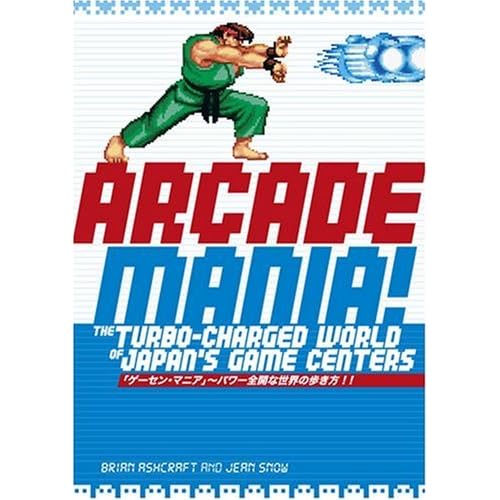
Book Review: Arcade Mania

Over vacation, I finished Brian Ashcraft's little gem on the Japanese arcade scene, Arcade Mania: The Turbo-charged World of Japan's Game Centers.


It's a great little book, despite a few flaws.

On the plus side, Brian gives a perspective on the less well travelled (at least by gaijin) corners of the Japanese arcade scene. Not just the story behind the well known hits from Miyamoto & Suzuki, but the story behind arcade Mahjong, the history & culture behind the sticker-picture machine craze, and more.

In addition, he makes it infinitely more colorful and readable by making it a story about people. Many western gamers have heard of Fatal1ty or other FPS players at the top of their game. In Arcade Mania, Brian introduces us to characters like Yuka Nakajima, queen of the mechanical claw games, whose prize-snatching prowess has netted her 3500 of her favorite stuffed animal and a role a consultant and celeb with the machines' manufacturers. He also introduces us to a pro Mahjong (real and video) player, a retired 2D fighter champ in his 20's, and to some figures from the Doujin software scene in Japan (think indie bands selling casettes from a car trunk, only it's game developers and it's schleping home-created boxes in Akihabara). All of this underscores just how broad a spectrum gaming covers in Japan and how differently it traverses Japanese culture compared to that of the US.

There are also some well researched bits of history behind the technical progression of sticker-booth machines, the history of companies like Sega and others, as well as the influences between genres of arcade machines.

I have two complaints about the book. Neither of which should stop you from purchasing it if the above paragraphs seem up your alley.

First, it felt like some of the latter chapters, while they were ok, weren't nearly as well researched as some of the earlier chapters, and didn't really tap the same kind of cultural vein as the other ones seemed to. In the retro gaming chapter, for example, he mentions G-Front, an Akihabara store that carries old arcade cabinet PCBs and other parts, and profiles one of the employees. He doesn't though, explain whether this is the only one of it's kind, or one of a thousand. How widespread is this retro-gaming trend? [A few years ago, Doug Church dragged me through Super Potato and a handful of other places looking for an old cartridge version of one of his games, so I'd seen that there's apparently a fair number of such stores].

The second complaint is that I really would have liked to have seen Brian wrap up with a chapter speculating on the future of Japanese arcades and arcade games. Instead the book wraps with an interesting chapter on video-game/card-game hybrids, and then leaves us hanging. Given his level of knowledge, he's in a better position than most to give us a hint or two of what might lie in the future. Then again, perhaps he's seen enough of the wacky Japanese video game scene to know that the future holds things more bizarre than he's likely to dream up.

In any case, these are minor flaws. The book is a good read for anyone interested in the Japanese game business and arcade scene, as well as games in general. Go pick it up.