Friday, December 4, 2009

Hey Wait! I've heard that before!

I subscribe to a podcast of famous speeches, and today was listening to General MacArthur's "Duty, Honor, Country" speech given at Westpoint in 1962. Transcript here.


Man, it's awesome. The guy spoke with some serious gravitas.
...in memory's eye I could see those staggering columns of the First World War, bending under soggy packs, on many a weary march from dripping dusk to drizzling dawn, slogging ankle-deep through the mire of shell-shocked roads, to form grimly for the attack, blue-lipped, covered with sludge and mud, chilled by the wind and rain, driving home to their objective, and for many, to the judgment seat of God.
To the judgement seat of God. Wow.

Worth reading AND listening to.

I might be the last person to realize this (I am Canadian after all, and most of my history has to do with the catholic church, maple syrup and trapping beavers) but it was pretty apparent that the speech was the inspiration for the famous Nicholson speech from A Few Good Men courtroom scene. Shortened Hollywood style, of course:

Nicholson:
We use words like "honor," "code," "loyalty." We use these words as the backbone of a life spent defending something. You use them as a punch line.
MacArthur:

Duty, Honor, Country: Those three hallowed words reverently dictate what you ought to be, what you can be, what you will be. They are your rallying points: to build courage when courage seems to fail; to regain faith when there seems to be little cause for faith; to create hope when hope becomes forlorn.

Unhappily, I possess neither that eloquence of diction, that poetry of imagination, nor that brilliance of metaphor to tell you all that they mean.

The unbelievers will say they are but words, but a slogan, but a flamboyant phrase. Every pedant, every demagogue, every cynic, every hypocrite, every troublemaker, and I am sorry to say, some others of an entirely different character, will try to downgrade them even to the extent of mockery and ridicule.

I guess I shouldn't be surprised of the source of inspiration, but I thought it was interesting.

Thursday, December 3, 2009

Book Review: What the Dog Saw and Other Adventures

One of the downsides of committing to writing reviews of the books I read is that people then know what you read; and in some circles, admitting you read Gladwell's work is a little like admitting take your relationship advice from Dr Laura or your financial advice from that button-happy dude on Fox.


Gladwell's been criticized for presenting data either selectively or out of context to support very provocative ideas, presenting these ideas in a science-ish fashion, and then responding to critics with 'hey, I'm just a writer' attitude.

However, if you don't take his writing as science, if you take it as only provocative ideas, then I think he makes for good reading.

I'm a contrarian by nature and so I do like the idea of questioning fundamental assumptions, long-held behaviors and beleifs and the like.

His other books use numerous cases to support a single idea (Tipping Point, Outliers...). What the Dog Saw: And Other Adventures is a collection of his pieces from The NewYorker, each exploring different ideas.

In these pieces, he takes us for a romp through the history of hair-dye marketing, gourmet ketchup market realities, questions the science behind FBI profiling, and much more.

As promised, many provocative ideas that should stir your mind. Just be sure to question his science as he does that of others.

Wednesday, December 2, 2009

iPhone TouchPets post-mortem talk at PAGDIG

Last night's PAGDIG meet-up had Andrew Stern (Catz, Babyz, Facade) of Stumptown Game Machine give a talk about the development of TouchPets Dogs for iPhone. Good talk and I took some notes. Here they are.

TouchPets Dogs is an iphone-based, modernized take on the 'pet simulator' genre that Stern gave birth to with Dogz and Catz back in 1995. Not surprising that when NGMoco wanted to do a game along these lines, they came to find The Man :-). The game uses a business model that is kind of a hybrid of pay-to-play and pay-for-upgrades, and indeed they are evolving the business model on the fly based on performance. It also uses gesture input, accelerometers and all the usual iPhone platform candy.

Ok, so, notes [with added commentary in braces]

  • Probably among the largest and most ambitious iPhone projects done to date. 12 months, 5-6 people full time, 8-10 people part time, plus 4-6 people part time at the publisher [using a rate for a mid-range studio of 8-10k/man month, this ballparks the development budget at somewhere between 850k to 1.3M(!) not counting NGMoco's costs, marketing, etc. That certainly is higher than even the high-end stuff we're seeing on iPhone today, that has a feel of "few hundred k". Even if the studio was cheaper than my estimate, it almost certainly wasn't under, what, 700k?]
  • This was about 2X the scope and time of what was originally proposed, as publisher kept growing scope and ambition of the project. Server complexity, social elements, in-game transactions...
  • Great things to say about NGMoco as a publisher. Supportive of them doing what they wanted in the game, kept them funded as scope grew, great relationship with Apple, etc
  • The game is a pet simulator, but has heavy focus on stats (to involve more 'gamer types'), careers, stories/missions, a social network, facebook connection, inter-pet relationships between players, in-game transactions.
  • 850k people have downloaded and connected. Peak server load has been about 25k people. Game is only periodically connecting, so that means "some number more than 25k" playing simultaneously [100k?]
  • Dogs go to sleep if not fed. Need to buy bowls of food to keep them away. Amounts to pay-to-play. Some user backlash to this, looking at maybe shifting toward free to play (and keep playing) but premium items/missions/etc are for pay.
  • Push notification if your dog gets lonely [does this translate to "come feed me money!" :-)]
  • All attributes to cost, rate of decay, etc, etc are all on server, so they can evolve over time despite clients in the wild.
  • Uses NGMoco's Plus+ network, which was good to get a community aware of the game and quicker to connect.
  • Online infrastructure complicated and tricky. Communications between their server, Apples for appstore/transactions, NGMoco's Plus+network. As scope grew, server grew wicked complicated (e.g. needed to do sharding, manage issues with players with 500 friends inviting them all for playdates, etc)
  • Graphics: All in OGL 1.1, no realtime lighting, 3000-5000 polys/frame max, 2 textures only. "I think iPhone is more powerful than the Wii"
  • Used no engine, but lots of sample code from PowerVR SDK
  • Can't mix all Apple's really good UI with OGL, so if you want UI in your game, have to build it yourelf [seems like a middleware opportunity here. Do a exact copy of all Apple's UI functionality in GL]
  • Did some easy physics (ball collision, etc). Cartoon physics: Throw frisbee off left side of screen, it wraps around and flies in from right. Move viewpoint over to where the wall is though, and THEN it collides with wall rather than wrapping.

What went wrong:

  • Product spec always changing
  • Complexity of system grew beyond means of core team
  • iTunes rules and constraints - moving target plus they were pushing the envelope here*

* [lots of questions and talk about this afterward. One of the challenges being echoed from XBLA, then iphone, and now Facebook. High dependence on single gatekeeper, with no commit from gatekeeper on how policies/APIs will change, whether notice will be given, etc. People are betting their companies on stuff that can be pulled out from under them with hous notice]

What went right:

  • Good team
  • Just enough time, budget, freedom given by NGMOco to actually build a great game
  • iPhone as a platform is wonderful. great simulator, powerful, somewhat challenging to fit everything on a small screen

It was a good talk and we went over to Stumptown's studio afterward for a release party, complete with snack foods served on dogfood bowls. Woof!

Monday, November 30, 2009

Book Review: Good Video Games + Good Learning

I have mixed feelings about James Paul Gee's Good Video Games and Good Learning: Collected Essays on Video Games, Learning and Literacy.


On the pro side, I definitely agree with a lot of his pro-games-as-learning-tool view, and with some of the analysis he's done of the individual titles, and with the parallels to approaches used in education today.

On the other hand, there were a couple bits that irked me a little. First, early in the book he coins the term "good video games" but then doesn't really define it, instead giving a sort of 'you know it when you see it' definition. Secondly, he then goes on to site almost exclusively examples that are big-budget games.

It's in this last part that I feel he does a bit of a disservice to himself and to the reader. Surely some of his theories would be better tested on small Flash games. They'd both serve as cleaner 'petri dish' in which to test theories, and also serve as more accessible fodder to the reader. Can't Tower Defense or Lemonade Stand or Flight Control teach us as much as Rise of Nations?

These complaints aside, it's still interesting if you thirst for analysis of gaming's value for learning and for education of all kinds.

Thursday, November 26, 2009

The Developer's Duty

I attended both the IGDA Leadership Summit and the Montreal International Game Summit recently, and both conferences were punctuated by keynotes given by Chris Hecker. The keynotes were different, but related. Summaries are covered here and here.

One of the main points of both keynotes was that games are at a crossroads, and that whether they end up as a respected medium of entertainment and artistic expression, or get relegated to a 'cultural ghetto', or worse, get regarded as 'just toys'. Jason captured this slide on that point:


Chris also made the point that the industry was moving from questions of HOW (e.g. "How do I put 100 characters in a scene?") to questions of WHY ("Why do I want to put 100 characters in my scene? What am I trying to say by doing so?" etc)

His call to action was that developers should all ask themselves, during the course of their development, two questions:
- "What am I trying to say, and why?"
- "Am I saying it with interactivity?"

It/they were brilliant and provocative keynotes. Chris' big picture thinking always impresses me.

Yesterday, I watched Good Night and Good Luck, the story of Edward R Murrow's attempt to take a stand against Senator Joe McCarthy's communist witchhunt and circumventing of due process, etc.

The film begin and ends with Murrow's speech to the Radio and Television News Directors Association convention in 1958. The transcript of the speech is well worth reading (the film only provides the beginning and ending).

There's a passage toward the end that Murrow directed toward television, but I think applies equally to games and is in keeping with the ideas conveyed in Chris' speech. Given the sentiment of Murrow's speech, that the medium has a responsibility to *try* to do more - that those that develop and fund content have a duty to do so - I have to think he'd be OK with our applying his words to games in the same way:

We are currently wealthy, fat, comfortable and complacent. We have currently a built-in allergy to unpleasant or disturbing information. Our mass media reflect this. But unless we get up off our fat surpluses and recognize that television in the main is being used to distract, delude, amuse and insulate us, then television and those who finance it, those who look at it and those who work at it, may see a totally different picture too late.[1]

I do not advocate that we turn television into a 27-inch wailing wall, where longhairs constantly moan about the state of our culture and our defense. But I would just like to see it reflect occasionally the hard, unyielding realities of the world in which we live. I would like to see it done inside the existing framework, and I would like to see the doing of it redound to the credit of those who finance and program it. Measure the results by Nielsen, Trendex or Silex-it doesn't matter. The main thing is to try[2]. The responsibility can be easily placed, in spite of all the mouthings about giving the public what it wants. It rests on big business, and on big television, and it rests at the top. Responsibility is not something that can be assigned or delegated. And it promises its own reward: good business and good television.[3]

Perhaps no one will do anything about it. I have ventured to outline it against a background of criticism that may have been too harsh only because I could think of nothing better. Someone once said--I think it was Max Eastman--that "that publisher serves his advertiser best who best serves his readers." I cannot believe that radio and television, or the corporation that finance the programs, are serving well or truly their viewers or listeners, or themselves.[4]

I began by saying that our history will be what we make it. If we go on as we are, then history will take its revenge, and retribution will not limp in catching up with us.[1]

We are to a large extent an imitative society. If one or two or three corporations would undertake to devote just a small traction of their advertising appropriation along the lines that I have suggested, the procedure would grow by contagion; the economic burden would be bearable, and there might ensue a most exciting adventure--exposure to ideas and the bringing of reality into the homes of the nation.

To those who say people wouldn't look; they wouldn't be interested; they're too complacent, indifferent and insulated, I can only reply: There is, in one reporter's opinion, considerable evidence against that contention. But even if they are right, what have they got to lose? Because if they are right, and this instrument is good for nothing but to entertain, amuse and insulate, then the tube is flickering now and we will soon see that the whole struggle is lost.

This instrument can teach, it can illuminate; yes, and it can even inspire. But it can do so only to the extent that humans are determined to use it to those ends. Otherwise it is merely wires and lights in a box.[5]

Parallel's with Chris' talk:
  1. Art vs Pop-culture ghetto
  2. The important thing is that we all try
  3. Indies can't do all the heavy lifting. Big Games needs to pitch in too.
  4. "Cotton Candy for Dinner"
  5. It's ours to fuck up, and we CAN fuck it up.
I thought the parallels quite electrifying. I don't know whether to find encouragement in it though. The struggle Murrow spoke of 50 years ago continues today, and a few minutes watching Fox news makes a case that we are losing ground if anything.

That a struggle does continue though, is good. Hopefully games can fare as well, or better. So long as developers (and publishers, and the rest of us on the periphery) consider it their duty to try, then maybe we will do better.

Wednesday, November 25, 2009

Correlation vs Causation, and the MetaCritic MetaQuestion

This piece on Gamasutra offers an interesting take on the metacritic issue, concluding that review scores are among the least important of the factors affecting game sales.

The same subject came up at a round-table discussion at MIGS that was lead by EEDAR's Jesse Divnich.

An interesting snippet from the Gamasutra piece that is worth chewing on a little:

Analyst Doug Creutz says "We believe that while Metacritic scores may be correlated to game quality and word of mouth, and thus somewhat predictive of title performance, they are unlikely in and of themselves to drive or undermine the success of a game"

This highlights a point I brought up at the MIGS round table: That there's a difference between correlation and causation. Scores can be correlated to sales, but not necesarily affect them.

The correlation is fairly straight forward. Most game reviews are written by reviewers who fit the mold of the "typical gamer" if there is such a thing. A high meta-critic score is a small sampling of people who fit the demographic of the customer. "9 out of 10 people gave this game a thumbs up". These reviews serve as this indicator *even if not a single consumer ever reads them*.

Now, whether the average consumer consults these reviews and uses them to decide on a purchase of one game over another, and how that factors in versus everything else vieing for their attention is another matter. I have no idea whether there is any causation here, but it is certainly a more tenuous assertion than the correlation above.

Does it matter though? Of course, and here's why.

If you beleive in the correlation, then you can use meta-critic as an indicator of sorts. The publishers seem to be doing this, and there has been plenty of talk about developers having bonuses tied to MC scores and the like.

Now, using carrots'n'sticks motivators for developers, and tying those to MC scores is being done to drive behavior, I assume. It is essentially the publisher telling the team "Please go do what it takes to acheive 90% or better".

If you beleive only in the correlation, that the reviewers are essentially a sample group of gamers, then you focus on building a great game that they and everyone else will find enjoyable. [A cynic like me would say you also focus on building a marketing frenzy that will have everyone salivating for the title, so that reviewers are ready to write their 98% review before they've laid hands on the game - but again, you are doing nothing for the reviewers that you wouldn't do for the consumer as well]

But if you beleive in causation, then you focus part of that effort in gaming Meta-Critic itself. You go out and try to influence reviewers, beleiving that gaming a high score out of the system will result in high sales.

So the meta-level question about metacritic is whether you beleive it serves as a focus group, or as a marketing tool. I beleive its the former, but choose your own opinion and proceed accordingly.

Addendum: As I was writing this I had an interesting epiphany: If viewing MC as a 'focus group' of sorts, then it would be interesting to treat as such. Do games score extremely high with a subset of the focus group and low with another? And if so, how do those fair vs those with a more homogenous set of scores. Does an 80 MC title with scores ranging from 60-100 fair better or worse vs one with scores ranging from 75-85. In short, does MC standard deviation indicate something? Hmmm.... time to curl up with Excel and a glass of wine...

Thursday, November 19, 2009

Book Review: How The Mighty Fall

Finished How The Mighty Fall: And Why Some Companies Never Give In in two short plane rides. It is certainly a short business book, but also good. Oh, and terrifying.

From Jim Collins, the same guy that authored Good to Great, this looks at the other side of the coin: what factors make companies fall from greatness. He comes to the conclusion that there are many different ways to fail (vs fewer to succeed) but that there are some common traits to the examples they looked at.

Like many business books, the key point can be gleaned in just a few pages. In fact, this picture says much of it in a nutshell:


However, recognizing if your company is in one of these phases (as all companies suffer from at least SOME of the symptoms) makes the book worth reading, to compared to the numerous case examples throughout the book.

The terrifying part is how often great companies are unable to see the cliff, even as they are going over it.

Monday, November 9, 2009

EA Buys Playfish

From Techcrunch today:

Electronic Arts closed it’s anticipated acquisition of social gaming startup Playfish for $275 million in cash. An additional $25 million in stock will be set aside for retaining the top talent at the startup, and another $100 million in earnouts are part of the deal as well if the business hits certain milestones. So the total value of the deal could amount to as much as $400 million when all is said and done.

Wow. $400M is a lot of money. Social games are clearly the hot ticket right now, so it makes sense for EA to jump in, but one has to wonder if that's money well spent.

The stock & earnout will retain the people for some time, which is I'm sure a big part of why they acquired the company.

Still, the titles are cheaper to develop, and there doesn't (as of yet) seem to be the same IP loyalty that there is in hardcore games (are there Farmville fanboys out there dissing Mafia Wars?).

Time will tell if it was a good call, but it certain does seem rash, especially with all of the kerfuffle around questionable sources of social game revenues. (Interesting meta-level piece on the same issue here)

Saturday, November 7, 2009

Book Review: Seize the Daylight

Seize the Daylight is a history of daylight saving time.


I'm sure most don't at first think that sounds like a particularly entertaining story, it's actually quite interesting. At one level, it's a story about an idea that one guy spent his whole life evangelizing a simple but crazy idea, at first to ridicule, then to mixed reception, and then, after his death, to acceptance.

While others, including Ben Franklin, had the idea and proposed it in various forums, it was one man, William Willett, who spent the better part of his life trying to convince society we could be more productive and efficient by getting our collective ass in gear by sunrise.

Roughly a hundred years later, a billion people follow his guidance. Along the way though, curious things happened over the course of a couple world wars, an energy crisis, and a modernization of global commerce that necesitated everyone getting in sync.

David Prerau takes what otherwise would be a boring subject about legislation and debate between competing interests, and colors it with a ton of colorful bits of history about poorly timed train crashes, terrorist bomb plots gone awry (you know those clocks you see in the movies ticking to a certain detonation time - may want to note whose clock those were set to!), etc. Hard to imagine that only a generation or two ago there was a time where different states, cities and suburbs each observed different DST policies and dates, resulting in chaos.

Anyhow, if you enjoy the history of systems, technology, and of putting big ideas into practice, you may enjoy Seize the Daylight.

Friday, November 6, 2009

Indie Pop

I've often found that some of the best lessons in marketing are those involving commodity products. No difference between Coke and Pepsi, so the marketing better get creative, right?


Well here's a great video about the Soda Pop Stop, an indie grocer that has carved out a niche for himself by combing the world for quality product, catering to only those customers that care for such, and telling Pepsi to pound sand. I love how passionate he is about his customers and his products. Awesome.


I really hope this guy has kids and/or nephews. What a great role model he'd be while sating a kid's sweet tooth.

Monday, November 2, 2009

Playstructure project

Well, it's November, and I've almost wrapped up the 'summer project' play structure. It was a sunny day yesterday so I snapped a couple pics.

An off-the-shelf structure wouldn't work because we were building on an incline and over a retaining wall, so we decided to do something custom. As usual, this led to my getting a bit carried away.

Original rough concept in Sketchup:


Same, with rough orientation in situ:


Final product (still need a few pieces of trim, a pirate flag for the mast, etc):


From the downhill side (still needs a few pieces of 'hull' planking), showing slide and climbing wall:


I'll post some more pics after getting the last bits of trim done (hopefully this year!!)

Tuesday, October 27, 2009

It's not the size of your installed base, it's how you use it

This was an interesting graph up on Joystiq, contrasting the growth of installed base between platforms.


While interesting, it's not exactly intellectually honest. For one, the iphone saw a lot of hardware refresh with the same customers upgrading to the 3G/3GS,so some of those are repeat users. Yes, it's still units sold, but for purposes of installed-base discussion, this is relevant.

For another thing, if you are going to talk "consumer tech", then you need to look at other cell phones, DVD players, etc. If you are looking at game platforms, then include the gameboy, the Windows PC. etc. Not sure any of these numbers would beat that curve, but it's worth including (though this example shows that the GBA beat the Wii's growth curve in its first 10 quarters. hmm...). Finally, the attach rate and SW ARPU would also be apple to oranges.

Still, even with all these caveats, it's an interesting chart to consider.

Hot game development studio


Not as in their title roadmap. As in HAWT.

Just saw this pic of Kojima up on Kotaku. Since when do game studios look like giant pop band ensembles? Where's my shiny silver suit!?


Sunday, October 25, 2009

Book Review: On Writing

I'm not a big fan of Stephen King's, but some time ago I'd heard good things about his non-fiction work, On Writing. I recently got to it on my Amazon queue, and got through this week.


The book is half autobiography, half instruction manual. The first half of the book recounts tales of his childhood and school years, through to early adulthood and married life, touching on his life as a young writer and the experiences that formed that writer. The latter half is a collection of thoughts on being a professional writer; on the craft and the business.

The autobiographical part was entertaining, and at the same time interesting. In particular it was interesting to hear how some of his books that I'd read (or seen in movie form) were metaphors for parts of his life (e.g. Misery, in which a crazed fan holds an author hostage and forces him to write what she wants, was written while King was addicted to Cocaine. He was 'held hostage' by the addiction, and not in control of what he was writing).

I got much more out of the second part of the book. Even if, like me, you don't plan on writing any fiction, it has plenty to offer anyone who puts pen to paper to convey ideas. Some reminders on basic structure and grammar are there, as are some useful rules of thumb (e.g. "second draft = first draft - 10%").

I also thought it was interesting how he often doesn't know how the story is going to come together, but "puts characters in a predicament and then watch[es] them try to work themselves free". There's a similarity here to how, for me at least, sometimes writing is about getting complex ideas down to try and work them out.

The only downside is that while the book is ten years old (it was published in 2002, but the bulk of it was written before 1999, before an accident delayed it's publishing), but the mindset vis-a-vis publishing is ten or twenty years older than that, and definitely pre-Internet. For that part of it at least, I'd look to more timely authors and thinkers. Cory Doctorow has written numerous pieces on the subject, and Scott McCloud's Reinventing Comics has a lot to offer as well.

Despite this shortcoming, I recommend the book for anyone that does any writing. For those that don't, well, what are you waiting for?

Tuesday, October 20, 2009

Protesting Pachter's iPod Publisher Plea

Michael Pachter is normally a pretty rational guy as far as analysts go. However, I found his quotes in this piece on GamesIndustry.Biz to be strangely off the mark.

In the piece, Pachter claims that publishers are at risk of spoiling their own party, so to speak, by publishing games on iPhone and iPod Touch at prices lower than those they command on other platforms. He states,
"Putting well established franchises such as Madden on the iPod Touch for USD 10 cheapens their value, he explained. "Whether it's the same experience or not, and it's not, why would I ever spend USD 60 for Madden if I can get it for USD 10 on my iPod Touch?"
He goes on to state that this contributes to the risk of the iPod Touch displacing the DS (and one would assume PSP as well),
"It's a serious threat to pricing. And once people start to look at this as a substitute for the DS for smaller kids, for 12 and unders, then you're going to train a whole generation of 12 and unders that this is a perfectly acceptable gaming experience at that low price point."
I believe his line of thinking here is seriously flawed. I beleive this for three reasons:

  1. Different platforms merit different pricing. I'm surprised at the first quote. Madden on PSP today retails for under $40, vs $60 on PS3 or 360. By his line of thinking, why would anyone buy the $60 version? The reasons are that the experiences *are* different, the consumer may own a particular platform and not be swayed to another for an individual title, and the economics of each platform is different (dev cost, distribution costs, etc). To take it to the extreme, There's a version of Prince of Persia on cell phones that doesn't go far in displacing the $60 console version, despite selling only for a couple dollars.
  2. Meritocracy in the market. Pachter seems to claim that kids playing on an iPod touch won't 'move up' to other platforms as the previous generation did from GBA to DS/PSP/Home consoles. First, I'm not sure this platform graduation is anything but myth. If true though, the reason the gamers would 'move up' is because the next platform would offer a higher quality experience and or different content to suit their changing tastes. If other handhelds, or home consoles for that matter, can't offer a superior experience to the Ipod Touch, then they will fail - and should fail. On the other hand, if they do offer a superior experience, then they should be able to charge for it. If Nintendo or Sony can't compete on their own merits, it's not up to EA to prop them up - and if they do, then they should be compensated in a way that lets them lower the price of titles to better compete.
  3. No man, nor publisher, is an island. The Appstore, while not an open platform*, is certainly more open than the controlled, curated, catalog of titles available for handhelds. What that leads to is the tens of thousands of apps that we've seen show up on it, and I'm not sure that any publisher, even EA, refusing to publish on it is going to make any difference whatsoever. [I suppose that a cartel of publishers could agree in unison to boycott the platform, hoping that absence of ANY big-name content would poison consumer interest in the device. This has happened in the past with things like music labels boycotting Napster, or (IIRC) movie studios with betamax - however, its legality is questionable, the games publishers aren't organized in such a fashion, and there's enough of an indie community that I don't think this would work anyway]. In any case, the publishers seem to be faring fine while still charging a premium for their IP (see the top grossing list)
I guess what has me so bent out of shape is that it sounds so much like the death knells of the music industry. "$0.99 downloads will kill us all! What will become of our glorious CDs?"

People kept making music. People are going to keep making games. Whether to adapt to change is up to you, but don't expect the market not to change because you don't like the way it's changing.

Make excuses or make money, your call.

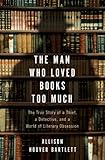
Book Review: The Man Who Loved Books Too Much

The Man Who Loved Books Too Much: The True Story of a Thief, a Detective, and a World of Literary Obsession was a fun little book. It's based on the true story of John Gilkey, a obsessed thief of rare books, and Ken Sanders, the book-dealer-turned-detective that set about catching him.


I enjoyed it for a number of reasons. The narrative is fairly good page-turner, following Gilkey through his spree of fraudulent purchases and thefts as Sanders catches up but remains a step or two behind. The characters - rare book collectors, Sanders, and of course Gilkey himself - prove an eclectic cast for the story. As well, the author recounts the tale in a way that lets us see how she becomes part of the story itself, worried she's possibly complicit in Gilkeys crimes.

Most of all though, I found the Bartlett's description of the world of rare books to be intoxicating. From the opening pages, when she describes first laying hands on Krautterbuch, a german botany text almost four hundred years old, unclasping the pigskin-clad oak cover boards and turning it's stiff pages as they make "a muffled crack, not unlike the sound of a flag on a windy afternoon", she does a great job of giving the reader a palpable sense of why some covet these books; some so much that they'll go to jail for them.

Tuesday, October 13, 2009

Kaboodle conundrum


photo.jpg, originally uploaded by Kim Pallister.

Walked by the 'Kitchen Kaboodle' while out at lunch today. Noticed they've reduced to a 4-day work week in an effort to cut costs, and then promise to pass some of this to the consumer.

Interesting that when many retailers (e.g. grocers) were faced with increased competition, they chose to increase their hours of availability, not decrease them. Doubt they're both right.

My guess, KK is wrong. I'm not sure many who shopped there were price-sensitive, plus I'm not sure how genuine the 'savings' pass down is when the markup was already hefty. And now they've proven they are ~60% as convenient as their nearest retail competitor, and 3 days a week they are less convenient than Amazon, whom I'm betting beats them on price.

Sunday, October 11, 2009

Book Review: Batman Arkham Asylum

I went on a bit of a Batman kick lately, playing the game, watching the latest movie, and so when a coworker offered to loan me the Batman: Arkham Asylum - A Serious House on Serious Earthgraphic novel set in the same mythical psychiatric hospital in which the game takes place.


It's pretty good, but not great. I've occasionally heard it referenced in the same vein as Watchmen, but I don't beleive it's nearly of the same caliber. I think people mainly like it because it's different. Instead of the usual omnipotent batman driven by his inner demons, we get a vulnerable batman, whose inner demons have him questioning whether he's any better than any of those he's spent his life putting behind bars.

The 15-th anniversary edition is nice in that it has some 'liner notes' on the project's history, the original final draft of the script before it's illustration, etc, which form a nice peek behind the curtain on how a project like this comes together.

It is different, it's clever, and its very pretty in it's layout, typography and of course artwork, but I don't consider it a must-read unless you are a die-hard fan of Batman.

Saturday, October 10, 2009

Book Review: Moral Panics and the Copyright Wars

I've just finished William Patry's excellent book, Moral Panics and the Copyright Wars and found it brilliant on a number of levels. I've been reading his blog (first here, now here) for some time now (linking to him occasionally), so I put the book on my reading list as soon as I learned about it.


First off, his knowledge on the subject is encyclopedic. He delves into the history of copyright law and opinion, both in the US and abroad, and yet does so without becoming inaccessible.

Secondly, his objective deconstruction of the approaches and techniques used by those on both sides of the argument lets him get to the heart of the matter. In fact there's a fair chunk of the book having little to do with copyright, but rather with the use of metaphor, moral panics, and other techniques, as tactics by those lobbying for a given cause.

Finally, by using his knowledge of the field and it's history, along with this kind of 'argument autopsy', he gets to the heart of who and what copyright is meant to serve (i.e. Copyright is not a 'natural right' of authors. It's a government-granted monopoly given only to serve a purpose, and that purpose is not that of the author. Copyright is an instrument created for the public good, and thus should serve the public's interests, not those of industry)

He's also not without a sense of humor. For example, in speaking about the 1998 extension of US copyright from fifty to seventy years from the authors death, supposedly to provide incentive to authors to compose new works, and how that was applied retroactively to works of already-deceased authors, Patry points out the absurdy in this by pointing out that these authors aren't composing, they are decomposing.

The only shortcoming I can think of is that I would have liked more of a prescription for a solution. Patry points out that monopolies created to serve the public interest, and that no longer are doing so, should be taken away. So there's a high level solution proposed, but it seems to me to be a bridge too far. How do we decide what the correct level to bring it back to, is? How do we unwind the DMCA? What should individual citizens or corporations do? I think Patry would have a lot to offer here, and I'd like to see future editions of the book include something along these lines.

I found the book enlightening. It has me thinking a ton about it's implications for games, my work, and the future. I highly recommend it.

Donate to Creative Commons


Creative Commons is having their annual fundraiser, and have added some incentive with a sweet Shepard Fairey CC t-shirt with a $75 or more donation.


Worthwhile, sweet threads. 'Nuff said

Friday, October 9, 2009

Robopomme?


photo.jpg, originally uploaded by Kim Pallister.

After several years our Roomba finally gave up the ghost, so we replaced it.

Somewhere along the lines, it got all mac-ified. Here's a before'n'after.

In other notes, it's pleasing tones have been accompanied by voice messages, but in third person. Such a disappointment. "Please clean the debris from Roomba's brushes" is so much more lame than "Help! My brushes are dirty! Clean them out and I will return to serving you, gracious overlord."

Thursday, October 1, 2009

Getting Hired

A few people have linked to this awesome story from Tim Schaefer about how he did a very unique job application that landed him his job at Lucasarts many years back. It reminded me of another unique approach I'd read about, taken by John Newcomer, designer of Joust, who got hired by Williams after handing in a resume rolled up and stuffed down the neck of a rubber chicken.


It kind of amazes me that in an industry as competitive as gaming - scratch that - in all job markets ranking above "would you like fries with that?" - just how many people apply for jobs by submitting resumes with form-factor cover letters, and then showing up for interviews with minimal, run-of-the-mill prep.

Of course, you can go part-way on this and still not make the cut. We had someone a while back interview for a position, and he came in with a presentation over 50 slides in length he'd prepared on our product, competitors, market trends, etc. Really exceptional. One of the people on the interview loop asked him "this is kind of lengthy, and I'd like to spend most of the time talking with you. Can you go to the summary slide?". "umm... summary slide?". Fail!

Anyhow, food for thought

Monday, September 28, 2009

In the margins

Alice pointed me to this very funny list on Joe Ludwig's blog of "50 things I never need to hear at another conference" (in this case, lampooning the wisdom of the Austin GDC crowd):

  1. Korea is the future.[]
  2. Free to play with micro transactions is the one true business model.
  3. Client downloads are death.
  4. We must look beyond the core gamer audience and embrace more casual players.
  5. Women are 50% of the audience.
  6. ...
Anyone who's done a lot of these conferences feels the sense that they've heard it all before. This list is a stinging reminder that this is indeed true.

Of course, often the most interesting part of an article is what's between the lines. The most interesting thing, for me anyway, about GDC and for that matter all conferences, is not the main content. It's the side note during a lecture about some product or feature's back story, it's the note in a post mortem about the cool idea they had but couldn't follow up on, the hallway or dinner conversation that happens after the lectures and panels are done.

The most interesting things are in the margins.

Sunday, September 20, 2009

Four Pointers on the Future of Games

I read a number of posts over the past week or two that opened my eyes. Here they are:


  1. Dan Cook's 'Flash Love Letter' series of posts (two so far: one, two. With more coming soon) on Flash games, the opportunity for premium flash games, how to monetize them, existing (flawed) feedback systems when distributing through portals, etc. His blog has always been gold, but this series of posts shows that he understands this space better than almost anyone who's writing about it. Much of it applies to all digital distribution and not just Flash games.
  2. Raph's liveblog of the AGDC panel on monetizing online games: Free-to-play biz model experts discuss successes and stats around different tweaks on the biz model and how it's evolving. I remember when I first worked in casual games, being surprised about how scientific (in the sense of hypothesize-->test-->measure-->analyze results) the business was compared to traditional big-budget retail games. This group takes it up a notch. A must-read.
  3. Alice's post on Smokescreen. Smokescreen is an online game that aims to educate teens about issues involved with their online activities, like identity, privacy, security, etc. By all means go play it - at least see the first mission through. It will challenge both what you think is possible in an 'educational' game, and in the quality of production possible in a publicly-commissioned game. On the latter note, I'm not sure what the budget was here, but its clearly NOT your $50k flash game. It's polished, rich, and deep. It doesn't take much to extrapolate a few years out and think about what it means when your games have to compete with free-to-play, $10M+ budget titles funded by your taxes.
  4. This GamesIndustry.biz post on Bobby Kotick's comments about 'untethered' Guitar Hero. Kotick has done his share of talking out of his rear, but this is not one of those cases. The idea of a stand-alone SKU of guitar hero, connected to a dedicated service, is not as ludicrous as you might first think. Music games are a phenomenon and there are still a lot of households without consoles. If some of the people who shelled out $250 for a Wii did so to buy 'the Wii sports machine', then I don't see why this wouldn't hold for people that want GH or Rockband but don't own one of the big 3 consoles. And if this is a route for publishers to connect directly to their customers without console holder as middleman? Hmm..
As I said above, these are four must-read posts. A lot of hints as to where we'll be going over the next decade are to be found in there.

Tuesday, September 15, 2009

Creative Destruction

Justin's got a good post-mortem-esque post up about GameLayers' startup game PMOG/Nethernet, which they made the decision to shut down in order to focus on another project, Dictator Wars.


I have to hand it to the GameLayers crew. It's very easy to get so emotionally attached to your baby that you don't recognize when it's time to put it down and start over. Difficult decision showing real maturity for such a young company.

Good read.

'top grossing' appstore list challenges assumptions

The iphone appstore added a 'top grossing' filter to the 'top paid' and 'top free' lists (which were based on units only.


Some of the takeaways are going to challenge conventional wisdom, which is that (a) there's a $1-2 sweet spot where impulse buys propel you to riches, and (b) that originality and innovation will be rewarded.

Some things to note on the list:
  • Only 5/25 are $1.99 or less, and only 1 of those is a game (Battlebears).
  • 14/25 are games. Just over half, despite a huge glut of game titles in the appstore overall
  • 5/25 are priced $29.99 to $99.99 (Utilities, GPS apps...)
  • Brands rule: Of the 14 games, 10 are around recognizable IP (Madden, Scrabble, Uno, Tetris, Bejeweled, Sims, Need for Speed, Dexter, Monopoly, Civilization). More than ever, brand matters when you have limited time and space to influence purchase decision.
  • Publishers rule: EA has 6 of the top grossing apps. Gameloft has 4.

They don't state if this is the current week only, or cumulative lifetime gross, though I beleive it's the former, or the list would be far more stagnant.

This approach isn't perfect. Why should an app's large gross revenue be an indication of whether I want it or not? And like any of the lists, it can be gamed (a publisher could, say, purchase a bulk number of applications to prop up their own numbers).

Still, it's another perspective, and thus interesting.

So, if you are a small indie developer, what do you do?

  • Develop remarkable product. There's a lot of competition, and if you don't have something special, and you don't have a publisher's marketing budget, then nothing's going to help you.
  • If you don't have a recognizable brand, then at least develop an intuitive name. (I'll post a presentation I did a couple years back at the Montreal Game Summit on this subject, but the challenge I discussed in that presentation was about the casual games space where the same limited shelf space, attention time, etc, exists: You have a fraction of a second to get someone to determine if your game is something they might like. "Magic Gem Collapse", "StuntBike", etc) Oh, and don't make the name one that is so long it gets cut off in the app store list! Looks like approx 24 characters is it. Unbeleivable how many people blow that one.
  • Lobby Apple HARD for a Sundance Channel style indie games list. You want a store where you don't have to compete with EA. Then work with the dev community, press, and Apple to make it cool for people to buy games there. Both hard tasks, but the alternative is competing with EA, and last I checked, that was hard too :-)
  • Build community on the web, use your community to market outside the appstore. Use the community to game the app store itself. Lots of people experimenting here, but the idea is to get escape velocity and get your app into orbit (aka on the prominent lists). One idea might be to offer a PC version for some amount of time before, offer a code for an extra level for people that buy the game, provided they buy it during the introductory week. Get them on a mail list for when launch is going to happen, and then when it does, get them to go buy, mail them invite codes they can mail friends to get a discount or free extra level or something.
It starts with building a great game, but now more than ever, that's only the beginning. In a limited shelf-space world (and don't kid yourself, Digital Distribution doesn't fix this, it only changes the rules a bit), marketing matters more than ever, especially for the little guys.

Monday, September 14, 2009

Kudos to the DLF!

OK, imagine you work at a big company. Like any big company, there's a push to make the quarter's numbers, to grow the customer base, to retain existing customers, to increase market segment share, etc.


Now imagine you want to propose to your management chain that you want to work on something that won't bring in revenue, will require effort, will make it easier for customers to defect to competitor's services and products, and that you'd like to do this across the entire range of the company's products and services. How do you think that'd go over? Like a fart in space suit, that's how! Right?

Well, a team of Google engineers labelling themselves the Data Liberation Front (a play on the Life of Brian skit) did exactly that, got it approved, and in doing so, proved that Google's still got some don't-be-evil juice left in it after all. From their announcement:
Many web services make it difficult to leave their services - you have to pay them for exporting your data, or jump through all sorts of technical hoops -- for example, exporting your photos one by one, versus all at once. We believe that users - not products - own their data, and should be able to quickly and easily take that data out of any product without a hassle. We'd rather have loyal users who use Google products because they're innovative - not because they lock users in. You can think of this as a long-term strategy to retain loyal users, rather than the short-term strategy of making it hard for people to leave.

We've already liberated over half of all Google products, from our popular blogging platform Blogger, to our email service Gmail, and Google developer tools including App Engine. In the upcoming months, we also plan to liberate Google Sites and Google Docs (batch-export).
Awesome. Way to go DLF and way to go Google.

Game Review: Batman Arkham Asylum

Short-n-sweet thoughts on B:AA.


It's brilliant. It's this year's Bioshock. It's probably the best comics license game ever made, and among the best of any license-based games (Jedi Knight comes to mind). It's certainly a game of the year nominee if not the hands-down winner.

Grand Text Auto summarizes it brilliantly as a game that is...
built from the gameplay up, asking what it is like to be The Bat. It’s about being a predator, swiftly moving through the darkness, instilling fear before destroying your prey. It’s about being a fist-fighter, able to level anyone who dares attack you. It’s about being The World’s Greatest Detective, using gadgets and gizmos to aid you. These are core mechanics, not bolted-on aspects to a 3D brawler or platformer. [] From that point on, everything Batman: Arkham Asylum does is flawless: the voice acting, the cape not just being a questionable sartorial choice, but as an object that defines Batman, the excellent pacing
My initial impression of the game, from just a few minutes, was that it was so.... polished.

If I have a minor complaint, its that the 'detective' element of the game really is spoon fed to you, guiding you down a story on rails. It would have been cool if you had to piece together what to do next, though I could also see that leading to frustration and breaking the nicely paced. story. Damn if you do, etc.

Anyhow. It's a must play game, IMHO.

Sunday, September 13, 2009

A better approach to pegboard

A friend pointed me to this LifeHacker post about keeping pegboard organized with peglocks.


Peglocks are crap. They don't stay locked, and they take too much space to work. But then unsecured pegboard is also crap, cause your pegs fall out and gnaw at your inner OCD demons. So, what to do?

Here's what I did.

1) Mount your pegboard on a frame of 2x2's. I did a 4' x 6' setup.

2) Mount the frame to an L-bracket improvised hinge.


photo.jpg

So you can access the back of it like this:
photo.jpg

3) Use tie-wraps to secure pegs through a single hole, using a piece of scrap or cable behind the pegboard.


photo.jpg

4) you are done.


photo.jpg

Way better than those 3-hole wide peglocks, plus the tie wraps will never come loose unless you want them to.

Monday, September 7, 2009

Arcades

Took the kids to a 'fun center' arcade style place this weekend.


It's been some time since I set foot in an arcade.

I was not surprised to see that many of the titles were several years old and that turnover isn't as rapid as it used to be.

I was surprised (though I guess I shouldn't have been) to see how many titles were licensed/ported versions of PC and console games from the big publishers. EA's Nascar, Ubisoft's Blazing Angels, etc.

I'd be curious to know how much revenue the publishers make from the arcade ports/licensing. What used to be the main event for video games is an afterthought, I'd guess.

Sunday, September 6, 2009

Book Review: Small is the New Big

Another library find was Seth Godin's Small Is the New Big and 183 Other Riffs, Rants, and Remarkable Business Ideas.


I've given Seth plenty of linkage from here in the past and am a big fan, though I've had mixed reviews of his books (1, 2).

This one gets a B+ rating. The book is basically a mixed bag collection of stuff he's posted on his blog, in book form, so there's no single big idea or arc to the story. That being said, if you like his stuff, and I usually do, there are some gems in here and if you like it in book form, then go get it.

Saturday, September 5, 2009

Book Review: Following Through

Following Through caught my eye when looking for something else at the library, and so I picked it up.


Really poor pick. I was hoping for a 'system' as promised on the cover, and when I read 'system', I think GTD-style, methodology, mechanical, etc.

Instead, I got a very disjointed structure, filled with long-winded analogies used to fill the pages and prop up the weak common sense advice. Skip it.

Definitely not recommended.

PAX'09 Pix

Just a few pix I snapped with the phone:

photo.jpg


People for whom "mobile computing" means wagons and hand trucks. I love these people, and not just because they help pay the mortgage.

photo.jpg
Lanfest room. Where they wheel the hand trucks to.

photo.jpg
Opening day keynote. Just to give you an idea attendance size.

photo.jpg
John Baez from The Behemoth, neck deep in merch and confusing attendees on whether they are game developer that sells t-shirts or a t-shirt developer that makes games. I went over to say hi and John said "Hi! Help me open these boxes!" yes, they were that busy. Awesome.


photo.jpg
Sony was showing Eyepet, an augmented reality game/toy that was VERY cool. (It interacts with things you draw on paper on the table in front of you)

photo.jpg

Geek Chic, selling very slick high end furniture for board/tabletop gaming. Some hides your game stuff under a classy dining room table, other furniture attempts to hide nothing, but rather augments your games to Bond-villain-lair style furnishings.
photo.jpg

One booth had a mechanical bull dressed up as a demon warhorse from their MMO. Awesome. Would love to see this for a Chocobo or other game creatures. Or Blaster from Beyond Thunderdome. WHO RUNS BARTERTOWN!?!

PAX'09 thoughts

I did a whirlwind trip up to PAX yesterday, leaving at 5:30 for the 3hr drive up to seattle, and arriving home at around 11:30. Six hours in the car wore me out, but well worth it for what I compressed into the remaining time.

I hang my head in shame and say this was my first PAX. When I was living up in Seattle I had schedule conflicts that kept me from attending the past couple of them. Decided I'd make the effort this year and was glad I did.

Some quick thoughts on the event, with a few topics requiring lengthier posts later.

The event itself: Wow. PAX has grown up. I think the E3 Supernova helped them get escape velocity, and now even with E3 making a comeback, PAX remains a big deal. We'll wait to see attendance numbers, but it felt like a 10k+ attendee event.

If you haven't been, I'd describe it as follows: GDC is the nerdy kid you knew in high school. E3 was his Jock older brother who drove a Chevelle and got all the chicks and gave him wedgies. PAX was the middle brother who listened to GWAR, wore combat boots, played D&D and smoked weed while doing it, and who mom and dad didn't really mind skipping out on the family reunion. :-)

There are panels and other sessions at the event but they aren't the point of the event itself, which is really a mix of game/geek culture celebration, fan-fest, and game companies exhibiting their goods to the hardest of hardcore gamer fans. Oh, and there's a pretty big lanfest and some board gaming thrown it for good measure.


Talks: I only attended two talks and a keynote, but I'd say that the fact that these aren't the main focus of the conference, and the quality is indicative of that. Not that the ones I attended were bad, but the quality varied, showing that it was largely up to the individual moderating the panel. (Vs GDC which scrutinizes talks and speakers to quite a degree).

I attended a panel on 'game developer parents' that had a number of industry veterans who are also parents (and two of whom were former co-workers of mine), who were supposed to discuss issues around games and parenting. I'd say it was 10% that, and 90% anecdotes about their kids, which would be ok except that those were half sage advice and half boasting about their offspring. mildly disappointing.

I attended Ron Gilbert's keynote which was humorous and moving, but not mind-blowing or anything (like say, Will Wright's Siggraph keynote)

I attended a legal issues in games panel, with a variety of legal folk around the industry. Was suprised when they asked "how many people here are lawyers or law students?", and had like 40 people raise their hands! This panel was better run (but not excellently run) and covered a number of timely topics, with the panel offering opinions on each. A few of which were:
  • The "Edge" trademark hullaballoo: Tom Buscaglia had to tread lightly around this one because of Langdell's IGDA involvement, etc. The short version of the opinion was that trademarks and copyrights have their place and people have a right to defend them. In this case, both parties have behaved very poorly from the outset and dug themselves into a hole.
  • The project Entropia Banking license thing (my question to the panel on this one was what their impressions where, and whether they subscribed to the theory that eventually all MMOs are banks, and regulation is inevitable): At least one panelist agreed with the theory, and two expressed sentiment that the Entropia thing in particular was a good thing, shows games offering more, growing up, etc.
  • SW Patents: The usual lawyer-speak about "ya better file 'em!", but Tom B had a good answer to an audience question/comment about SW patents being evil, etc. He made the point that (a) the patent portfolio isn't the problem nearly as much as poor scrutiny of claims at the USPTO, and (b) a patent portfolio is something that can serve as collateral to borrow against with banks, and that Harmonix in particular did so against their patent portfolio and used that cash to survive a tight spot before their big hit. i.e. While there are plenty of examples of patent trolls, this is a counter example of patents saving what otherwise would never have become Guitar Hero.
  • First amendment/free speech vs regulating violent games, etc. Good precendents set now with universal defeat of these initiatives across more than a dozen states. Sign of games success and also their growth into a major media. "they join the club of art forms across history that have been feared and attacked in similar ways: movies, rock music, etc"
The show floor:

A mix of exhibitors from the major publishers (EA, Ubi, etc) and HW vendors (Sony, MS, Intel, Alienware) but with a disproportionately high number of indie studios meeting their fans and selling merch. (Twisted Pixel, Dofus, The Behemoth, many others).

Trends:

Cosplay: Wow there was a lot of it. Plenty of galleries online.

Indie Games: Lengthier post on this later, but there's both good and bad here. The "indie game" meme has caught up with publishers, and so they are nabbing up titles whereever they can. Good to see guys getting funded, but this results in muscle put behind these titles and ups the pressure for higher polish etc. As an example the quality of some of the showcase titles in the Xbox Indie games (formerly community games) was fantastic, but these are looking like multi-month, multi-person team titles, and it's not clear that these games can generate the numbers on that channel to justify the investment. Not picking on MS, this is a problem across the board about which I'll post a lengthier piece when I get some time.

Some photos in my next post.

Steampunk Shuffle


From the steampunk challenge, which contains a number of brilliant ones and a few more videogame inspired ones.


Tuesday, September 1, 2009

"It's complicated" - or - Beating Facebook made easy

Occasionally, I'll see this on someone's Facebook profile and it always gives me a chuckle:


I find it ironic that FB gives this as an option to describe your 'relationship status', while they give no such distinction for relationships themselves, and relationships (aka 'friends') are the currency upon which FB is built. For that matter, this is true of all social networks.

Relationships are indeed complicated, and yet they aren't treated as such by these services.

I preface this post by saying that I have never worked for a social networking service, nor have I designed or built one, nor have I ever had source code access to one's inner guts.

Despite this, I have the intertube blogger bravado to state that (a) all of today's social network services are fundamentally broken, and (b) I know how to fix them. I'll also explain why I think this is going to come to a head over the coming year or two.

First, the problem. There are three components to it, two of which really just complicate the first primary issue.

First: Relationships are things, not properties of things.

I believe today's SNs are defined with connections between people being just that, connections. In database parlance, you have a table of properties describing an individual, one of which is a link to a table of 'friends', where this is a list of pointers/IDs of other individuals in the SN.

What that means is that the relationship itself is just a pointer connecting two people. But relationships are more complicated than that aren't they? As a hint, when we discuss relationships we often use nouns, not only adjectives. More on this in a minute.

Second: Not all relationships are created equal.

They certainly aren't all "friends". Of course, if all you've got is a pointer, then you've limited how much you can differentiate between relationships. At least LinkedIn uses the more generic and neutral "Connections". At least this is a term that comes with less baggage.

Third: Having this flaw in the initial design results in kludgy solutions to resulting problems that may cripple the SN.

Software design flaws are, like many things, easier to see in hindsight. In the case of database design, one clue is the amount of bandaids. We see this happening today with FB's kludgy filtering tools. I want this person to be part of this list or that list, etc.

The current 'lists' approach that FB is using is basically a kludge that lets you segregate 'friends' into a couple different groups (e.g. personal friends vs work friends). I'd imagine that each pointer now has an added field of 'type' and this is used to filter functionality ('what kind of friend is this? the kind that receives only this kind of spam but not that kind').

This will only work so long though, and the more people want to overload functionality (what if I want another type, or I have friends I want to be in both lists, etc), the more the bandaids will become cumbersome to handle and for users to manage.

The solution:

As I hinted above, I beleive there are some clues in the grammar used.

For starters, Treat relationships as nouns, which means they are entities and constitute another table in the database design of the social network.

Relationships have attributes. They have a history, a beginning and end, different properties describing what they do/don't entail, and those evolve over time. e.g. Bob and Susan went to school together but only met in their 4th year, became co-workers later, belong to the same church, etc. These are the 'adjectives' that describe the relationship. Relationships can also be assymetrical.

There are verbs too. Certain actions or activities that are part of a relationship.

I'd imagine there'd be a couple ways of implementing this. Tables for different relationship types, or a huge table sparsly populated at the outset. The choices of how to implement this will present tradeoffs between complexity, storage requirements, possibilities, etc.

At the end of the day, there will be some sweet spot in the tradeoffs that will provide the right mix of expanded functionality vs ease of use and storage/compute burden.

I'll also guess what the main pushback is going to be:

(1) The compute and storage requirements will explode! The answer to this one's easy. Tough! Both are getting cheaper, so pick the right entry point and run with it. (Remember when everyone thought Gmail was crazy for offering unlimited storage?)

(2) It will be difficult and cumbersome for people to manage: Agreed. One approach might be to pre-populate defaults people can override, or to start with a basic 'connection' and a peel-the-onion approach through both management over time and learning through history.

It may be complicated, but that doesn't mean people don't want to make sense of it.

There are three reasons why this is going to come to a head.

First the collision/connection of social networks is going to lead to a need for additional filtering/segregating, and this is going to result in a lot of bandaids for SNs that aren't built to handle this need. We've all read stories about someone's FB photos being seen by coworkers, etc. This is only going to get more complicated as people's FB feeds get seeded with their Xbox gameplay achievements or their WoW guild's political chat. The bandaids may snap.

Second, this connection of social networks is only entering its first phase, a phase where individual identities are linked (e.g. My Xbox Gamertag and my FB profile). I beleive this will enter a second stage where other entities in the SN may be shared, like the relationships themselves.

For example, today (or when the FB/Xbox integration ships anyway), I have to belong to both SNs and then tell them both that this gamertag is linked to that FB profile. However, what if I want to be friends with someone on FB when I don't have a FB account at all, but DO have an Xbox Live account? Not possible with the current bandaid solutions, but possible if relationships are tracked separately.

There's a third reason this is going to come to a head, one that arguably going to be an issue sooner than the above one. This is that people will desire more than a 1:1 mapping between identity and persona. Today, most SNs assume that your persona is your online representation of your identity. (In fact, one can argue that one reason FB stole a lot of thunder from MySpace is that it had a looser coupling between identity and persona but thats the subject of another post). However, on some MMOs, someone (one identity) may have multiple characters they play (personas).

The clash between identity and persona is going to messy on a number of fronts. In some contexts (FB, linkedin, paypal, etc) we look for identity to be real-world concrete. In others (say, playing a frilly kitten-girl in a korean MMO) someone may be looking for anonymity. Worlds collide, etc. All the more reason we provide people with tools to manage these things, rather than just labelling everyone 'friend'.

Anyhow, as these three reasons become real issues, there's an opportunity to offer a better type of SN, and beat Facebook at their own game, by being the 'next-gen social network'.

Claiming that there's an opportunity to stop the Facebook juggernaut seems like blasphemy, but people's loyalties are fickle on the Internet. The list defeated undefeatables (MySpace, Everquest, Friendster...) is long. FB is no more immune than any of them were, and the coming problems and opportunities as SNs collide may be the disruption that allows someone else to better serve people's needs.

I'd like everyone to just get along as much as the next guy, but the first step toward that might be in admitting that we're not all friends. It's more complicated than that.

Monday, August 31, 2009

Book Review: The 4-Hour Workweek

I recently finished reading The 4-Hour Workweek: Escape 9-5, Live Anywhere, and Join the New Rich and I have to say I have very mixed feelings about it.


I had the book recommended to me by a couple friends, and by the end of the first chapter it had me questioning whether those friends really had their heads on straight. Nevertheless, I pounded through it and found a few redeeming benefits in later chapters.

At it's worst, the book is all the snake oil slick of a late night get-rich-quick infomercial. The author rambles on about how he's taken the time out from motorcycle racing down the Andes and Scuba diving under the polar ice cap to bestow upon you the wisdom that let you get rich working only an hour a week, just like Bob, Sue, and other anonymous success stories.

If you can get past this, and I almost didn't, the book then has the added flaw of trying to do too much. It's a personal productivity self-improvement book, a guide to starting your own low-maintenance business, a lifestyle guide, and a travel book to boot.

I'd dismiss it entirely, but there are some redeeming gems hidden within the pages here. The personal productivity part is basic 80/20 rule and goal setting, but has some gems about outsourcing and on different ways in looking at work-life balance and measuring 'wealth'. The business how-to is basic "you too can make riches on the internet" fare, but with a very useful set of links to contract manufacturers, 3rd party support companies, etc. Similarly, there are a few gems in the last section.

Also the question of the author's ethics comes into play. For example, some parts of the business section of the book speak to developing real product, gauging market demand for it, etc. Then in other parts he outlines how to pass yourself off as an expert on anything by reading the top few books on the subject and sprinkling in a pinch of bravado. Short leap from there to fraud, in my book. (Then again, I'm a blogger, so I guess I'm a little guilty of the 'unqualified expert' sin by definition).

Do I recommend the book? No. I will say that if you looking to start your own business or if any of the other topics he covers sound interesting to you, you may find a few nuggets of wealth in here, but it's not optimal time use to scan through this book to get it. At the very least, scan quickly and read only the parts you think matter. The rest of the filler you can get of network TV at 2 AM next time you have insomnia.

Sunday, August 30, 2009

Hecker gets let go, goes Indie

Kotaku and Gamasutra picked up on the news Chris broke that EA laid him off. He's now going to work on an indie game called 'SpyParty', a prototype of which was shown at the 2009 GDC EGW. I'm pretty sure this version was born out of an even earlier prototype done as part of the 2005 Indie Game Jam 3 and shown at the 2005 GDC EGW, in a barrage of 'people interacting' jam prototypes.


Anyhow, SpyParty's got a fantastic core idea, and Chris is f***ing smart and driven, so I'm excited to see the game when it eventually ships.

Tuesday, August 11, 2009

Good rant on the 'games as art' thing

From Damion Schubert's (Bioware designer) wonderful Zen of Design blog.

All this being said, narrative is a red herring in the discussion of games as art. Let’s put it this way: can oil paintings succeed without great cinematography? Can classical music be great without a killer screenplay? Can a Ming vase be great without compelling characters?These are very silly questions.

Each artistic medium has its own rules for what makes that particular craft capture the viewers eye and imagination. For video games, narrative is an exceptionally powerful tool – one used exceptionally well in Knights of the Old Republic and Starcraft, for example. But I posit that many games without story, games like Civilization and Minesweeper, are elegant, artful games with barely a lick of developer-provided narrative. The art found in these games is less about what you find in a movie theater, and more about what you find in an ancient Chinese puzzle box.