Thursday, January 15, 2009

iPhone games mini-review, market thoughts

It occurred to me that I've bought and downloaded a bunch of iPhone games (17 to be precise - for a total of ~$20) but not commented on them. I'll also post some thoughts about the market in general in the next few days..


I'm doing a rough stack-rank based on my perceived value for time and money spent:
  • TapDefense: A tower-defense game for the iphone. It's good, it's free, it's playable in bite-size chunks of time. Same mechanic that made this genre addictive on the PC works here. There's even an accelerometer-driven earthquake tower just to make it special.
(Image courtesy Flickr user C4Chaos, Creative Commons attribution, sharealike)
  • Rolando ($9.99). NGMoco's flagship title. It's a *great* platformer showing just how much fun a platform the iphone can be. Innovative use of multi-touch & accelerometer. Worth the $10. Only down side is it's not exactly something you can play for 30 seconds at the grocery store checkout line (like tapdefense). Still, great title.

  • JellyCar (free): Fun physics-based, toon-rendered vehicle platformer
  • SolFree (free): Four different solitaire games, free. It's on your phone and sometimes you've got time to kill.
  • Sudoku (free): Same comment as above.
  • Enigmo ($1.99): A fun Lemmings/IncredibleMachine style puzzle game with 3D graphics and touch UI. Fun, and higher quality than many iphone games. Touch-driven UI can be finicky.
  • TouchPhysics ($0.99): It's CrayonPhysics for the iPhone. It looks cool, and physics puzzlers are always fun. However, the lack of precision and resolution made it frustrating for me. Between those two, things had a 'snap to' feel to them, far more than Crayon physics on a tablet PC, which felt magical.
  • Labyrinth LE (Free): It's a great 'virtual' version of those wooden maze/marble games you had as a kid. Great demonstration of the accelerometer. There's a paid version with more levels.
  • iBall3D (Free): It's a better version of labyrinth. However, I prefer Labyrinth's more minimalist and wooden-table feel.
  • FourFree (Free): It's connect four. Fun if you have kids.
  • TicTacFree (Free): It's tic tac toe. Fun if you have kids.
  • Piccross ($2.99): A reveal-the-image puzzle game. Gets to be *okay* after you clear the initial levels which are really there just to learn the mechanics of it. It would be fun if you were playing to try and beat a time, but this makes it frustrating as the 'picking' precision is too fine for the iphone's touch interface. [Disclosure: I bought this mainly because a friend of mine developed it, but I'm trying to be objective]
  • AirHockey ($0.99): It's air hockey. Fun if you have kids. It's a little finicky given the speed it moves at and the lack of precision in the touch interface.
  • Break Classic ($0.99): It's breakout. It's ok. I think it got pulled after getting a warning letter from Atari prior to their breakout releasing (which, btw, I'm going to boycott. They should spend money on building a better breakout, not on lawyers).
  • Aquahoops ($0.99): It's a virtual version of one of those water-filled pump games we had as kids in the eighties. Entertaining for about 2 minutes as an adult, but my kids loved it.[Disclosure: I bought this mainly because a friend of mine developed it, but I'm trying to be objective]
  • AllisJigsaw($0.99): I'm not a jigsaw-game fan, but it's a genre that keeps clocking along in the casual space. Anyhow, I got it because my daughter likes jigsaws. She enjoyed this one in the easy mode.
  • Cube (Free): It's a 3D First Person Shooter! And that's it. i.e. It's good to download and see that it can be done, but as far as playability, the poor UI, chunky frame rate and lack of precision on the touch interface make it nearly unplayable. Still, it's free and it looks nice.

Flying Squirrels!

I went skydiving once when I was younger and stupider. It was quite a thrill. However, I can't imagine how crazy this must feel, especially the clips at about 2min and 3min in of people skirting cliff walls and peaks by what looks like less than 30 feet or so. Hairy.


wingsuit base jumping from Ali on Vimeo.

via BoingBoing.

Wednesday, January 14, 2009

Mt Hood outing


photo.jpg, originally uploaded by Kim Pallister.

Went up to mount hood last weekend. Sunny, great snow. Slightly windy. Still awesome though. Hadn't been snowboarding in a year and a half.

Tuesday, January 13, 2009

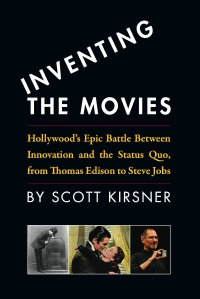
Book Review: Inventing the Movies

A while back I finished  (deep breath) Inventing the Movies: Hollywood's Epic Battle Between Innovation and the Status Quo, from Thomas Edison to Steve Jobs (exhale), by Scott Kirsner but never got around to posting about it in any detail.


The book is entertaining for anyone in an interest in business, in film, and in how technical innovation affected the business of film and vice versa.

For those with a vested interest in a similar space, such as gaming, the book is a must read. The parallels of history repeating itself are numerous and uncanny in their similarity.

A couple random examples: 
  • The reluctance of film editors to adopt digital editing systems and cinematographers to adopt digital cameras, have some parallels to the NIH reluctance we saw around the adoption of game engine middleware.
  • The concerns some have expressed about consolidation of distribution into the hands of console owners (see here and scroll down to Burning Mad) is similar to that expressed when studios locked up all the theaters and controlled distribuiton that way (pay attention MS/Sony/Nintendo - that one ended in a DOJ consent decree)
  • Many, many cases of elitism by the established players poo-pooing the new media and those quick to move to it. Pick your favorite EA, MS, Sony quote dissing casual games a few years back, or free-to-play biz models, or whatever.
  • Movie vendors said "no one will want to watch movies on a screen that small!" about TV, then about portable DVD players, then iPods. I hear the same thing about games on phones, iPhones, Netbooks, etc.
Anyone with time spent in the games business will see parallels upon reading Kirsner's book. The question, of course, is how to avoid falling into this trap of repeating history. First step, the easy one, is to know it, and this book is a good start. The harder step, is to be aware of which side of the fence you are on: Innovator or Luddite, and take a good introspective look on whether you've really assessed things objectively, or whether you sit too far to one side or the other.

Kirsner has a good blog where he continually covers this stuff, located here.

Thursday, January 8, 2009

Best of Booty 2008 is up!


Best of Booty 2008 is out, and like previous editions, it's awesome. I'm 6 tracks in and loving it. The previous 3 years BoB has been on constant rotation on the MP3 player.


I love the mashup of Another One Bites the Dust and Pastor Gary Greenwald's lecture/sermon asserting that the same tune contained satanic messages when played backward.


Wednesday, January 7, 2009

iTunes Abandons Music DRM - Could Games be Next?

The internets are afire with news that Apple is abandoning DRM from their music on iTunes. Apple fans everywhere will say that this was Jobs intent all along, naysayers will say it was pressure from customer defection to places like Amazon MP3 (where I currently buy my tunes). Regardless, it's a good thing.

[As an aside, it's interesting that Apple caved to the labels' request for tiered pricing, which they've lobbied for in the past. Songs will be $0.69 and $1.29. Compared to Amazon's $0.99. I think the labels are entering a dangerous game by opening the pricing can of worms. They may end up getting the whip 'o the long tail. It's also cool that they are letting people un-DRM their previously-purchased songs, but kind of shitty that a customer has to pay them $0.30c/song to basically uncripple it]

Anyhow, while this is good, as BoingBoing points out there's still DRM-crippled sales around audio books (through an exclusive arrangement with Audible), and Video. Also, BB didn't point it out, but games too, are DRM-crippled at this time.

In the past, I've posited that it seems inevitable that the same consumer demand for DRM-free content will spread from music to video and eventually to games. However, I thought it would go in that order. Movies first after music, games last.

My thinking there was that (a) games tend to have the highest price point ($60 retail titles) and a fanbase most aligned, stereotypically anyway, with the 'young male hacker type' stereotype, they are played on connected compute platforms, so less 'owning the media as incentive to go legit', and (c) movies tend to have a glut of hit-driven inventory even more so than games (not sure about this, but that was my thinking).

In thinking about this in the context of iphone, I'm now rethinking that position.

When looking at iPhone games, or all apps for that matter:
  • The vast majority of paid-for apps are $0.99 price point, so similar to music. The convenience of purchase vs pirate is similar to music
  • The biggest obstacle for most devs isn't piracy, it's obscurity, just as it is for authors and musicians.
  • As apps get connected, and I assume more of this will come, there's the possibility of connecting them to services that are for legit customers only
  • It's a new platform with a new base of apps, unlike movies which are shackled to a lot legacy agreements about distribution rights and rev sharing and the like.
The question that remains, of course, is whether customers will actually ASK for DRM-free game titles, and if so, for what? 

Music and video content are consumable on other devices. I might want to back them up, play them on my 360 or in the car. DRM stops me from doing that, or at best tells me how and when I can. Thus the bad taste.

The games, on the other hand, are written only for an iphone. so what do I stand to gain from DRM removal: moving to your spouse's iPhone? Upgrading phones? Play the games on an iphone emulator on my PC or mac? I'm not sure, but I'd like to know I have the option. Still that's likely a minority sentiment. Real pressure will only come if masses of customers have something they want to do, today, and start to demand it, as they've done with music. 

The only legit reason that comes to mind that would be truly compelling is if someone (Google? Nokia? RIM?) were to come out with a competitive phone that could (natively or through emulation) run iPhone apps. If that were the case, as a customer, I might be tempted with the other device, but faced with a software library that won't come with it. 

And that might tick me off... and remind me of when I had the same issue with music...

Friday, January 2, 2009

Daring Deeds of Desperate Developers

So I just picked up on this story about developer Bob Pelloni, who's staging a 100-day, uh, I guess it's a sort of a cross between a sixties sit-in and a coding binge in order to convince Nintendo to give up a dev kit so he can officially 'release' his game, Bob's Game.

By day 21, as Joystiq puts it, things are getting a little weird.

So first off, my 2c about this case:

It's pretty clear by reading the text on his site that Pelloni is probably a little, er, socially challenged, but more importantly doesn't really understand everything there is to understand about the business side of what he's doing. To say there's no cost to Nintendo isn't true. Any game shipped for a console reflects to some degree on those making that console, so they need to be ok with that and put some effort into getting behind the title (even though Nintendo does notoriously little of that).

Is his game any good? No idea. However, as a developer, he really shouldn't be putting all his eggs in one basket. [He mentions doing an iPhone port among others as his backup plan, but is naive to think that just because you can get the iPhone SDK that you won't run into other 'soft censorship' issues].

But anyhow, that's not the real story here.

At the high level, the thing that's interesting about this is visibility that little guys with a bone to pick can get in today's connected world, and what that means to those that offer a platform for content.

XBLA was hailed as the indie path to the 'console big leagues', but has endured it's share of criticism from small devs,with that criticism getting some attention. Criticism for non-transparency, soft-censorship, royalty rate changes, and lengthy cert processes, to name a few reasons. Beleive me, the posts by outspoken folk like Minter or others complaining about XBLA cert process, rate changes, etc, get the attention of execs. Being perceived as the big guy that tramples the little guy isn't good PR (whether or not it may be good for business).

In the past, only the big guys (like the one at the top of this post) could speak out against The Man and get any attention. Today, anyone with a good story and/or a crafty way to tell it can be a thorn in the side of a publisher or platform owner.

So now you have an issue if you are the big guy: Deal with the bad PR, or deal with the little guy. "Ignore him" is no longer an issue. Ignoring will let you filter out those unable to figure out a unique angle, but the rest become problematic.


And the thing is with little indie guys is that people WANT them to win. One could imagine this case ending with Nintendo saying "we looked at his game and it's CRAP!", to which the Intertubes would reply "shouldn't that be for us to decide? Give him his damn dev kit!".


Now whether fans beyond the hardcore ever speak with their purchasing dollars (i.e. "I'm refusing to buy a DS because they won't help indies like Bob") is another matter, but the possibility is there, and worth thinking about.

It's like the Kryptonite problem of publishing. Fun.

Braid coming to PC in Feb/Mar

Jon's commented on the PC release of Braid:

At this time, we’re looking at a window of February-March 2009 for the PC
release.

I also liked this little addition from him in the comment thread when asked if it was releasing on Steam:

"Oh, and about Steam: Originally they did not seem very interested in Braid, but
now that it’s a successful game they seem to have changed their mind. I haven’t
signed a contract with them, but they seem interested, so the biggest factor now
is just me finishing the PC version and giving it to them."

New years party. Kids playing gh3.

We had a new years party and had GH3 playing to keep some of the kids busy that parents had brought over.

I exposed the kids to the GH3 soundtrack, and Tom's gone from singing chrismas carols and kids songs to singing Kiss's "I wanna rock and roll all night"; and Jenny's now claiming that she love's Ozzy and has gone from ballet dancing to imitating the 'stage girls' in GH3.

Sigh. They grow up so fast.

Sunday, December 28, 2008

2008 in books... with reviews!

I’m probably missing a few that I’ll think of later, but here’s a summary of the year’s books, as I’ve fallen behind in book reviews I'd meant to blog. I’ll try to keep it brief but feel free to comment if there are additional questions about any of them.

Next year I've got to try and up it a bit. 1.5  books/month is way lower than I should be consuming. 

In no particular order (other than the order I found them around the house):


1. The Five Dysfunctions of a Team, Manga Edition: An Illustrated Leadership Fable, by Patric M Lencioni and Kensuke Okabayashi. 

Recommended.

I’ve sometimes complained that many business books feel like enough content to fill a ten to twenty page paper, that has then been bloated to book size. In the case of this book, what they did, rather than bloat it, was to illustrate it to make it a fun read. I picked it up on a whim after spotting it at Powell’s but thought the style fun and learned a thing or two along the way.


2. Slide:ology: The Art and Science of Creating Great Presentations, by Nancy Duarte.

Recommended, but with mixed feelings.

This is one of the new generation of ‘pretty’* books about effective powerpoint. I’d say effective presentations, but it’s really more about the powerpoint. Despite making the point numerous times that ‘it’s about the presenter, not the slides’, the book spends the majority of time on the slides, paying only a small amount of attention to the presenter. In addition, a number of its ‘case studies’ consist of nothing more than referencing a TED presentation and saying it was awesome. Now, these complaints aside, there were a couple good tips I picked up out of the book, such as the idea of creating panoramas & scenes in presentations, and tips on lighting and object arrangement to create a sense of space in slides. Thus the recommendation with trepidation: If you are like me and feel that a $20 book that gives you at least one or two usable ideas is good value, then you’ll like this book. However, you’ll have to see past its flaws to do so.

Pros: Good lessons on design basics, different slide arrangement styles, panoramas and scenes.

Cons: Not enough time spent on the presenter as opposed to the presentation materials. Borrows heavily from other authors without even distilling usefully (e.g. the bit on Guy Kawasaki’s 10/20/30 rule even attempts to re-tell his jokes. Doesn’t work at parties, doesn’t work in books). Attempts to throw in some ‘tips’ that are way too low level (e.g. telling me keyboard shortcuts for powerpoint isn’t useful unless the whole book works at that level. Who’s to say I’m not using another piece of software altogether?)

*As an aside, there seems to be a trend in many corporate cultures of ‘powerpoint replaces the word doc’. Intel’s got a chronic case of this, and Microsoft seemed to be falling into the trap during the time I was there. Anyhow, the same thing seems to be happening with some books, and books on presentations seem to be leading the way. They are turning into sparse, picture-laden coffee table books. Aesthetically pleasing, but it ultimately means the book can only convey so much. Slideology & Presentation Zen both are case in point here.


3. Losing Faith: How the (Andy) Grove Survivors Led the Decline of Intel's Corporate Culture, by Bob Coleman and Logan Shrine. 

Recommended, but only for some and with a caveat.

The short version is that this book argues that Andy Grove was the rudder to the ship of Intel’s corporate culture (one of ruthless attention to detail, paranoia, and intellectual honesty) and that the ship has slowly drifted off course in the eras of leadership following his. I’ve recommended the book to several Intellites, as I feel there are some fairly spot-on -fairly painful- observations, and that they do a good job of dissecting and categorizing the symptoms and causes. On the other hand, my main complaints are that very few sources and data points are actually cited, and the authors pull the “we have a source but can’t disclose his name” card a few too many times. In fact, its only because I’ve spent eight of the past ten years there that I can recall my own case examples to support most of their theories. Book recommended to folks who work at Intel, or at companies dominated by a single visionary leader (I'm looking at you, Appleites!)


4. Zag: The Number One Strategy of High-Performance Brands

Not Recommended

When everyone else Zigs, you've got to ZAG! Ok, you've got it, you no longer need to read this book. 

It's easy to point to lots of people that bucked the rules, zagged when everyone else zigged, and were wildly successful. However, what they don't point out is that for every wild success, there were a dozen miserable failures. It's called monday morning quarterbacking and it's easy to do. There's a also a strong argument for 'zigging', if you are prepared to outpace and outspend your competition in a very stable marketplace, etc. Anyhow I thought the book weak.

Not Recommended.

Man, it pains me to say it. I'm quoting Seth often enough to consider myself a Godin disciple, but still I can't recommend this. I thought the book was not his finest work. The basic theme is 'its always darkest before the dawn', but doesn't offer a lot of advice for seeing when there may be a dawn, vs cases where they may not be one coming.


6. Content: Selected Essays on Technology, Creativity, Copyright, and the Future of the Future, by Cory Doctorow

Highly Recommended.

You don't need to buy this book. It's a collection of essays published elsewhere (many of them online), and Cory makes the book itself available under Creative Commons license. However, I found the dead-tree version a nice portable read, great for moments during takeoff and landing, and other small breaks. His ideas on, well, all the areas listed in the title, are fantastic.


7. Little Brother, Cory Doctorow

Highly Recommended.

Cory's teen-fic sci-fi novel about teen hackers that rebel against a too-big-for-its-britches department of homeland security is the type of distopian sci-fi that takes place just close enough to the present and just close enough to reality to scare you like hell. Great read.


8. Settlers of the New Virtual Worlds, by Erik Bethke and Erin Hoffman.

Highly recommended.

I did a Detailed review here. In short, a compelling series of essays about developments in Virtual Worlds, and how the biggest developments in VW’s and MMO’s over the coming years won’t be about 3D file formats or pixel shaders, but rather copyright, property rights, and even human rights. The ideal grounding read to the imaginative thoughts that Halting State will conjur up.


9. Halting State, by Charles Stross

Highly Recommended.

A sci-fi novel about a bank heist taking place in a virtual world, it's a good sci-fi/detective story in it's own right, but what really sets it apart is the fantastic depiction of many things in the near future of games, including MMO's, VW's, intra-world communications, identity, PvP, ARGs, RMT, and many many more. I'll go so far as to say it's one of my top 5 recommendations for those looking to understand the future of games.


10. Clear and to the Point: 8 Psychological Principles for Compelling PowerPoint Presentations by Stephen M Kosslyn.

Not Recommended

I reviewed it in back in January, but the punchline was: Author Stephen Kosslyn's main differentiator from other PPT books is that he's an expert in cognitive psychology, and the book attempts to explain some of the science behind why we understand things the way we do, and what works or what doesn't... and then applies that to run-of-the-mill, 4 points per slide, max 4 sub-bullets per point PowerPoint pabulum! Yuck!


11. Presentation Zen: Simple Ideas on Presentation Design and Delivery (Voices That Matter), by Garr Reynolds

Recommended

I reviewed it back in January, and recommend it for anyone looking for a cold glass of ‘chuck out your bullet points and tell a frikkin story’.


12. Born Standing Up: A Comic's Life, by Steve Martin

Recommended

Steve Martin's autobiographical accounting of his path to stand-up comic success was interesting from a couple perspectives. It was interesting to learn what influences and experiences shaped his abilities and style. More interesting, however, was to learn that once he'd had a vision for what unique path he wanted to forge in comedy, it was not immediately popular. It took a decade of beleiving in his vision while toiling in obscurity before it would be recognized. How many of us would beleive in ourselves that strongly? 


13. It's Not About the Coffee: Leadership Principles from a Life at Starbucks, by Howard Behar

Not Recommended

The basic premise is beleive in people, focus on the people, etc, etc. However, its coated in way too much "we are so awesome!" syrup to be tolerable, let alone valuable. My new rule is to only read books about businesses from those that have gone through (surviving or not) catastrophies. Behar's book was published in late 2007, and probably completed in early to mid-2007, shortly after their stock's meteoric climb. One wonders whether some better lessons may have been learned in time since then, since the stock has fallen back to 2001 levels.


14. Welcome to the Creative Age - Bananas, Business and the Death of Marketing, by Mark Earls 

Recommended

This book about what's gone wrong with marketing over the past decades, and how it will and must change in the modern era, is a good read. It was written back in 2002, and I was glad to have read it after its had a few years to mellow. Sometimes ideas that are very de rigeur at a given point in time, seem silly and dated only a short time later. There are few of those in this book, and most have stood the test of at least a small amount of time. 


15. Collapse: How Societies Choose to Fail or Succeed, by Jared Diamond

Recommended

A fascinating analysis of the factors leading to the collapse of societies. Diamond uses riveting accountings of downfalls of ancient societies (e.g. the people of Easter Island, for one) to illustrate common factors leading to societal collapse. He does this to make the case of how we are at risk in the modern age of making many of the same mistakes. I thought it interesting how many of the same factors have metaphorical equivalents in the business world that lead to the collapse of companies and industries. Anyhow, gread read.


16. Magic and Showmanship: A Handbook for Conjurers, by Henning Nelms

Recommended

I reviewed this back in January. In short, a book about the theatre of magic, from which any presenter may learn a thing or two.


17. The Back of the Napkin: Solving Problems and Selling Ideas with Pictures, by Dan Roam

Recommended, but only for some.

There are some good tips in here on basics of doing illustrations/sketches on napkins or whiteboards. It's recommended for those looking for just that. However, the thing I struggle with is that of coming up with teh visual metaphor for an abstract idea. That's trickier, and as of yet, not something I've found comes in a book.

Highly Recommended

I just got this one from Santa, and haven't been able to put it down. Should be done in the next day or two, but can already highly recommend it, *especially* for anyone working in the games industry. Those working in games will read many examples of the history that we are now repeating. As such, it might offer us a few pointers to the future. Even if you don't work in games, the accounting of the history of technology & innovation in Hollywood is quite fascinating.


Whew. That's it. Happy reading!


Wednesday, December 24, 2008

Mad igloo skilz!


Mad igloo skilz!, originally uploaded by Kim Pallister.

Just as the city started to dig out (I got the car out for the first time all week yesterday - and needed to chain up just to make it off the street), it dumped another few inches on us last night.

We took advantage and spent the morning building snowforts, sledding and following animal tracks in the snow.

(this igloo never made it beyond the 2/3 Pi circumference and 1/2 height, but was enough to withstand a snowball onslaught)

Friday, December 19, 2008

RIAA To Stop Prosecuting Individual File Sharers

Well, it's about time the lawyers learned that punishing customers and stomping on the little man and other such acts weren't going to help them in the popularity department.


Next up, video.

It will be interesting to see where this gets us with games, as that will likely be the next area of heated debate. 

In the meantime, a few in the games business are already boldly stepping outside of DRM shackles and hoping that maybe fewer hurdles between the customer and the cash register may actually result in more of them getting there. Some recent examples:

Stardock's Sins of a Solar Empire ships DRM-free, sells 500k units (back of napkin: 500k thru retail at revenue of ~$15$/unit = 7.5-10M, on a game with a $1M budget).


Tuesday, December 9, 2008

Honoring the Legendary Customer

BoingBoing's linking to a cool story about how the makers of the Warhammer MMO are going to be erecting statues of the top players in the game world to honor their accomplishments.


Very cool indeed.

The thought exercise for the reader is this: if games did more gestures like this for customers, wouldn't that be a more-carrot-less-stick approach to the piracy problem? (Not unlike the personalized game idea I discussed a while back).

Monday, December 8, 2008

The Numbers

I was in SFO last week and hooked up for a conversation with a developer friend after my meetings, etc.


Among the many topics discussed, he raised some concerns about our industry's lack of "sharing" numbers. (Further conversation defined 'sharing' as 'widely available numbers through sharing/leaking/research/analysts/etc'). The conversation was precipitated from a discussion of Valve's disclosure of some numbers last week, the coverage of which didn't discuss some of the titles/genres that haven't fared as well on Steam (some titles that have been released on PSN, WiiWare, etc, are rumored to have fared far better than on XBLA's 

I pointed to VG Chartz as one example of how people are making some numbers available (whether released or reverse-engineered in the case of XBLA titles).

As a comparison point, he pointed me to the AWESOME site, The Numbers, which covers the movie industry and has just about every data point you'd ever want to pull.

He cited this as an example of a different attitude to sharing numbers within Hollywood. I beleived it was a symptom of supply and demand. Bigger industry, more demand for the numbers, more people figuring out ways to make money off covering that scene. I think we'll get there over time, though a change in attitude could possibly accelerate it.

Now, as a cleansing sorbet: a couple tidbits off this site:

For those that continue to beleive this crazy notion that games are bigger than hollywood (less beleived these days), I offer the following:

GTA 4 was projected to do as much as $400M. Some claim WoW as the biggest with perhaps $1B in lifetime revenue.

Titanic did $600M[corrected from B] in box office receipts. Wall-E did $112M... in DVD sales... in two weeks.

Oh, and the top grossing *franchise* of all time? James Bond at almost $5B dollars WW gross to date. Narrowly beating out Harry Potter and Star Wars. I did my bit by going to see Quantum of Solace last night.

We are clearly still a spec on Hollywood's radar. For now...


Tuesday, December 2, 2008

Take a Mulligan?

From Gamasutra:


From VGChartz:
PacManCE units (lifetime to date):  329,698 
Galaga Legions units (lifetime to date):    43,510

"Uh. That didn't work out so great. Can we take a mulligan?"

I guess the interesting thing to ponder is whether, if publisher/MS were to give them the chance, would consumers be more or less interested in checking it out? At the very least it could be a unique marketing angle.

Sunday, November 30, 2008

Fantastic Distraction

I showed the twins (aged 5) Fantastic Contraption, and they LOVED it. Tom especially so. I was surprised how many levels they made it through without any help from dad.


I feel far better about letting them spend three straight hours playing with this than I do about a 30 minute span on the infernal webkinz site.
[On a related note, I can't beleive how quickly the kids pick up computer navigation skills. The other day Tom told his mom in the car, "when we get home, I'm going to look on the computer for some crafts to do because it's a rainy day.". Alisa asked him how to do that and he replied, singing like the Yahoo jingle, "GOO-GLE!". She then asked him what that was, and he answered "you type w-w-w-DOT-COM-DOT-GOOGLE, and then type in the box what you want to find. I'm going to type 'kids crafts'". Holy crap. Probably time I have a talk with them about what not to type into a browser, etc.]


On irony and strange bedfellows

We bought Alisa a new laptop, her 6 year old Toshiba having finally given up the ghost. (We bought a Viao, about which a series of whiny posts is coming soon).

During the setup/migration process, I had to install the latest Java runtime from Sun.

It's somewhat comical that the Sun JVM install piggybacks the MSN toolbar (presumably with a similar buck-an-install kickback that Google's offers), and then after the accept/decline of the toolbar, is immediately followed by a splash screen ad for OpenOffice.

Tuesday, November 25, 2008

Why futurizing sucks, part II

...at least if it sucks if you are Ben Stein, or anyone else other than Peter Schiff in this compilation:


Why futurizing sucks, part I

via Kotaku:

In 1982 the president of Arista records, Clive Davis, wrote an editorial in Billboard magazine entitled "You can't hum a video game." His point was that, although the then newly-popular pastime of gaming was giving record companies the heebie-jeebies by threatening to eat into the spending power of the youth market, music would always have the upper hand compared to this newfangled bleepy nonsense.

Irony, she is a cruel mistress. Thirty Twenty Six years later, Gamasutra reported that Aerosmith have earned more from their Guitar Hero spin-off Guitar Hero:Aerosmith than from any single one of the fourteen albums they have released to date. The A&R man responsible for discovering Aerosmith? Step forward Clive Davis.


Click thru to read the rest of the post. It's interesting

Sunday, November 23, 2008

Square sets sail for yesterday's new world

Square announces that they are going to be doing downloadables. Cool.

Of course the money quote is:

"...All formats – Xbox Live, WiiWare, PlayStation Network – are all viable formats for us"

Those aren't all the formats though. Are they? Just those that developers have been excited about for a few years.

PC, iPhone, (DS & PSP also support downloads now don't they?), etc.

Anyhow, says something about the industry's myopia. Kind of like europeans setting sail for the new world when those that settled it are already in wagons heading west.

Twitters from the attic


Alice points us to this neat Botanicalls DIY kit, a kit to build a device to that you sit in your houseplant and it twitters you if it's been overwatered, is in need of water, etc.


Pretty neat, but I could see this having other uses. I could see myself sitting one in the sump pump in the crawlspace, so I get a message on my phone if we have any flooding occurring. Cool.


As an aside, I love that there is so much open source & DIY hackery still alive in hardware. I really should bust out the ol' soldering iron!

Saturday, November 22, 2008

Montrealers live a polygon


photo.jpg, originally uploaded by Kim Pallister.

Just one. They share it.

This pic was a bad tagline that someone came up with for the MIGS conference. The photoshopped image in the background is from Habitat 67 (http://en.wikipedia.org/wiki/Habitat_67) a condo development from Expo67 famous for it's architectural cachet.

I guess someone thought it looked like an Unreal level or something :-)

The Shipping Machine


photo.jpg, originally uploaded by Kim Pallister.

From Jason Mitchell's MIGS talk, a second-hand pic of Valve's "shipping machine" which I mentioned in the post about his talk

Thursday, November 20, 2008

MIGS (Post 4 of N): Jon Blow closing keynote

Jon got a massive turnout for the closing keynote of the show. I took some notes, but didn't post till now as thurs/fri were pretty busy and then in transit. Anyhow, In rough form, here they are:


"A fundamental conflict in contemporary game design”

Inspiration to be found for those of us to think about problems

Goals: To touch people, to change there lives.

Other media have no problem doing this.

Today we limit ourselves to 'If it was profound  to you, it was from a game designer standpoint, not an emotional standpoint.'

Things that we do as a matter of course that prevent us from reaching those goals.

How do you make something important, profound, meaningful?

It musn't be.. Fake unimportant meaningless.

Two ways to be important to people. By expression. By introduction of activity.

Story games (fable, half life 2, GTA)

Activity games (Madden, Wii sports, Pacman, Go)

Developers are always trying to make better stories.

Academics are working on dynamic story techniques.

Fallout 3, far cry 2, attempting dynamic story.

Story games are inherently conflicted.

People can sense a conflicted work. It wont strike them deeply. Disharmouious. It won’t resonate. How can we remove the conflict?

Conflict 1: story meaning vs dynamical meaning.

Dynamical meaning.

Art games (very small)

Communicating via behavior and perceptual primitives.

The Marriage by rod humble.

“Here’s what Rod’s marriage feels like”

Gravitation by Jason Rohrer

Expressing “real life” themes through rules of interactivity.

Behavior/interpretation

Stares become ice blocks/ideas become concrete projects

Blocks preven you reaching child – projects interfere with family.

(bug) (weird interpretation)

Imagine I introduce a new element:

Ice block score decrease changes with a powerup. (stops counter)

What does this freeze mean in this game that is a metaphor for work/life balance.

More rules added, less pure interpretation, more of a mishmash

By adding/subtracting rules you travel a continuum. The resulting game will always have some meaning.

In the games industry we ignore this interpretation

Extend this to any game

Any time we stet up a system of behavior

“dynamical system”

…that system communicates something to the player, whether intentional or not.

This is the dynamical meaning.

(see Ian Bogosts “procedural rhetoric”, doesn’t need to be rhetorical or procedural)

Gravitaiton has thematic elements but does not tell a story.

Conflict 1:

Story meaning vs dynamical.

Mainstream designers not thinking about dynamical meaning. Rather implmenting story and basic gameplay mechanic that is “fun”. The story and fun mechanics have separate meanings that often clash.

Like having a scoring of film “happy carnival music" through a funeral scene.

We have happy carny music over every funeral…

How does this manifest in some popular games?

Altruism vs balance.

Bioshock: Rules showed very small token difference in ADAM whether or not you saved the girls.

GTA4: “I like Kate”. No, I don’t. The game rules expressed to me that I don’t care about her.

HL2: Alex relationship vs game progress.

We want to prevent these games from  seeming fake.

How to resolve these conflicts?

-          Don’t use story

-          Don’t use dynamical meaning

-          Make dynamical meaning match story.

A)     Don’t use story

Story gives you “interesting mental stuff

What happens next, people doing things, Themes, moods

Can we supply interesting mental stuff that doesn’t come from story?

Whereas Rohrer-style games are hard, anyone can write a story?

How could we scale Gravitiation up?

"Any dumbass can write a story from a game, and if you look at our games, a lot of dumbasses do"

The trend will always be toward the easiest things to throw money at (known quantity)

B) Don’t use dynamucal meaning

-          Technically impossible. It’s automatic

-          You could navigate to 0. So this devolves to case C.

C) “Tight coupling” (Bogost) or elemintate conflicts.

Like pressing bubbles out of wallpaper.

“change aspects of story that don’t fit story, vice versa (gameplay)

Designers not trained to consider dynamical meaning.

AAA production models do not support this. (late gameplay changes are very expenseive!)

2) Conflict 2: challenge vs progression.

We base most mainstream games on story, and also challenge.

Why challenge? It’s viscreral, fun, etc, but more fundamentally.

Challenge communicates to you that your interaction 'means something’ that it is important or necessary.

Story needs to occur, challenge is a friction preventing you from getting there.

Story is a reward

Challenge is about withholding that reqard until we deserve it.

Leads to dramatic presentation of non-difficulty ‘God of War, Fable 2 – seems like there’s a challenge – dramatic presentation of stuff that isn’t difficult.

Dynamic Difficulty Adjustment.

The Arrow can’t go to zero

“like “suspension of disbelief”

But for games and importance.

A reason to exist.

Without ANY challenge, that suspension is hard to maintain.

Faux challenge is unlikely to impact someone deeply, to change the player’s life.

Challenge is a precious thing: we can do it much more derictly that other media. We waste this. [Note: Braid makes a good case for this, doesn't it. The difficulty of some of the later puzzles really made the reward of progress that much sweeter; to me anyhow]

Challenge substitutes

Not difficult, but interesting.

“invitation-style” alternatives.

Open Problem: how to make game meaningfully response to player’s choices, without blocking progress.

Conflict 3: Intreactivity vs pre-baked delivery.

Trying to create Drama or Crafted Impact.

Required careful pacing and framing

Delivery.

Interactivity sabotages delivery.

You don’t know where the player came from, or what he just did.

Deus Ex spoof from “old man murray”

Interactivity sabotates structure!

Chehkov's Gun

“if you say in the first chapter that there’s a rifle hanging on the wall, then in chapter 2,3 it better go off”

Economy of audience attention.

Sideeffect of foresshadowing and justification

In a good story, it’s not random out of context gun.

Requires and intense preprocess.

Story is a filtered presentation of events that have already happened. ß games haven’t already happened.

Why is the gun there? What’s the history, etc.

Drama manager – “intelligent dramama manager? Yeah, show me… Can never match a human drama manager. A human drama manager can never match a human writing a pre-baked story.

Character animation analogy: Pre-baked CGI vs Live Physics {<-- ooh, good point!]

Recap: story telling techniques we suck at:

Foreshadowing

Justification

Pacing

Potetic adjustment

Tone adjustment

Vocal emphasis

Body language

“importance”

-- 

Dynamic stories are

Pretend stories

Poorly structured

Poorly delivered

Will always be awkward second fiddle to linear media. Not a good core value proposition for our medium.

Don’t use story. At least as not as a core value prop. We said this was hard

What does story provide people, can we provide it in a different way?

Why not pursue examples from other forms? Music, sculpture, painting, etc.

Art games are a good place to start. How afar can we go in this direction?

To try completely, we art game authors must abandon “the message model of meaning”

The message model of meaning is insufficient

"The moral of the story is”

High school: Taught to read works and say what they are about.

Gamers get mad at art games. Inherently pretentious. Being condescended to. This is often true! If the message model of meaning is applied, whe the works are created. Trivializes meaning. (high school 5 paragraph essay)

[Frank Lanz quote, I missed part of it, so my apologies for perhaps butchering it...]

"...meaning which is less specific, less concrete and deliberate, harder to define, harder to pin down, trancends the author reader conduit model of message styles. "

Message model author is at least a little deluded. The true meaning of a game is multidimensional and fuzzy. … more complex than what you set out to build.

"if I understand it, it can’t be that important."

Instead, what if I build something that readhes beyond the eduge of my understanding and we all explore it together. They will have a play experience that is very deep and very precious and meaningful.

So what does Freeze mean? I don't know, but I think I'll stop here.


Wednesday, November 19, 2008

In the department of "you can't make this crap up"

Big three auto CEOs flew private jets to ask for taxpayer money.


"...the three companies defendede the CEOs travel as standard procedure."

Well perhaps the problem is with the procedure then, monsieur and madames PR lackeys?

yeesh.

MIGS (Post 4 of N): Randy Smith's talk

Randy's talk was entitled "Games are Art, and what to do about it."


As I get older, my attention is turning away from games and toward other media. Play less frequently these days [me too!]. Is this because I've changed? Games have? or are they not changing in the same way I am? Decided to spend some time thinking about this.

Some games I worked on (Thief , Thief II, dark messiah, Deus Ex, System shock)

Lots of talk about “games and art”. I spent some time thinking about this. 
Looked at some other media. 
Scott McCloud’s Understanding Comics: pic of Superman vs Maus 
- ‘Closure is the space between the panels’
- Is Interactivity the games equivalent of Closure?
[McCloud is must-read for everyone in games. This one and reinventing comics as well]

Well, what is interactivity:
Interactivity: “How user input is translated into Activity on the screen”
Good enough definition for this lecture.
- Magnitude of interactivity is how much the game listends to and applies player input
- (indigo prophesy reference) Discrete vs (Tony hawk) analog
- Stepwise vs continuous
- Isolated vs connected
- Designer-authored vs player authored

"choose your own adventure" books are really “choose between several of someone else’s adventure” books

- Interactivity is technical …for now…

Language of cinema

- Media literacty (example of day-to-night fade. Used to be the film had to 'explain' this wasn't an eclipse, just elapsed time - by say showing a guy waking up in the morning)
- Dialog and such (no interactivity)
- Shooting, running (lots – because we know how to do it)

- Magnitude of interactivity

A functional definition of art

“Joseph campell – The hero with a thousand faces”

- Consistent trends
- Certainty of death
- Need for connection
- Fundamental isolation
- Stories as functional

Robert mckee [missed the quote/definition]
- Any screenplay worth a damn contains relevance, honest

- How should I live my life?
- What is life like for you?
- ‘getting through the thick wall’

Comparison between ‘art games’ and ‘product games’

Top 10 movies list, Titanic on top.

Why think about games as art

- You could reach more peopoe
- You could make more money

- Art works because it reaches people: Aesthetics

How it works, how it feels

Narrative: how it works
o Children of men: walks you thought how it works to as he transitions from self-interest to selfless.
o Cinematography gives you how it feels.

Sinead o’connor ‘nothing compares to you’
o Narrative is in the lyrics - how it works
o Music and voicing – how it feels

Message comes from – topics of the artistic piece.
- How the piece represents the work represents how it feels

Passage [art game]
o Left to right, ages to old – metaphor for life
o Picking up spouse
o Metaphor for memory and anticipation

GTA4
o How it works to escape the cops [mechanics, balance speed with out-of-controlness]
o How it feels to escape the cops [releif, pacing, less heightened sound effects]

- Artist --> mechanics --> dynamics -->aesthetics --> player
- When leader is knocked out, the rest of pack scatters (mechanical)
- Players often attempt to knock out leaders quickly (dynamics)
- Aesthetics – “I feel like  calculating hunter identifying and taking out the leader"
- Leader is identical to others – player can’t identify – “I feel like I flail in desperation”
- Possibility space
- An understood designer authored range
- Discovery through play
- “which is the right aesthetic for your message? (flail vs calculating) – depends what you want to get across…

FUN! Fairness, goals, clarity, balance

The Dogma of fun
- Topics -> aesthetics, messages --> mechanics
- Topic: licensed IP, your own idea, team project
- Aesthetic: what are you trying to say? What excites you? Why? Keep asking yourself
- What mechanics and tuning will produce that result

Post apocalyptic MMO example
- Expression of human struggle
- Tenuous alliances
- starvation economy
- individual more vulnerable than a group
- Why? Starvation economy? why do I like that as a designer? then ask why again to that answer.

Example: RTS meets FPS
- Tiberium
- Jump jets - LOD renderer - lonliness of leadership
- Audio and visual touches - fog, fade noise out
- Giving RTS orders from 1st person
- Soldier react to being sent into battles

Summary
- Maturing art form
- Interactivity is our distinct thing
- Mechanics carry the aesthetic
- Overall interactive work is a possibility space
- Are we going to be the ones to mature thie art form
- Limited range of topics
- Attached to dogmas
- Interactivity is technical, but the barrier to entry will drop some day

MIGS (Post 3 of N): Jason Mitchell's talk

Jason Mitchell (former ATI, now at Valve a couple years) gave a talk on "Connecting Visuals to Gameplay)


Rough notes below. Lots of screens and some video from Team Fortress 2 and the recently released "left for dead". Worth googling both before you read the notes below.

We'll look at two games today
TF2
- Distinctive silhouettes
- Stylized rendering
Left for dead
- Dark, gritty horror
- “filmic effects"
- Lessons from TF2

TF - Orignally as a quake mod 10 years ago, then half life mod
Class is selected by players. 
Initial TF2 1999 screenshot.
- Screen showing more “realistic” FPS, nothing distinctive
- Evolved to be stylized
Why?
- Gameplay (different classes)
- Readability
- Branding

Read hierarchy: What does player attempt to ascertain?
- Friend or foe (color)
- Class – run or attack (distinctive silhouettes, Body proportions,  Weapons, shadows, hats and clothing folds)
- Selected weapon – what’s he packin?
- Highest contrast at chest level
- Greadient from dark feet to light chest
- Lots to draw your eye up to chest level.

Early 20th centry conmmercial illustration influences.
Cornell, Leyendecker, Norman Rockwell
JC Leyendecker was biggest influence
- Clothing folds
- Rim highlights (light source orthogonally) – helps silouetttes pop.
- “red terminator” – where normal crosses orthogonal – increases saturation at that point, makes it red – actually makes sense inf you think about subsurface scattering

Screenshot from early short videos (“meet the heavy”)
- Before and after 2D paintover to make the image pop – rim highlighting was awesome.

Character creation
- Character silhouette (showed silouette of elephant, everyone gets it, despite it being orange)
- Bulding block, Identifiable at first read
- Interior shapes, Keep it iconic
- Work out design in ¾ pose
- Model sheet
- 3D model
- Front rear views
- Base ambient occlusion map, that's then used as a guide for painting skin
- Final character
- Iterate on the above

Environment design
- Create a compelling immersive worlds
- Team districntion through material hue/saturation/etc desaturate relative to players.
- Uncluttered painterly look.
- Bases – blue featured concrete, steel; red featured wood, sand.
Miyazaki was an influence – brushwidth foreshortened example. 
--
Left for Dead

Co-op first person horror, Dynamic shared narrative – "experience an action movie with friends"
AI director

Photo  - The valve “Shipping machine” (When games go live, they have a BIG RED BUTTON on a control panel of sci-fi proportions that Gabe hits at midnight. This then sends an 'enter' keystroke to a person's PC. Awesome. Took a pic, will post soon).

Gameplay movie (awesome).

Lessons learned from TF2
Filmic effects
Shaders enhance dark setting.

Filmic
-Color correction
-Grain
-Vignette
-Local contrast enahancement
-Dynamically communicate game state

Showed step by step
Color correction made it a bit greyer, desaturated
Grain – detail in greyed out darker areas
Vignette – mainly along top, to focus attention down at center.
Local contrast – highlights area around the player

We’re not film, we’re an interactive medium, so we might have info and cues we are looing to give to player
“sideband communications channel” like music score to film director
Gave example of normal stress level vs high stress
(local contrast driven higher, more stark
"Third strike", totally washed out, stark contrast - almost black and white.

[one note is that all the filmic effects were weilded subtly, but in sum were dramatic. good lesson here]

Lighting for darkness
Support fiction
- Fires
- Headlights of abandoned vehicles “clearly something has gone wrong”
- aid naviation - players tend to follow light.
"Smoking the set"
- Separate foreground from background
- - fog, light colord fog in dark areas to contrast with silhouettes, of infected in mid-ground
- Particles – adds atmostphere and helps accentuate silhouettes.
- Subway example of grey fog.
- Particles coming up from manhole
Reload shove and muzzle flash
- Player is the light source
- - increase drama and immersion (when Flashlight is attached to the weapon, and you are using it to light up a dark hall, reloading has consequence).

Self shadowened normal mapping
- Normal mapping locally alters surface orientation, causing detailed lighting effects
- HL2 “radiosity normal mapping”
- Turned out to be free by refactoring shader code
[note effect here was noticable but not huge, felt like he delved a little to deep into this one vs others. Hmm...]

Wet environments
- Film technique
o Wash down the set to geth that moview dark look
o Film noir
- Adds details to dark settings while still feeling dark

Then showed gameplay elements to show the above.