Tuesday, October 20, 2009

Book Review: The Man Who Loved Books Too Much

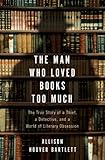
The Man Who Loved Books Too Much: The True Story of a Thief, a Detective, and a World of Literary Obsession was a fun little book. It's based on the true story of John Gilkey, a obsessed thief of rare books, and Ken Sanders, the book-dealer-turned-detective that set about catching him.


I enjoyed it for a number of reasons. The narrative is fairly good page-turner, following Gilkey through his spree of fraudulent purchases and thefts as Sanders catches up but remains a step or two behind. The characters - rare book collectors, Sanders, and of course Gilkey himself - prove an eclectic cast for the story. As well, the author recounts the tale in a way that lets us see how she becomes part of the story itself, worried she's possibly complicit in Gilkeys crimes.

Most of all though, I found the Bartlett's description of the world of rare books to be intoxicating. From the opening pages, when she describes first laying hands on Krautterbuch, a german botany text almost four hundred years old, unclasping the pigskin-clad oak cover boards and turning it's stiff pages as they make "a muffled crack, not unlike the sound of a flag on a windy afternoon", she does a great job of giving the reader a palpable sense of why some covet these books; some so much that they'll go to jail for them.

Tuesday, October 13, 2009

Kaboodle conundrum


photo.jpg, originally uploaded by Kim Pallister.

Walked by the 'Kitchen Kaboodle' while out at lunch today. Noticed they've reduced to a 4-day work week in an effort to cut costs, and then promise to pass some of this to the consumer.

Interesting that when many retailers (e.g. grocers) were faced with increased competition, they chose to increase their hours of availability, not decrease them. Doubt they're both right.

My guess, KK is wrong. I'm not sure many who shopped there were price-sensitive, plus I'm not sure how genuine the 'savings' pass down is when the markup was already hefty. And now they've proven they are ~60% as convenient as their nearest retail competitor, and 3 days a week they are less convenient than Amazon, whom I'm betting beats them on price.

Sunday, October 11, 2009

Book Review: Batman Arkham Asylum

I went on a bit of a Batman kick lately, playing the game, watching the latest movie, and so when a coworker offered to loan me the Batman: Arkham Asylum - A Serious House on Serious Earthgraphic novel set in the same mythical psychiatric hospital in which the game takes place.


It's pretty good, but not great. I've occasionally heard it referenced in the same vein as Watchmen, but I don't beleive it's nearly of the same caliber. I think people mainly like it because it's different. Instead of the usual omnipotent batman driven by his inner demons, we get a vulnerable batman, whose inner demons have him questioning whether he's any better than any of those he's spent his life putting behind bars.

The 15-th anniversary edition is nice in that it has some 'liner notes' on the project's history, the original final draft of the script before it's illustration, etc, which form a nice peek behind the curtain on how a project like this comes together.

It is different, it's clever, and its very pretty in it's layout, typography and of course artwork, but I don't consider it a must-read unless you are a die-hard fan of Batman.

Saturday, October 10, 2009

Book Review: Moral Panics and the Copyright Wars

I've just finished William Patry's excellent book, Moral Panics and the Copyright Wars and found it brilliant on a number of levels. I've been reading his blog (first here, now here) for some time now (linking to him occasionally), so I put the book on my reading list as soon as I learned about it.


First off, his knowledge on the subject is encyclopedic. He delves into the history of copyright law and opinion, both in the US and abroad, and yet does so without becoming inaccessible.

Secondly, his objective deconstruction of the approaches and techniques used by those on both sides of the argument lets him get to the heart of the matter. In fact there's a fair chunk of the book having little to do with copyright, but rather with the use of metaphor, moral panics, and other techniques, as tactics by those lobbying for a given cause.

Finally, by using his knowledge of the field and it's history, along with this kind of 'argument autopsy', he gets to the heart of who and what copyright is meant to serve (i.e. Copyright is not a 'natural right' of authors. It's a government-granted monopoly given only to serve a purpose, and that purpose is not that of the author. Copyright is an instrument created for the public good, and thus should serve the public's interests, not those of industry)

He's also not without a sense of humor. For example, in speaking about the 1998 extension of US copyright from fifty to seventy years from the authors death, supposedly to provide incentive to authors to compose new works, and how that was applied retroactively to works of already-deceased authors, Patry points out the absurdy in this by pointing out that these authors aren't composing, they are decomposing.

The only shortcoming I can think of is that I would have liked more of a prescription for a solution. Patry points out that monopolies created to serve the public interest, and that no longer are doing so, should be taken away. So there's a high level solution proposed, but it seems to me to be a bridge too far. How do we decide what the correct level to bring it back to, is? How do we unwind the DMCA? What should individual citizens or corporations do? I think Patry would have a lot to offer here, and I'd like to see future editions of the book include something along these lines.

I found the book enlightening. It has me thinking a ton about it's implications for games, my work, and the future. I highly recommend it.

Donate to Creative Commons


Creative Commons is having their annual fundraiser, and have added some incentive with a sweet Shepard Fairey CC t-shirt with a $75 or more donation.


Worthwhile, sweet threads. 'Nuff said

Friday, October 9, 2009

Robopomme?


photo.jpg, originally uploaded by Kim Pallister.

After several years our Roomba finally gave up the ghost, so we replaced it.

Somewhere along the lines, it got all mac-ified. Here's a before'n'after.

In other notes, it's pleasing tones have been accompanied by voice messages, but in third person. Such a disappointment. "Please clean the debris from Roomba's brushes" is so much more lame than "Help! My brushes are dirty! Clean them out and I will return to serving you, gracious overlord."

Thursday, October 1, 2009

Getting Hired

A few people have linked to this awesome story from Tim Schaefer about how he did a very unique job application that landed him his job at Lucasarts many years back. It reminded me of another unique approach I'd read about, taken by John Newcomer, designer of Joust, who got hired by Williams after handing in a resume rolled up and stuffed down the neck of a rubber chicken.


It kind of amazes me that in an industry as competitive as gaming - scratch that - in all job markets ranking above "would you like fries with that?" - just how many people apply for jobs by submitting resumes with form-factor cover letters, and then showing up for interviews with minimal, run-of-the-mill prep.

Of course, you can go part-way on this and still not make the cut. We had someone a while back interview for a position, and he came in with a presentation over 50 slides in length he'd prepared on our product, competitors, market trends, etc. Really exceptional. One of the people on the interview loop asked him "this is kind of lengthy, and I'd like to spend most of the time talking with you. Can you go to the summary slide?". "umm... summary slide?". Fail!

Anyhow, food for thought

Monday, September 28, 2009

In the margins

Alice pointed me to this very funny list on Joe Ludwig's blog of "50 things I never need to hear at another conference" (in this case, lampooning the wisdom of the Austin GDC crowd):

  1. Korea is the future.[]
  2. Free to play with micro transactions is the one true business model.
  3. Client downloads are death.
  4. We must look beyond the core gamer audience and embrace more casual players.
  5. Women are 50% of the audience.
  6. ...
Anyone who's done a lot of these conferences feels the sense that they've heard it all before. This list is a stinging reminder that this is indeed true.

Of course, often the most interesting part of an article is what's between the lines. The most interesting thing, for me anyway, about GDC and for that matter all conferences, is not the main content. It's the side note during a lecture about some product or feature's back story, it's the note in a post mortem about the cool idea they had but couldn't follow up on, the hallway or dinner conversation that happens after the lectures and panels are done.

The most interesting things are in the margins.

Sunday, September 20, 2009

Four Pointers on the Future of Games

I read a number of posts over the past week or two that opened my eyes. Here they are:


  1. Dan Cook's 'Flash Love Letter' series of posts (two so far: one, two. With more coming soon) on Flash games, the opportunity for premium flash games, how to monetize them, existing (flawed) feedback systems when distributing through portals, etc. His blog has always been gold, but this series of posts shows that he understands this space better than almost anyone who's writing about it. Much of it applies to all digital distribution and not just Flash games.
  2. Raph's liveblog of the AGDC panel on monetizing online games: Free-to-play biz model experts discuss successes and stats around different tweaks on the biz model and how it's evolving. I remember when I first worked in casual games, being surprised about how scientific (in the sense of hypothesize-->test-->measure-->analyze results) the business was compared to traditional big-budget retail games. This group takes it up a notch. A must-read.
  3. Alice's post on Smokescreen. Smokescreen is an online game that aims to educate teens about issues involved with their online activities, like identity, privacy, security, etc. By all means go play it - at least see the first mission through. It will challenge both what you think is possible in an 'educational' game, and in the quality of production possible in a publicly-commissioned game. On the latter note, I'm not sure what the budget was here, but its clearly NOT your $50k flash game. It's polished, rich, and deep. It doesn't take much to extrapolate a few years out and think about what it means when your games have to compete with free-to-play, $10M+ budget titles funded by your taxes.
  4. This GamesIndustry.biz post on Bobby Kotick's comments about 'untethered' Guitar Hero. Kotick has done his share of talking out of his rear, but this is not one of those cases. The idea of a stand-alone SKU of guitar hero, connected to a dedicated service, is not as ludicrous as you might first think. Music games are a phenomenon and there are still a lot of households without consoles. If some of the people who shelled out $250 for a Wii did so to buy 'the Wii sports machine', then I don't see why this wouldn't hold for people that want GH or Rockband but don't own one of the big 3 consoles. And if this is a route for publishers to connect directly to their customers without console holder as middleman? Hmm..
As I said above, these are four must-read posts. A lot of hints as to where we'll be going over the next decade are to be found in there.

Tuesday, September 15, 2009

Creative Destruction

Justin's got a good post-mortem-esque post up about GameLayers' startup game PMOG/Nethernet, which they made the decision to shut down in order to focus on another project, Dictator Wars.


I have to hand it to the GameLayers crew. It's very easy to get so emotionally attached to your baby that you don't recognize when it's time to put it down and start over. Difficult decision showing real maturity for such a young company.

Good read.

'top grossing' appstore list challenges assumptions

The iphone appstore added a 'top grossing' filter to the 'top paid' and 'top free' lists (which were based on units only.


Some of the takeaways are going to challenge conventional wisdom, which is that (a) there's a $1-2 sweet spot where impulse buys propel you to riches, and (b) that originality and innovation will be rewarded.

Some things to note on the list:
  • Only 5/25 are $1.99 or less, and only 1 of those is a game (Battlebears).
  • 14/25 are games. Just over half, despite a huge glut of game titles in the appstore overall
  • 5/25 are priced $29.99 to $99.99 (Utilities, GPS apps...)
  • Brands rule: Of the 14 games, 10 are around recognizable IP (Madden, Scrabble, Uno, Tetris, Bejeweled, Sims, Need for Speed, Dexter, Monopoly, Civilization). More than ever, brand matters when you have limited time and space to influence purchase decision.
  • Publishers rule: EA has 6 of the top grossing apps. Gameloft has 4.

They don't state if this is the current week only, or cumulative lifetime gross, though I beleive it's the former, or the list would be far more stagnant.

This approach isn't perfect. Why should an app's large gross revenue be an indication of whether I want it or not? And like any of the lists, it can be gamed (a publisher could, say, purchase a bulk number of applications to prop up their own numbers).

Still, it's another perspective, and thus interesting.

So, if you are a small indie developer, what do you do?

  • Develop remarkable product. There's a lot of competition, and if you don't have something special, and you don't have a publisher's marketing budget, then nothing's going to help you.
  • If you don't have a recognizable brand, then at least develop an intuitive name. (I'll post a presentation I did a couple years back at the Montreal Game Summit on this subject, but the challenge I discussed in that presentation was about the casual games space where the same limited shelf space, attention time, etc, exists: You have a fraction of a second to get someone to determine if your game is something they might like. "Magic Gem Collapse", "StuntBike", etc) Oh, and don't make the name one that is so long it gets cut off in the app store list! Looks like approx 24 characters is it. Unbeleivable how many people blow that one.
  • Lobby Apple HARD for a Sundance Channel style indie games list. You want a store where you don't have to compete with EA. Then work with the dev community, press, and Apple to make it cool for people to buy games there. Both hard tasks, but the alternative is competing with EA, and last I checked, that was hard too :-)
  • Build community on the web, use your community to market outside the appstore. Use the community to game the app store itself. Lots of people experimenting here, but the idea is to get escape velocity and get your app into orbit (aka on the prominent lists). One idea might be to offer a PC version for some amount of time before, offer a code for an extra level for people that buy the game, provided they buy it during the introductory week. Get them on a mail list for when launch is going to happen, and then when it does, get them to go buy, mail them invite codes they can mail friends to get a discount or free extra level or something.
It starts with building a great game, but now more than ever, that's only the beginning. In a limited shelf-space world (and don't kid yourself, Digital Distribution doesn't fix this, it only changes the rules a bit), marketing matters more than ever, especially for the little guys.

Monday, September 14, 2009

Kudos to the DLF!

OK, imagine you work at a big company. Like any big company, there's a push to make the quarter's numbers, to grow the customer base, to retain existing customers, to increase market segment share, etc.


Now imagine you want to propose to your management chain that you want to work on something that won't bring in revenue, will require effort, will make it easier for customers to defect to competitor's services and products, and that you'd like to do this across the entire range of the company's products and services. How do you think that'd go over? Like a fart in space suit, that's how! Right?

Well, a team of Google engineers labelling themselves the Data Liberation Front (a play on the Life of Brian skit) did exactly that, got it approved, and in doing so, proved that Google's still got some don't-be-evil juice left in it after all. From their announcement:
Many web services make it difficult to leave their services - you have to pay them for exporting your data, or jump through all sorts of technical hoops -- for example, exporting your photos one by one, versus all at once. We believe that users - not products - own their data, and should be able to quickly and easily take that data out of any product without a hassle. We'd rather have loyal users who use Google products because they're innovative - not because they lock users in. You can think of this as a long-term strategy to retain loyal users, rather than the short-term strategy of making it hard for people to leave.

We've already liberated over half of all Google products, from our popular blogging platform Blogger, to our email service Gmail, and Google developer tools including App Engine. In the upcoming months, we also plan to liberate Google Sites and Google Docs (batch-export).
Awesome. Way to go DLF and way to go Google.

Game Review: Batman Arkham Asylum

Short-n-sweet thoughts on B:AA.


It's brilliant. It's this year's Bioshock. It's probably the best comics license game ever made, and among the best of any license-based games (Jedi Knight comes to mind). It's certainly a game of the year nominee if not the hands-down winner.

Grand Text Auto summarizes it brilliantly as a game that is...
built from the gameplay up, asking what it is like to be The Bat. It’s about being a predator, swiftly moving through the darkness, instilling fear before destroying your prey. It’s about being a fist-fighter, able to level anyone who dares attack you. It’s about being The World’s Greatest Detective, using gadgets and gizmos to aid you. These are core mechanics, not bolted-on aspects to a 3D brawler or platformer. [] From that point on, everything Batman: Arkham Asylum does is flawless: the voice acting, the cape not just being a questionable sartorial choice, but as an object that defines Batman, the excellent pacing
My initial impression of the game, from just a few minutes, was that it was so.... polished.

If I have a minor complaint, its that the 'detective' element of the game really is spoon fed to you, guiding you down a story on rails. It would have been cool if you had to piece together what to do next, though I could also see that leading to frustration and breaking the nicely paced. story. Damn if you do, etc.

Anyhow. It's a must play game, IMHO.

Sunday, September 13, 2009

A better approach to pegboard

A friend pointed me to this LifeHacker post about keeping pegboard organized with peglocks.


Peglocks are crap. They don't stay locked, and they take too much space to work. But then unsecured pegboard is also crap, cause your pegs fall out and gnaw at your inner OCD demons. So, what to do?

Here's what I did.

1) Mount your pegboard on a frame of 2x2's. I did a 4' x 6' setup.

2) Mount the frame to an L-bracket improvised hinge.


photo.jpg

So you can access the back of it like this:
photo.jpg

3) Use tie-wraps to secure pegs through a single hole, using a piece of scrap or cable behind the pegboard.


photo.jpg

4) you are done.


photo.jpg

Way better than those 3-hole wide peglocks, plus the tie wraps will never come loose unless you want them to.

Monday, September 7, 2009

Arcades

Took the kids to a 'fun center' arcade style place this weekend.


It's been some time since I set foot in an arcade.

I was not surprised to see that many of the titles were several years old and that turnover isn't as rapid as it used to be.

I was surprised (though I guess I shouldn't have been) to see how many titles were licensed/ported versions of PC and console games from the big publishers. EA's Nascar, Ubisoft's Blazing Angels, etc.

I'd be curious to know how much revenue the publishers make from the arcade ports/licensing. What used to be the main event for video games is an afterthought, I'd guess.

Sunday, September 6, 2009

Book Review: Small is the New Big

Another library find was Seth Godin's Small Is the New Big and 183 Other Riffs, Rants, and Remarkable Business Ideas.


I've given Seth plenty of linkage from here in the past and am a big fan, though I've had mixed reviews of his books (1, 2).

This one gets a B+ rating. The book is basically a mixed bag collection of stuff he's posted on his blog, in book form, so there's no single big idea or arc to the story. That being said, if you like his stuff, and I usually do, there are some gems in here and if you like it in book form, then go get it.

Saturday, September 5, 2009

Book Review: Following Through

Following Through caught my eye when looking for something else at the library, and so I picked it up.


Really poor pick. I was hoping for a 'system' as promised on the cover, and when I read 'system', I think GTD-style, methodology, mechanical, etc.

Instead, I got a very disjointed structure, filled with long-winded analogies used to fill the pages and prop up the weak common sense advice. Skip it.

Definitely not recommended.

PAX'09 Pix

Just a few pix I snapped with the phone:

photo.jpg


People for whom "mobile computing" means wagons and hand trucks. I love these people, and not just because they help pay the mortgage.

photo.jpg
Lanfest room. Where they wheel the hand trucks to.

photo.jpg
Opening day keynote. Just to give you an idea attendance size.

photo.jpg
John Baez from The Behemoth, neck deep in merch and confusing attendees on whether they are game developer that sells t-shirts or a t-shirt developer that makes games. I went over to say hi and John said "Hi! Help me open these boxes!" yes, they were that busy. Awesome.


photo.jpg
Sony was showing Eyepet, an augmented reality game/toy that was VERY cool. (It interacts with things you draw on paper on the table in front of you)

photo.jpg

Geek Chic, selling very slick high end furniture for board/tabletop gaming. Some hides your game stuff under a classy dining room table, other furniture attempts to hide nothing, but rather augments your games to Bond-villain-lair style furnishings.
photo.jpg

One booth had a mechanical bull dressed up as a demon warhorse from their MMO. Awesome. Would love to see this for a Chocobo or other game creatures. Or Blaster from Beyond Thunderdome. WHO RUNS BARTERTOWN!?!

PAX'09 thoughts

I did a whirlwind trip up to PAX yesterday, leaving at 5:30 for the 3hr drive up to seattle, and arriving home at around 11:30. Six hours in the car wore me out, but well worth it for what I compressed into the remaining time.

I hang my head in shame and say this was my first PAX. When I was living up in Seattle I had schedule conflicts that kept me from attending the past couple of them. Decided I'd make the effort this year and was glad I did.

Some quick thoughts on the event, with a few topics requiring lengthier posts later.

The event itself: Wow. PAX has grown up. I think the E3 Supernova helped them get escape velocity, and now even with E3 making a comeback, PAX remains a big deal. We'll wait to see attendance numbers, but it felt like a 10k+ attendee event.

If you haven't been, I'd describe it as follows: GDC is the nerdy kid you knew in high school. E3 was his Jock older brother who drove a Chevelle and got all the chicks and gave him wedgies. PAX was the middle brother who listened to GWAR, wore combat boots, played D&D and smoked weed while doing it, and who mom and dad didn't really mind skipping out on the family reunion. :-)

There are panels and other sessions at the event but they aren't the point of the event itself, which is really a mix of game/geek culture celebration, fan-fest, and game companies exhibiting their goods to the hardest of hardcore gamer fans. Oh, and there's a pretty big lanfest and some board gaming thrown it for good measure.


Talks: I only attended two talks and a keynote, but I'd say that the fact that these aren't the main focus of the conference, and the quality is indicative of that. Not that the ones I attended were bad, but the quality varied, showing that it was largely up to the individual moderating the panel. (Vs GDC which scrutinizes talks and speakers to quite a degree).

I attended a panel on 'game developer parents' that had a number of industry veterans who are also parents (and two of whom were former co-workers of mine), who were supposed to discuss issues around games and parenting. I'd say it was 10% that, and 90% anecdotes about their kids, which would be ok except that those were half sage advice and half boasting about their offspring. mildly disappointing.

I attended Ron Gilbert's keynote which was humorous and moving, but not mind-blowing or anything (like say, Will Wright's Siggraph keynote)

I attended a legal issues in games panel, with a variety of legal folk around the industry. Was suprised when they asked "how many people here are lawyers or law students?", and had like 40 people raise their hands! This panel was better run (but not excellently run) and covered a number of timely topics, with the panel offering opinions on each. A few of which were:
  • The "Edge" trademark hullaballoo: Tom Buscaglia had to tread lightly around this one because of Langdell's IGDA involvement, etc. The short version of the opinion was that trademarks and copyrights have their place and people have a right to defend them. In this case, both parties have behaved very poorly from the outset and dug themselves into a hole.
  • The project Entropia Banking license thing (my question to the panel on this one was what their impressions where, and whether they subscribed to the theory that eventually all MMOs are banks, and regulation is inevitable): At least one panelist agreed with the theory, and two expressed sentiment that the Entropia thing in particular was a good thing, shows games offering more, growing up, etc.
  • SW Patents: The usual lawyer-speak about "ya better file 'em!", but Tom B had a good answer to an audience question/comment about SW patents being evil, etc. He made the point that (a) the patent portfolio isn't the problem nearly as much as poor scrutiny of claims at the USPTO, and (b) a patent portfolio is something that can serve as collateral to borrow against with banks, and that Harmonix in particular did so against their patent portfolio and used that cash to survive a tight spot before their big hit. i.e. While there are plenty of examples of patent trolls, this is a counter example of patents saving what otherwise would never have become Guitar Hero.
  • First amendment/free speech vs regulating violent games, etc. Good precendents set now with universal defeat of these initiatives across more than a dozen states. Sign of games success and also their growth into a major media. "they join the club of art forms across history that have been feared and attacked in similar ways: movies, rock music, etc"
The show floor:

A mix of exhibitors from the major publishers (EA, Ubi, etc) and HW vendors (Sony, MS, Intel, Alienware) but with a disproportionately high number of indie studios meeting their fans and selling merch. (Twisted Pixel, Dofus, The Behemoth, many others).

Trends:

Cosplay: Wow there was a lot of it. Plenty of galleries online.

Indie Games: Lengthier post on this later, but there's both good and bad here. The "indie game" meme has caught up with publishers, and so they are nabbing up titles whereever they can. Good to see guys getting funded, but this results in muscle put behind these titles and ups the pressure for higher polish etc. As an example the quality of some of the showcase titles in the Xbox Indie games (formerly community games) was fantastic, but these are looking like multi-month, multi-person team titles, and it's not clear that these games can generate the numbers on that channel to justify the investment. Not picking on MS, this is a problem across the board about which I'll post a lengthier piece when I get some time.

Some photos in my next post.
Steampunk Shuffle


From the steampunk challenge, which contains a number of brilliant ones and a few more videogame inspired ones.