Showing posts with label Presentation. Show all posts

Tuesday, June 1, 2010

Better, not simpler

I love this presentation from Daniel at LostGarden on the design of RibbonHero, his MS Office learning game plug-in. I love the point about culling features and complexity being an answer, but the wrong answer. The right, but difficult, answer is to help people to master the complexity.

Thursday, March 18, 2010

Sunday, June 21, 2009

Games & The New Negroponte Switch

Great presentation from Matt Jones, lead designer at Dopplr and principal at design firm Schulze & Webb. It's a mind-expanding look at the transition of services into things and things into services he calls The New Negroponte Switch. Great read.


And if you are wondering where the relevance to games comes in:

Xbox Live, OnLive: Products becoming services
Figureprints, (and one could argue Guitar Hero): Services becoming products.

And to his point about Thingfrastructure, and products and services that are resiliant and self sustaining, this is a challenge games are going through now. Games are increasingly being developed as services, but sold and marketed as products - as things.

When someone "buys" a downloadable game, do they always understand that they've bought *access* to it through a service, and that should that service go away, so might their game? For a parent buying a Webkinz stuffed animal with a coded tag, do they understand that they've bought a limited-time access to a service?

These are challenges we'll have to face going forward. The innovation is good, but its important that people aren't mislead along they way.

Sunday, December 28, 2008

2008 in books... with reviews!

I’m probably missing a few that I’ll think of later, but here’s a summary of the year’s books, as I’ve fallen behind in book reviews I'd meant to blog. I’ll try to keep it brief but feel free to comment if there are additional questions about any of them.

Next year I've got to try and up it a bit. 1.5  books/month is way lower than I should be consuming. 

In no particular order (other than the order I found them around the house):


1. The Five Dysfunctions of a Team, Manga Edition: An Illustrated Leadership Fable, by Patric M Lencioni and Kensuke Okabayashi. 

Recommended.

I’ve sometimes complained that many business books feel like enough content to fill a ten to twenty page paper, that has then been bloated to book size. In the case of this book, what they did, rather than bloat it, was to illustrate it to make it a fun read. I picked it up on a whim after spotting it at Powell’s but thought the style fun and learned a thing or two along the way.


2. Slide:ology: The Art and Science of Creating Great Presentations, by Nancy Duarte.

Recommended, but with mixed feelings.

This is one of the new generation of ‘pretty’* books about effective powerpoint. I’d say effective presentations, but it’s really more about the powerpoint. Despite making the point numerous times that ‘it’s about the presenter, not the slides’, the book spends the majority of time on the slides, paying only a small amount of attention to the presenter. In addition, a number of its ‘case studies’ consist of nothing more than referencing a TED presentation and saying it was awesome. Now, these complaints aside, there were a couple good tips I picked up out of the book, such as the idea of creating panoramas & scenes in presentations, and tips on lighting and object arrangement to create a sense of space in slides. Thus the recommendation with trepidation: If you are like me and feel that a $20 book that gives you at least one or two usable ideas is good value, then you’ll like this book. However, you’ll have to see past its flaws to do so.

Pros: Good lessons on design basics, different slide arrangement styles, panoramas and scenes.

Cons: Not enough time spent on the presenter as opposed to the presentation materials. Borrows heavily from other authors without even distilling usefully (e.g. the bit on Guy Kawasaki’s 10/20/30 rule even attempts to re-tell his jokes. Doesn’t work at parties, doesn’t work in books). Attempts to throw in some ‘tips’ that are way too low level (e.g. telling me keyboard shortcuts for powerpoint isn’t useful unless the whole book works at that level. Who’s to say I’m not using another piece of software altogether?)

*As an aside, there seems to be a trend in many corporate cultures of ‘powerpoint replaces the word doc’. Intel’s got a chronic case of this, and Microsoft seemed to be falling into the trap during the time I was there. Anyhow, the same thing seems to be happening with some books, and books on presentations seem to be leading the way. They are turning into sparse, picture-laden coffee table books. Aesthetically pleasing, but it ultimately means the book can only convey so much. Slideology & Presentation Zen both are case in point here.


3. Losing Faith: How the (Andy) Grove Survivors Led the Decline of Intel's Corporate Culture, by Bob Coleman and Logan Shrine. 

Recommended, but only for some and with a caveat.

The short version is that this book argues that Andy Grove was the rudder to the ship of Intel’s corporate culture (one of ruthless attention to detail, paranoia, and intellectual honesty) and that the ship has slowly drifted off course in the eras of leadership following his. I’ve recommended the book to several Intellites, as I feel there are some fairly spot-on -fairly painful- observations, and that they do a good job of dissecting and categorizing the symptoms and causes. On the other hand, my main complaints are that very few sources and data points are actually cited, and the authors pull the “we have a source but can’t disclose his name” card a few too many times. In fact, its only because I’ve spent eight of the past ten years there that I can recall my own case examples to support most of their theories. Book recommended to folks who work at Intel, or at companies dominated by a single visionary leader (I'm looking at you, Appleites!)


4. Zag: The Number One Strategy of High-Performance Brands

Not Recommended

When everyone else Zigs, you've got to ZAG! Ok, you've got it, you no longer need to read this book. 

It's easy to point to lots of people that bucked the rules, zagged when everyone else zigged, and were wildly successful. However, what they don't point out is that for every wild success, there were a dozen miserable failures. It's called monday morning quarterbacking and it's easy to do. There's a also a strong argument for 'zigging', if you are prepared to outpace and outspend your competition in a very stable marketplace, etc. Anyhow I thought the book weak.

Not Recommended.

Man, it pains me to say it. I'm quoting Seth often enough to consider myself a Godin disciple, but still I can't recommend this. I thought the book was not his finest work. The basic theme is 'its always darkest before the dawn', but doesn't offer a lot of advice for seeing when there may be a dawn, vs cases where they may not be one coming.


6. Content: Selected Essays on Technology, Creativity, Copyright, and the Future of the Future, by Cory Doctorow

Highly Recommended.

You don't need to buy this book. It's a collection of essays published elsewhere (many of them online), and Cory makes the book itself available under Creative Commons license. However, I found the dead-tree version a nice portable read, great for moments during takeoff and landing, and other small breaks. His ideas on, well, all the areas listed in the title, are fantastic.


7. Little Brother, Cory Doctorow

Highly Recommended.

Cory's teen-fic sci-fi novel about teen hackers that rebel against a too-big-for-its-britches department of homeland security is the type of distopian sci-fi that takes place just close enough to the present and just close enough to reality to scare you like hell. Great read.


8. Settlers of the New Virtual Worlds, by Erik Bethke and Erin Hoffman.

Highly recommended.

I did a Detailed review here. In short, a compelling series of essays about developments in Virtual Worlds, and how the biggest developments in VW’s and MMO’s over the coming years won’t be about 3D file formats or pixel shaders, but rather copyright, property rights, and even human rights. The ideal grounding read to the imaginative thoughts that Halting State will conjur up.


9. Halting State, by Charles Stross

Highly Recommended.

A sci-fi novel about a bank heist taking place in a virtual world, it's a good sci-fi/detective story in it's own right, but what really sets it apart is the fantastic depiction of many things in the near future of games, including MMO's, VW's, intra-world communications, identity, PvP, ARGs, RMT, and many many more. I'll go so far as to say it's one of my top 5 recommendations for those looking to understand the future of games.


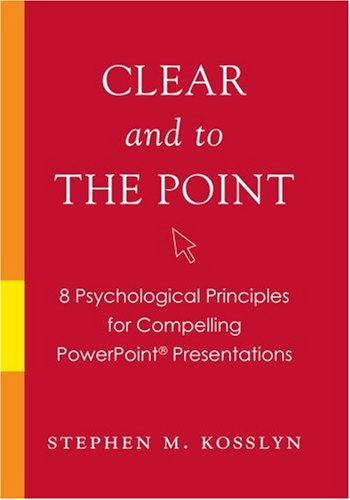
10. Clear and to the Point: 8 Psychological Principles for Compelling PowerPoint Presentations by Stephen M Kosslyn.

Not Recommended

I reviewed it in back in January, but the punchline was: Author Stephen Kosslyn's main differentiator from other PPT books is that he's an expert in cognitive psychology, and the book attempts to explain some of the science behind why we understand things the way we do, and what works or what doesn't... and then applies that to run-of-the-mill, 4 points per slide, max 4 sub-bullets per point PowerPoint pabulum! Yuck!


11. Presentation Zen: Simple Ideas on Presentation Design and Delivery (Voices That Matter), by Garr Reynolds

Recommended

I reviewed it back in January, and recommend it for anyone looking for a cold glass of ‘chuck out your bullet points and tell a frikkin story’.


12. Born Standing Up: A Comic's Life, by Steve Martin

Recommended

Steve Martin's autobiographical accounting of his path to stand-up comic success was interesting from a couple perspectives. It was interesting to learn what influences and experiences shaped his abilities and style. More interesting, however, was to learn that once he'd had a vision for what unique path he wanted to forge in comedy, it was not immediately popular. It took a decade of beleiving in his vision while toiling in obscurity before it would be recognized. How many of us would beleive in ourselves that strongly? 


13. It's Not About the Coffee: Leadership Principles from a Life at Starbucks, by Howard Behar

Not Recommended

The basic premise is beleive in people, focus on the people, etc, etc. However, its coated in way too much "we are so awesome!" syrup to be tolerable, let alone valuable. My new rule is to only read books about businesses from those that have gone through (surviving or not) catastrophies. Behar's book was published in late 2007, and probably completed in early to mid-2007, shortly after their stock's meteoric climb. One wonders whether some better lessons may have been learned in time since then, since the stock has fallen back to 2001 levels.


14. Welcome to the Creative Age - Bananas, Business and the Death of Marketing, by Mark Earls 

Recommended

This book about what's gone wrong with marketing over the past decades, and how it will and must change in the modern era, is a good read. It was written back in 2002, and I was glad to have read it after its had a few years to mellow. Sometimes ideas that are very de rigeur at a given point in time, seem silly and dated only a short time later. There are few of those in this book, and most have stood the test of at least a small amount of time. 


15. Collapse: How Societies Choose to Fail or Succeed, by Jared Diamond

Recommended

A fascinating analysis of the factors leading to the collapse of societies. Diamond uses riveting accountings of downfalls of ancient societies (e.g. the people of Easter Island, for one) to illustrate common factors leading to societal collapse. He does this to make the case of how we are at risk in the modern age of making many of the same mistakes. I thought it interesting how many of the same factors have metaphorical equivalents in the business world that lead to the collapse of companies and industries. Anyhow, gread read.


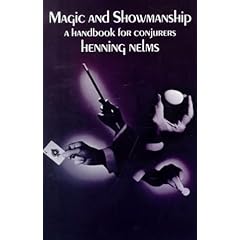
16. Magic and Showmanship: A Handbook for Conjurers, by Henning Nelms

Recommended

I reviewed this back in January. In short, a book about the theatre of magic, from which any presenter may learn a thing or two.


17. The Back of the Napkin: Solving Problems and Selling Ideas with Pictures, by Dan Roam

Recommended, but only for some.

There are some good tips in here on basics of doing illustrations/sketches on napkins or whiteboards. It's recommended for those looking for just that. However, the thing I struggle with is that of coming up with teh visual metaphor for an abstract idea. That's trickier, and as of yet, not something I've found comes in a book.

Highly Recommended

I just got this one from Santa, and haven't been able to put it down. Should be done in the next day or two, but can already highly recommend it, *especially* for anyone working in the games industry. Those working in games will read many examples of the history that we are now repeating. As such, it might offer us a few pointers to the future. Even if you don't work in games, the accounting of the history of technology & innovation in Hollywood is quite fascinating.


Whew. That's it. Happy reading!


Tuesday, October 7, 2008

Financial Crisis Explained

This is not just a great explanation of the current financial crisis. It's also a great example of how expertise in a subject and a well suited metaphor can make for a powerful presentation.


Thursday, June 26, 2008

In-game PPT: Raising the bar on presentations

Just back from Paris GDC, and while there was a number of cool things there, my favorite was the keynote given by the guys at Media Molecule, makers of Little Big Planet.

You can find plenty of summaries of their talk online. No need to rehash here.

What I did want to note though, is that they seriously raised the bar for those of us looking to given good, unique, presentations.

Rather than using Powerpoint, their entire presentation was done as an in-game level, which they "played through" as they gave their talk. Different videos and pix were brought up by leaping onto trigger switches, levers and buttons were used to trigger animated actions supporting the talk, etc.

It was just beautiful.

Maybe I'll give my next talk in Line Rider!

Monday, January 14, 2008

Books for Presenters

As I've been linking to a number of good presentations lately, it's only fitting that I post some reviews on a few books I've recently covered on the subject.

I ordered two of these on recommendations from friends. The third (the first review below, was based on Amazon's recommendations, and was a very poor impulse buy. Anyhow here they are.


Ugh. A horrible book.

It should have been called 'the complete idiot's guide to mediocre powerpoint presentations'. Author Stephen Kosslyn's main differentiator from other PPT books is that he's an expert in cognitive psychology, and the book attempts to explain some of the science behind why we understand things the way we do, and what works or what doesn't....

...and then applies that to run-of-the-mill '4 points per slide, max 4 sub-bullets per point' powerpoint pablum! Yuck!

Worse yet, short of a few points about looking your audience in the eye in between bullet-reading segments, there's very little on story-telling, story building, etc.

I would only recommend this book for the worst '8-point bullet eye-chart' type of powerpoint offenders. Otherwise, skip it.


Presentation Zen


This book is much better.

The book's author, Garr Reynolds, is former Apple employee and currently resides and teaches in Japan. Both influences show, as he is of the 'minimal text, maximum imagery' school of presenting that you see in Steve Jobs keynotes and elsewhere. I've blogged about this in the past (here, and here), and am definitely a fan of this school of presentation style.

More importantly, Reynolds is adamant about properly preparing your ideas first, knowing what you are trying to say, to whom, and how, before ever touching the PC. I also agree with this whole-heartedly, and often find myself telling coworkers to do the same (when they are neck deep in borrowed slides from other people and unsure what it is they are trying to say).

If there's one downside to the book, its that so much of it is borrowed and/or reprinted from elsewhere, much of it online, that I felt like I'd already been through half of it before ever picking it up. Much of it was deja-vu. Still, I recommend it.


Magic and Showmanship


This was something a friend pointed me to, and I have to say I'm glad he did.

This is a book for professional or aspiring magicians/illusionists. What does that have to do with presenting? A lot!

The book spents some time talking about the mechanics of magic tricks, but far more on the theatre of magic. The story arc in a trick, the careful direction of audience attention to something while the orator prepares to surprise them from another direction. I found it to be both enlightening and useful. Recommended.

Plus you might learn an easy trick or two that will fool the five-and-under folks in your life :-)

Friday, January 11, 2008

Passionate storytelling


Another Must-watch ted talk. This one from author Isabelle Allende.

The content of her talk, about the oppression of women and the need for change around the world is compelling. I can't add anything else to the topic other than to urge you to watch it.

I do think that there are also lessons here for presenters to take away.

(1) Passion. She discusses it in her talk, and she clearly has it. This is a great example of how someone that has passion for their topic can engage an audience and infect them with kind of passion.

(2) Story-telling. She effectively uses story-telling to not just make a point, but to make it come up and hit you like a hammer.

(3) Use of humor. Wow. She can go from making the audience laugh, to making them gasp at stories of child rape, to making them laugh again, in the space of a few moments. She weilds humor like a katana. In less skilled hands, someone could kill themselves trying to do this, but in her skilled hands, it make the dreadfull 'lows' in her stories that much deeper. Like a roller coaster's high peaks making the deep valleys that much more terrifying.

(4) No slides. Just goes to show you; Imagery can help, but it is almost entirely about the speaker.

Wednesday, July 11, 2007

Social Networking for Dummies

This video *brilliantly* explains social networking in laymans terms, in an entertaining fashion, in under two minutes.


[update: The authors of that video at CommonCraft have a number of others - brilliant]

Tuesday, May 8, 2007

Are bullet points the new hem length?

Some time ago, Guy Kawasaki blogged about SlideShare, a web startup for sharing/storing presentations, and a contest they were having to judge the best presentations.

The contest winners were announced, and they are worth looking at.

A few thoughts:

  • These of course aren't presentations at all. They are slide decks. Presentation materials. Minus the speaker, they aren't exactly 'presented'. That being said, I think the site/service is interesting. It would also be interesting if they supported posting video/audio of a talk along with the deck, or perhaps a transcript (like I described in my presentation-related post a while back).
  • Most of the presentations subscribe to the very image-heavy, minimal-text style used by Lawrence Lessig, Steve Jobs, and others (more on this here). The judges of this contest, like me, beleive this to be a 'winning' style of presentation. I do wonder though, if we are collectively blinded by the fact that its just plain different than what we are used to seeing. Is this the optimal solution, or are presentation styles just that... styles. Will text quantity vary with trend? And if so, as I asked in the title of this post, are bullet points the new hem length?
  • [It would be interesting to ask Seth Godin, who himself favors this style of presentation, what he things a 'purple cow' presentation looks like when all presentations look like purple cows :-)]

Those comments aside, some thoughts on the specific contest-winning 'presentations':

  • "Shift Happens" is a great example of using visuals to give facts some punch.
  • "Meet Henry" is a great story-telling, single message sales pitch.
  • While a little text-heavier than the others, "Unlocking Cool" uses some 'big font' slides to drive key points home (Slide twelve's "Culture Eats Strategy for Breakfast" slide is a great example)

In any case, there are some good lessons to be learned here. The site is worth bookmarking.

Monday, April 16, 2007

TEDriffic

Wow. TED revamped it's site and along with it, posted 30 new videos (from past conferences, but new to the site).

I've blogged about the TED talks before. They are almost all well-polished, moving, inspiring and/or educational. Great site to bookmark, and great talks to download watch when you have time (I always have 5-10 of them on my Zune for watching on flights). Hans Rosling gapminder talk, Malcolm Gladwell's talk on spaghetti sauce, and Majora Carter's talks are ones I could watch multiple times.

Bookmark it here.


Saturday, March 17, 2007

GDC 2007: Post-mortem on my sessions

I sat on two panels, and also gave a sponsored session. Here's my thoughts on each and the results thereof.

Console/PC Distribution Gatekeepers

I sat on this panel moderated by Simon Carless. Other panelists included people from Sony,
Manifesto games, and Gametap. There was supposed to be someone from Nintendo but he backed out. The panel got covered here, here, and here, and if interested, you can buy an audio transcript here.

I think I did OK, though I gave pretty middle-of-the-road answers. Panels are more entertaining when provocative, and several people afterward picked up on the fact that I failed to bite on some obvious opportunities to stir things up a bit (e.g. I've griped about GameTap before). This was a case where I felt I was more "the Microsoft guy" on the panel, rather than just "kim pallister", and so had to take the high (less-risky-but-less-entertaining) road. Oh well.

I do think I acheived the goal of letting the indie games track attendees better understand how to get their titles on Xbox Live Arcade and MSN Games, which was the main reason I was there. We had a few hundred people in the room and I was swamped by about 20 people afterward with questions about just that.

I give myself a B+.

Casual Games and Windows Vista: The Real Story on What It Means For Casual Games

This was a sponsored session braindump on Vista, Games explorer, GDF files, etc, etc, from the perspective of casual games. Very much along the lines of what my Q&A with the IGDA Casual Games SIG Quarterly covered.

The session got covered at Josh Bancroft's blog (Intel bloggers? WTF? when did that happen. bully for them).

This type of session is a brain dump and while you can try to convey the information in an engaging manner, it's never quite as fun to give as a more creative presentation (see my post about my MIGS06 presentation for more on this).

While I think I helped some attendees, and had some positive feedback after the talk, I still give myself a B- on this one.

Sharing Control

This panel was moderated by David Edery, a co-worker of mine. However, he wasn't a coworker at the time he set up the panel and invited me. I certainly had less business being on the panel than the others up there (Raph Koster, Ray Muzyka, Matt Brown...), but pinged David about it when he was putting together the panel because at the time we were working on the details around hosting Cranium's Pop5 game - a web-based casual game featuring user-created content.

So, I was about to contribute and I think I got some positive reaction out of the audience and brought a different perspective to the table. I was happy with it overall. I give myself an A-.

The highlight for me was that I used my MIGS05 UGC anecdote, and the guy that gave the Mona Lisa comment at the MIGS session was in the audience for this panel and came up afterward to point out that he was the guy. Cool!

The session got covered here.

Thursday, January 11, 2007

Visualization Porn

I'm probably the last peron on the internets to link to this Periodic Table of Visualization Methods. (originally seen, I think, on BoingBoing)


I agree with Seth Godin's thoughts on it:

"I love the spectacular use of technology on this web page. I hate the twisted use of the periodic table (because the relationships between the types isn't natural or elegant the way chemicals are) but it's worth it, because it will certainly inspire you to figure out how to get out of your text rut."

After reading it, you can kind of grok why they placed things in the rows/columns they did, but it doesn't intuitively leap off the page as to why they are related. Feels like some were kind of 'plugged into leftover spots'.