Showing posts with label Innovation. Show all posts

Friday, October 5, 2012

Book Review: Where Good Ideas Come From

I've been whittling away for a while at Steven Johnson's Where Good Ideas Come From: The Natural History of Innovation and finished it today. I really liked it.

That isn't to say I agreed with everything in it. Like many books with broad theories like this one, I feel he tries too hard to extend it too far. Regardless, it's provocative and made me think a great deal.

The short version is that Johnson examines the different environments in which innovation takes place (think open/liquid networks like educational institutions vs closed networks like corporate labs - or networked collaborative efforts vs 'lone genius inventors', etc) and shows the strengths and weaknesses to each and where they each have a role under different environmental conditions.

He goes to great lengths to make a case that ideas thrive and multiply in the same way that organisms do, taking great pains to make comparisons to darwinian models and the like. At times he stretches it too far, in my opinion, but I'll forgive him as it's provocative.

The book will make you think, as it did for me, about your "idea networks" and how you might improve them, and about what the right approach for your company or organization might be given the current environment. In my opinion, a book that makes you think and gives you a few novel ideas is always worth it, even if there are elements you disagree with.

Where Good Ideas Come From: The Natural History of Innovation

Monday, May 7, 2012

Is the 3D-Printing Tipping Point Upon Us?

I've been on-and-off following the 3D printing scene since first seeing one at Siggraph about a 2000 or so. I, like many others, noted that initial price points were, like color laser printers, only suited to high-end professional use but poised to fall quickly. The implication, of course, is that eventually it hits consumer price points and then something big happens.

At that time, units costed in the neighborhood of $30k. In 2009, Makerbot introduced the cupcake at about $1000 in kit form. Makerbot's gone on to improve the products in that price range while others have taken the barebones kits even lower. Printrbot launched a Kickstarter project in late 2011 with a $544 price point for their printer in kit form.

Recently, my friend Billy launched his own design via Kickstarter, with beta kit prices at $300 plus shipping. I'm on the list for one and am excited that I can roll up my sleeves with the tech while supporting a friend's project.

Anyhow, the fall in pricing for kit-form printers certainly feels Moore's-law-esque, or something close to it. Interesting point will be when pre-built, ready-to-print devices hit the market at sub-$500. I'll go out on a limb and say: CES 2014.

Some other anecdotal indicators:

This weekend, Alisa and I went out to DC for a long weekend to check out the Art of Video Games exhibit at the Smithsonian and to do some sight-seeing. First, on the flight on the way out was a documentary about various pop-science stuff, and one segment was on 3D printing. It speculated that in the near future the corner Kinkos will have one for printing replacement parts for your air conditioner, etc.

Then, on Saturday night Alisa and I were out having dessert in Georgetown and a table of college kids there with their parents were discussing 3D printers. The interesting thing was that they were non-technical people, but clearly enthused about it ("I have no idea how it works - maybe layers of paper or something - but it ACTUALLY BUILDS PHYSICAL OBJECTS").

There's something significant about technology that captures consumer layperson interest when there still isn't clarity about what the killer app is. I don't know what it will be, but there are hints. Easy-to-use CAD apps like Tinkercad. Print-your-own-toy applications. Lots of innovation happening in the space.

If there's interest at this stage, then imagine what happens when a killer app finally does come along... BOOM. Tipping point.

Really feels like we're close to it.

Saturday, December 24, 2011

Book Review: Escape Velocity

This was one of my favorite business books of the year. I've been a disciple of Geoffrey Moore ever since reading Crossing the Chasm and the fantastic Inside the Tornado. Moore is skilled at distilling complex machinations of markets and organizations, getting them down to their fundamental systems, and then explaining those in crystal clear form.

In Escape Velocity: Free Your Company's Future from the Pull of the Past, he turns his attention to the question of why companies are unable to innovate, arguing that a major factor is their being trapped by the pull of their past and current product efforts. He argues that the way budgeting & planning work at most large organizations, headcount & spending are allocated among existing efforts first, and that afterward anything left for innovating in new areas is meager at best. Having worked at a couple such companies, I was struck by how accurately he portrayed the details of this process and problem.

Moore goes on to propose a framework for tackling this problem in four parts.

First, he describes this budgeting dilemma and proposes that the key areas for innovation, once identified, get planned for outside of the rest of the budget planning process, and that the company make highly assymetrical bets on these in order to acheive 'escape velocity'.

Next he provides a framework for identifying company and competitor areas of strength in a hierarchy of domains of category power, company power, market power, offer power. I found this framework useful for discussion of competitor offerings. He makes the case that your breakthrough will come from focusing on a key differentiator in one of these domains, and identifying which is key.

He then goes on to provide a really useful model for categorizing types of innovation, breaking things into differentiation vs neutralization (innovation efforts in matching competitor offerings) vs efficiency vs waste (innovation efforts spend in areas that won't be leveraged or that don't align with the one area you've picked to differentiate). This framework too, I found really useful, and intend to employ it at work.

Finally, he presents a well structured blueprint for how to go put all this into action. He does so for both volume-operation vs service-oriented businesses (the tactics are different for each). His model suggests that there are three key phases for these efforts (invention, deployment, and optimization), and that the efforts for each should be handled by completely different management teams with different skill sets. He also outlines the structure for a transition team and process to move the product efforts between these three phases.

Throughout the whole book there are many, many case examples, and I liked that - with one exception - he called upon himself to avoid the temptation of using Apple in case examples (too easy).

Moore has an uncanny ability for structuring order out of the chaos that exists in high tech business. This is a masterwork, and a must-read for anyone in management or planning at any company of a few hundred employees or greater. However, even those other roles or at small companies will, I think they'll get a lot out of the framework tools for evaluating their place in the market, or their competitors. I highly recommend this book.

Escape Velocity: Free Your Company's Future from the Pull of the Past

Wednesday, May 25, 2011

Does LA Noire represent the next 3 years of AAA game innovation?

I started playing through LA Noire a few nights ago and am digging it thus far. As Red Dead Redemption taught me, the combination of Rockstar's immense game worlds and my limited gaming time, I won't likely finish it until sometime in 2012. Still there are a few initial thoughts I thought worth writing up.

The game doesn't have me *loving* it yet. Not in a Portal 2 (which I loved start to finish) kind of way, or even in a Red Dead Redemption (which I had 'moments of swooning' for) kind of way. That said, I think it offers some interesting hints on future direction.

LA Noire is very much a Rockstar game. Like both GTA and RDR, it offers a large 'open' world, many side-quests and missions, in-game mini-game type activities. The story is - so far anyway, I'm only five cases into it -more linear than GTA and RDR.

Still, there's no reason that this game needed to be anything other than 'Grand Detective Auto', just as many people labelled RDR 'Grand Theft Horsie'. It could have been the good-guy version of GTA, with lots of cops and robbers shootouts in a late 1940's setting. And they'd have sold tons of it.

Still Rockstar chose to take a couple risks in straying from the usual, in trying to make not a cops-n-robbers game, but a detective game.

The first is that the game has an element of point-and-click-adventure to it. Searching crime scenes, finding bits of evidence, writing these in your notebook, and then recalling them at the right time later to solve a puzzle - these are all reminiscent of the best of early 90's Lucasarts titles. More in keeping with the theme, and more unique in today's market vs the plethora of shooters.

The second, and bolder, risk they took was in making interrogation a core element of the game. The facial animation that's been much talked about, together with what must have been a massive spend on voice-and-mocap acting, were needed to add a more innovative - and thus risky element to the game. The game asks you to interview witnesses and suspects, and then lets you decide whether to believe, doubt, or accuse them of lying. Doing so requires that you look at the evidence you've got thus far, as well as reading the characters faces and body language. In doing so, it not only bumps into the uncanny valley - it throws the player headlong into it. Is it perfect? No.

I don't like the way this guy avoids eye contact!


The interesting thought to ponder here is where Rockstar chose to invest and/or innovate.

It certainly feels like we're near the asymptote on performance that can be extracted out of the current generation of consoles, and next generation isn't coming until (depending who you beleive) 2014.

That means another 3 years or more of making AAA titles, in which the publishers/developers need to garner interest in their titles, and they can't use screenshots alone to do it.

So, what do you do if you are trying to make money in this space. Well, for one, you focus on efficiency. Aside from that, you invest in content production (like all the voice acting in this case, and the more detailed facial models), and in innovations in gameplay (like the lie detection element; or the revisiting of point-n-click adventure).

I think this is a good indication of how others will be spending their money too. Production quality, art, and innovation in gameplay. I hope we'll see more big budget titles with experimentation along these lines over the next few years. Kudos to Rockstar for taking these risks.

Tuesday, May 3, 2011

Revolution-era pragmatists

Recently when I reviewed "The Best in Technology Writing 2010", I mentioned that Clay Shirky's piece on the radical revolution/reformation of the newspaper industry, 'Thinking the Unthinkable' was one of my favorites.


I revisited it recently, and really liked the observation made in the following passage:

Revolutions create a curious inversion of perception. In ordinary times, people who do no more than describe the world around them are seen as pragmatists. While those who imagine fabulous alternative futures are viewed as radicals. The last couple of decades haven't been ordinary, however. Inside the papers, the pragmatists were the ones simply looking out the window and noticing that the real world increasingly resembled the unthinkable scenario. These people were treated as if they were barking mad. Meanwhile the people spinning visions of popular walled gardens and enthusiastic micropayment adoption, visions unsupported by reality, were regarded not as charlatans, but saviors.

When reality is labeled unthinkable, it creates a kind of sickness in an industry. Leadership becomes faith-based, while employees who have the temerity to suggest that what seems to be happening is in fact happening are herded into Innovation Departments, where they can be ignored en masse. This shunting aside of the realists in favor of the fabulists has different effects on different industries at different times. One of the effects on the newspapers is that many of their most passionate defenders are unable, even now, to plan for a world in which the industry they knew is visibly going away.

He is writing about newspapers, but the above passage could be speaking about any large incumbent (or group thereof) in any industry undergoing radical change. I've seen it at Intel and Microsoft dozens of times, and I confess to having played the role of accuser and accused at different times.


Thursday, May 20, 2010

Book Review: Ten Rules for Strategic Innovators

Ten Rules for Strategic Innovators: From Idea to Execution is the best business book I've read this year, and may one of my top favorites of all time.


Many books have been written about intrapreneurship, the incubating of new businesses or products inside large companies. This is the first I've come across that looks at the causes of success and failure when those incubation projects are brought out of the back room and re-integrated into the larger fabric of the company.

It's at this point that many fail, and they do so for a number of reasons. This book looks at a number of case examples and illustrates what things were done right and wrong, and more importantly why this is the case.

The book hit close to home with me because there are many examples (both good and bad) that resonated with the Larrabee project I came back to Intel to work on. This aside though, I found it relevant to many efforts I've seen at Intel and Microsoft and at other companies through conversations with friends.

If you work at a large company and are interested in the dynamics of trying to bootstrap new products or businesses within those walls, you owe it to yourself to pick up this book.

Ten Rules for Strategic Innovators: From Idea to Execution

Tuesday, February 16, 2010

Plus ca change

“America has in fact transformed journalism from what it once was, the periodical expression of the thought of the time, the opportune record of the questions and answers of contemporary life, into an agency for collecting, condensing and assimilating the trivialities of the entire human existence,” he moaned. “The frantic haste with which we bolt everything we take, seconded by the eager wish of the journalist not to be a day behind his competitor, abolishes deliberation from judgment and sound digestion from our mental constitutions. We have no time to go below surfaces, and as a general thing no disposition.”
- W.J. Stillman (Journalist)

The above quote is typical of the panic we hear today on the subject of how the Internet threatens to destroy journalism (first off by way of destroying the newspaper business, but more fundamentally by destroying our attention spans and focus).

If you haven't heard of Stillman before you can be forgiven as he uttered the above quote in 1891. The doomsday technology at that time was not the Internet, but the telegraph. News was turning from something that traveled over days and weeks by ship, mail and carrier pigeon to something that traveled by wire in minutes and hours. People's focus was diluted as suddenly they had all the world's news headlines, not just local.

This piece in The Economist is a nice bit of history and a reminder that the basic need is still there, despite turmoil as the industry struggles to find new footing. More importantly, it's a reminder that these arguments are seldom new.

Thursday, June 4, 2009

Book Review: Longitude

Wow did I enjoy this little gem of a book. A friend loaned it to me *months* ago (sorry Pete!) but it got lost in a pile of books somewhere and I only found it recently and got to it. Once started I tore through it pretty quick.

It is the story of the Longitude prize, the sixteenth century equivalent of the X-Prize, a handsome award offered by the British government to whomever could solve the problem of longitudinal location for purposes of sea navigation. For years people were able to calculate their latitude by comparing the angle of the north star to the horizon, but latitude – figuring out their east-west position on the globe - was a far harder problem, and people at sea that couldn’t calculate their location tended to also to do things like run into rocks and cease floating.
Specifically, Longitude is the story of John Harrison, a self-taught clockmaker that devo
ted his life – or at least 31 years of it, to the building of 4 clocks, the fourth of which would eventually win this prize, conquering the astronomers, changing the state of the art of chronometer making. In solving the problem, Harrison changed the ability of the British Navy to navigate the globe, and in doing so, its no exaggeration to say that he changed the course of history.

Despite this, it took him years to get the acknowledgement, as the book details the many years his efforts were thwarted for reasons of politics and greed.

Those looking for good business analogies will find a good metaphor for resistance to innovative approaches in the face of an assumed/established direction. (The clockmakers were regarded as 'mechanics' and the whole practice as folly by many of the astronomers, who beleived that like the north star's use for latitude, the answer lay in the clockwork of the heavens.

Amongst the coolest things I learned in this book is that of the 4 clocks he built, all four of which are located in the National Maritime Museum in Greenwich, England, three of them are still running today. Quietly ticking away, tended to only with a daily winding and occasional cleaning, almost 300 years after their construction. How awesome is that!? That museum is now on my list of must-see places.

Tuesday, January 13, 2009

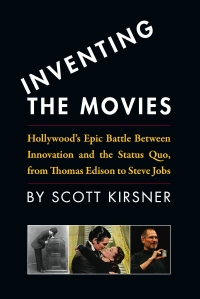
Book Review: Inventing the Movies

A while back I finished  (deep breath) Inventing the Movies: Hollywood's Epic Battle Between Innovation and the Status Quo, from Thomas Edison to Steve Jobs (exhale), by Scott Kirsner but never got around to posting about it in any detail.


The book is entertaining for anyone in an interest in business, in film, and in how technical innovation affected the business of film and vice versa.

For those with a vested interest in a similar space, such as gaming, the book is a must read. The parallels of history repeating itself are numerous and uncanny in their similarity.

A couple random examples: 
  • The reluctance of film editors to adopt digital editing systems and cinematographers to adopt digital cameras, have some parallels to the NIH reluctance we saw around the adoption of game engine middleware.
  • The concerns some have expressed about consolidation of distribution into the hands of console owners (see here and scroll down to Burning Mad) is similar to that expressed when studios locked up all the theaters and controlled distribuiton that way (pay attention MS/Sony/Nintendo - that one ended in a DOJ consent decree)
  • Many, many cases of elitism by the established players poo-pooing the new media and those quick to move to it. Pick your favorite EA, MS, Sony quote dissing casual games a few years back, or free-to-play biz models, or whatever.
  • Movie vendors said "no one will want to watch movies on a screen that small!" about TV, then about portable DVD players, then iPods. I hear the same thing about games on phones, iPhones, Netbooks, etc.
Anyone with time spent in the games business will see parallels upon reading Kirsner's book. The question, of course, is how to avoid falling into this trap of repeating history. First step, the easy one, is to know it, and this book is a good start. The harder step, is to be aware of which side of the fence you are on: Innovator or Luddite, and take a good introspective look on whether you've really assessed things objectively, or whether you sit too far to one side or the other.

Kirsner has a good blog where he continually covers this stuff, located here.

Sunday, December 23, 2007

Hacker Wiizardry

Apologies for the title. I am as prone to Wii-puns as the rest of the blogosphere.

A number of people pointed me to Johnny Chung Lee's youtube vids. Lee has done some interesting hacks with the Wiimote, and posted vids of them along with explanations. They include:

Interactive Whiteboard:


Minority Report-style finger-tracking:


VR headtracking:


These are all very cool, yes. But the real lesson to take away here is that this is what happens when you base your products on open standards (Wiimote uses bluetooth to communicate). This in turn is predicated on not selling your HW at a loss, which means you have to be damn sure people aren't using it for something other than its intended purpose, but that's the subject of another post...

One does wonder whether the folks at Nintendo are benefiting from these vids in some way. If I were them I'd be replicating the experience and doing some game jams around them to see if they have legs.

Sunday, October 7, 2007

Knock-offs best of both worlds?

BoingBoing has this post about "MFC" a chinese fast-food chain that is a rip-off and mash-up of both McDonalds and KFC, combining look, feel and menus of both American chains.

It reminded me of this post about the Chinese car manufacturer making a mashup/knockoff of both a Mercedes, and a Chrysler (with a BMW-inspired logo to boot).

It struck me that people discussing these things,and I include myself here, are either struck by the scale of these things ("sure, knock off a Rolex, but a Mercedes?!"), or suprised by the mashup model being applied to something other than media or online businesses.

But why should either of these surprise us?

The scale of the operation to do a Mercedes knockoff should not surprise us when coming from the same folks that built the Three Gorges dam and capped off the Yangtze.

And with regard to the mashup model, well, why should that suprise us either? It's not exactly new here either.I'm sure at some point, someone said "How about we apply Ford's assembly line to Acme's widget manufacturing!".

So I guess what we are finding surprising is the combination of these, the blatant disregard for IP, the unabashed lack of originality, and the speed of progress. Either way it's fun to watch

Wednesday, January 24, 2007

Hopes for Game Innovation "Crushed"

... and by this I mean they are alive and well.

I *love* the idea behind Crush from Kuju. SWEETNESS! Go watch. You'll get it.