BoingBoing linked to an awesome two part article (1 - Body by Victoria, 2 - The Secret Is Out) in which a security expert uses digital forensics techniques to reverse engineer what retouching has been done to a photo of a model in a Victoria's Secret catalog. The photo first showed up on the fabulous Photoshop Disasters. "A human being should be able to change a diaper, plan an invasion, butcher a hog, conn a ship, design a building, write a sonnet, balance accounts, build a wall, set a bone, comfort the dying, take orders, give orders, cooperate, act alone, solve equations, analyze a new problem, pitch manure, program a computer, cook a tasty meal, fight efficiently, die gallantly. Specialization is for insects." - Robert A. Heinlein
Thursday, December 31, 2009
You can re-touch, but you can't hide
BoingBoing linked to an awesome two part article (1 - Body by Victoria, 2 - The Secret Is Out) in which a security expert uses digital forensics techniques to reverse engineer what retouching has been done to a photo of a model in a Victoria's Secret catalog. The photo first showed up on the fabulous Photoshop Disasters. Sunday, December 27, 2009
The Crapware Carnival
The digital world, even the high end brands, has become a sleazy carnival, complete with hawkers, barkers and a bearded lady. By the time someone actually gets to your site, they've been conned, popped up, popped under and upsold so many times they really have no choice but to be skeptical.
The Passion Trough and the Ho-hum hump
Amazon reviews never reflect the product, they reflect the passion people have for the product. As Jeff Bezos has pointed out again and again, most great products get 5 star and 1 star reviews. That makes sense... why would you be passionate enough about something that's sort of 'meh' to bother writing a three star review?...The Kindle has managed to offend exactly the right people in exactly the right ways. It's not as boring as it could be, it excites passions and it has created a cadre of insanely loyal evangelists who are buying them by the handful to give as gifts.

Friday, December 25, 2009
2009 in Books, with reviews
- Little Brother: Cory Doctorow's distopian sci-fi teen-fic romp that I described last year as 'just close enough to the present and just close enough to reality to scare you like hell'.
- Halting State: Charles Stross' heist-meets-sleuth-meets-virtual-worlds story was probably my most recommended book of last year, when I called it 'one of my top 5 recommendations for those looking to understand the future of games'.
- Inventing the Movies: I found this history of film medium and business has a lot to teach us in the games industry.
- Losing Faith: How the Grove Survivors Led the Decline of Intel's Corporate Culture. I found myself loaning/recommending this to a number of co-workers.
- Closed, vertically integrated business model. There's an opportunity for someone to disrupt here by integrating with multiple stores, etc,
- All features that detract from time spent buying and reading books seem to be secondary concerns, and therefore are poorly implemented (browser, pdf functionality, and where is a decent RSS aggregator?)
- The biggest reason is that books are social objects for me. I like to loan them to friends, propogate ideas, etc, and this is lost with the existing business model. Longer post on Kindle and Nook coming later...
- Reality Check: Guy Kawasaki's compilation of loosely related essays on evangelism, venture capital, running a startup, etc. Recommended. My review here.
- Outliers: Malcolm Gladwell makes the case for why some people are special :-). My review here.
- Arcade Mania: Kotaku's Brian Ashcraft's quirky look at Japanese arcade machines, culture and history. My review here.
- Business Stripped Bare: Richard Branson's follow on to Losing My Virginity. Not quite as good, but still useful. My review here.
- Ten Foot
: R Dale Chandler's teen-fic fantasy novel that I described as 'Lord of the Rings with an American Indian flavor'. Recommended. My review here.
- I Will Teach You To Be Rich: Ramit Sethi's practical approach to saving money and building wealth. Pretty straight forward, and aimed at younger folk than I, but I still picked up a thing or two. Recommended for some (if don't have at least a year's salary squirreled away, and/of if you ever carry a monthly balance on your credit card, then this is you.). My review here.
- Longitude: An educational and entertaining read about the X-prize-like competitive race to solve the longitudinal navigation problem, and the amateur clockmaker who schooled the scientific establishment. My review here.
- Edison: His Life and Inventions: An interesting, if dated and biased, look at Edison's life's work. My review here. Audio version of book available here.
- Ignore Everybody: Hugh MacLeod's Gaping Void blog style, in print form. My review here.
- Racing the Beam: Ian Bogost's fantastic start to his 'platform studies' series, in which he looks at the history of the Atari VCS, and how the platform's architecture shaped the games built on it. Recommended. My review here.
- Meatball Sundae: Seth Godin's take on what happens when marketers of everyday products say "I can haz facebuk?!". My review here.
- The 4 hour workweek: Get-rich-quick snakeoil that I'd love to urge you to stay away from, except that there are some useful nuggets in there. More detail in my review here.
- Following Through: What it aims to teach is indicated by the title. How much I disliked it is indicated by my review here.
- Small is the New Big: A collection of Seth Godin's essays and blog posts. My review here.
- Moral Panics and the Copyright Wars: Bill Patry's book on how and why copyright lost its way and has since gotten out of control. My favorite book of the year. Highly Recommended. My review here.
- Batman Arkham Asylum: I found this highly-rated graphic novel to be good, but not necessarily deserving of the hype. My review here.
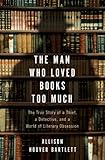
- The Man Who Loved Books Too Much: Allison Hoover Bartlett's accounting of her investigation into the world of an obsessed thief of rare books and the book dealer turned gumshoe who helped bring him down. My review here.
- On Writing: Stephen King's only non-fiction book. One part autobiography, one part practical guide to the art and craft of writing. Recommended. My review here.
- Seize the Daylight: David Prerau's surprisingly colorful look at the history of daylight savings time, and the madness that lies in trying to convince the world to get it's collective butt out of bed a little earlier. My review here.
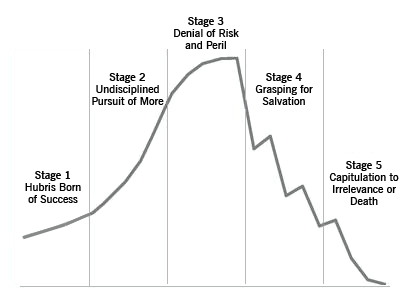
- How the Mighty Fall: Jim Collins, author of the popular Good to Great, looks at the other side of the coin: What makes great companies fail. Fascinating and terrifying. Highly Recommended. My review here.
- Good Video Games and Good Learning: James Paul Gee's look at video games and their ability to teach. I found myself disagreeing with some of his biases and approaches, but mostly agreeing with the ideas and conclusions. My review here.
- What the Dog Saw, and Other Adventures: A collection of Malcolm Gladwell's New Yorker pieces. Best taken as provocative ideas and not science. My review here.
- The Post-American World: Author. Highly Recommended. My review here.
- Circles: James Burke's collection of brief whirlwind tales of invention through history. My review here.
- Permanent Death: An e-book chronicling Ben Abraham's efforts to play through Far Cry 2 on a single life. It's free and thought provoking. My review here.
Wednesday, December 23, 2009
Book Review: Permanent Death
391 pages long and features hundreds of full colour screenshots from Far Cry 2, one of the most beautiful games of recent times. It chronicles my progress from the beginning of the game all the way to the end of my single in-game life some 20 play hours later. Permanent Death represents a large portion of a year of my life, and an obsession with a game that captured my imagination in a way that I struggle to articulate.
Clint's post on the experiment and book is also worth reading.
I found parts of it to be as monotonous as many games are (I ran into some guys. I hid behind cover and sniped them. then I scavenged their stuff. repeat). However, the parts of the game that were more moving to Ben are interesting, as are his thoughts about the game's rules and mechanics, his attempts to infer the designers intent at times, and his thoughts on things like switching off the background music.
Those and Clint's foreward make it worth reading. It's free, and it won't take you long, so what's keeping you?
Permanent Death
Friday, December 18, 2009
Book Review: Circles by James Burke
Wednesday, December 16, 2009
Book Review: The Post-American World
Monday, December 14, 2009
Scooby dooby..... BRAAAAIIIINNNSSS!

Saturday, December 12, 2009
Good Documentary on The Silver Ball

I recently watched TILT: The Battle to Save Pinball
Friday, December 4, 2009
Hey Wait! I've heard that before!
...in memory's eye I could see those staggering columns of the First World War, bending under soggy packs, on many a weary march from dripping dusk to drizzling dawn, slogging ankle-deep through the mire of shell-shocked roads, to form grimly for the attack, blue-lipped, covered with sludge and mud, chilled by the wind and rain, driving home to their objective, and for many, to the judgment seat of God.
We use words like "honor," "code," "loyalty." We use these words as the backbone of a life spent defending something. You use them as a punch line.
Duty, Honor, Country: Those three hallowed words reverently dictate what you ought to be, what you can be, what you will be. They are your rallying points: to build courage when courage seems to fail; to regain faith when there seems to be little cause for faith; to create hope when hope becomes forlorn.
Unhappily, I possess neither that eloquence of diction, that poetry of imagination, nor that brilliance of metaphor to tell you all that they mean.
The unbelievers will say they are but words, but a slogan, but a flamboyant phrase. Every pedant, every demagogue, every cynic, every hypocrite, every troublemaker, and I am sorry to say, some others of an entirely different character, will try to downgrade them even to the extent of mockery and ridicule.
I guess I shouldn't be surprised of the source of inspiration, but I thought it was interesting.
Thursday, December 3, 2009
Book Review: What the Dog Saw and Other Adventures
Wednesday, December 2, 2009
iPhone TouchPets post-mortem talk at PAGDIG
TouchPets Dogs is an iphone-based, modernized take on the 'pet simulator' genre that Stern gave birth to with Dogz and Catz back in 1995. Not surprising that when NGMoco wanted to do a game along these lines, they came to find The Man :-). The game uses a business model that is kind of a hybrid of pay-to-play and pay-for-upgrades, and indeed they are evolving the business model on the fly based on performance. It also uses gesture input, accelerometers and all the usual iPhone platform candy.
Ok, so, notes [with added commentary in braces]
- Probably among the largest and most ambitious iPhone projects done to date. 12 months, 5-6 people full time, 8-10 people part time, plus 4-6 people part time at the publisher [using a rate for a mid-range studio of 8-10k/man month, this ballparks the development budget at somewhere between 850k to 1.3M(!) not counting NGMoco's costs, marketing, etc. That certainly is higher than even the high-end stuff we're seeing on iPhone today, that has a feel of "few hundred k". Even if the studio was cheaper than my estimate, it almost certainly wasn't under, what, 700k?]
- This was about 2X the scope and time of what was originally proposed, as publisher kept growing scope and ambition of the project. Server complexity, social elements, in-game transactions...
- Great things to say about NGMoco as a publisher. Supportive of them doing what they wanted in the game, kept them funded as scope grew, great relationship with Apple, etc
- The game is a pet simulator, but has heavy focus on stats (to involve more 'gamer types'), careers, stories/missions, a social network, facebook connection, inter-pet relationships between players, in-game transactions.
- 850k people have downloaded and connected. Peak server load has been about 25k people. Game is only periodically connecting, so that means "some number more than 25k" playing simultaneously [100k?]
- Dogs go to sleep if not fed. Need to buy bowls of food to keep them away. Amounts to pay-to-play. Some user backlash to this, looking at maybe shifting toward free to play (and keep playing) but premium items/missions/etc are for pay.
- Push notification if your dog gets lonely [does this translate to "come feed me money!" :-)]
- All attributes to cost, rate of decay, etc, etc are all on server, so they can evolve over time despite clients in the wild.
- Uses NGMoco's Plus+ network, which was good to get a community aware of the game and quicker to connect.
- Online infrastructure complicated and tricky. Communications between their server, Apples for appstore/transactions, NGMoco's Plus+network. As scope grew, server grew wicked complicated (e.g. needed to do sharding, manage issues with players with 500 friends inviting them all for playdates, etc)
- Graphics: All in OGL 1.1, no realtime lighting, 3000-5000 polys/frame max, 2 textures only. "I think iPhone is more powerful than the Wii"
- Used no engine, but lots of sample code from PowerVR SDK
- Can't mix all Apple's really good UI with OGL, so if you want UI in your game, have to build it yourelf [seems like a middleware opportunity here. Do a exact copy of all Apple's UI functionality in GL]
- Did some easy physics (ball collision, etc). Cartoon physics: Throw frisbee off left side of screen, it wraps around and flies in from right. Move viewpoint over to where the wall is though, and THEN it collides with wall rather than wrapping.
What went wrong:
- Product spec always changing
- Complexity of system grew beyond means of core team
- iTunes rules and constraints - moving target plus they were pushing the envelope here*
* [lots of questions and talk about this afterward. One of the challenges being echoed from XBLA, then iphone, and now Facebook. High dependence on single gatekeeper, with no commit from gatekeeper on how policies/APIs will change, whether notice will be given, etc. People are betting their companies on stuff that can be pulled out from under them with hous notice]
What went right:
- Good team
- Just enough time, budget, freedom given by NGMOco to actually build a great game
- iPhone as a platform is wonderful. great simulator, powerful, somewhat challenging to fit everything on a small screen
It was a good talk and we went over to Stumptown's studio afterward for a release party, complete with snack foods served on dogfood bowls. Woof!
Monday, November 30, 2009
Book Review: Good Video Games + Good Learning
Thursday, November 26, 2009
The Developer's Duty

Chris also made the point that the industry was moving from questions of HOW (e.g. "How do I put 100 characters in a scene?") to questions of WHY ("Why do I want to put 100 characters in my scene? What am I trying to say by doing so?" etc)
We are currently wealthy, fat, comfortable and complacent. We have currently a built-in allergy to unpleasant or disturbing information. Our mass media reflect this. But unless we get up off our fat surpluses and recognize that television in the main is being used to distract, delude, amuse and insulate us, then television and those who finance it, those who look at it and those who work at it, may see a totally different picture too late.[1]
I do not advocate that we turn television into a 27-inch wailing wall, where longhairs constantly moan about the state of our culture and our defense. But I would just like to see it reflect occasionally the hard, unyielding realities of the world in which we live. I would like to see it done inside the existing framework, and I would like to see the doing of it redound to the credit of those who finance and program it. Measure the results by Nielsen, Trendex or Silex-it doesn't matter. The main thing is to try[2]. The responsibility can be easily placed, in spite of all the mouthings about giving the public what it wants. It rests on big business, and on big television, and it rests at the top. Responsibility is not something that can be assigned or delegated. And it promises its own reward: good business and good television.[3]
Perhaps no one will do anything about it. I have ventured to outline it against a background of criticism that may have been too harsh only because I could think of nothing better. Someone once said--I think it was Max Eastman--that "that publisher serves his advertiser best who best serves his readers." I cannot believe that radio and television, or the corporation that finance the programs, are serving well or truly their viewers or listeners, or themselves.[4]
I began by saying that our history will be what we make it. If we go on as we are, then history will take its revenge, and retribution will not limp in catching up with us.[1]
We are to a large extent an imitative society. If one or two or three corporations would undertake to devote just a small traction of their advertising appropriation along the lines that I have suggested, the procedure would grow by contagion; the economic burden would be bearable, and there might ensue a most exciting adventure--exposure to ideas and the bringing of reality into the homes of the nation.
To those who say people wouldn't look; they wouldn't be interested; they're too complacent, indifferent and insulated, I can only reply: There is, in one reporter's opinion, considerable evidence against that contention. But even if they are right, what have they got to lose? Because if they are right, and this instrument is good for nothing but to entertain, amuse and insulate, then the tube is flickering now and we will soon see that the whole struggle is lost.
This instrument can teach, it can illuminate; yes, and it can even inspire. But it can do so only to the extent that humans are determined to use it to those ends. Otherwise it is merely wires and lights in a box.[5]
- Art vs Pop-culture ghetto
- The important thing is that we all try
- Indies can't do all the heavy lifting. Big Games needs to pitch in too.
- "Cotton Candy for Dinner"
- It's ours to fuck up, and we CAN fuck it up.
Wednesday, November 25, 2009
Correlation vs Causation, and the MetaCritic MetaQuestion
Thursday, November 19, 2009
Book Review: How The Mighty Fall

Monday, November 9, 2009
EA Buys Playfish
Electronic Arts closed it’s anticipated acquisitionof social gaming startup Playfish for $275 million in cash. An additional $25 million in stock will be set aside for retaining the top talent at the startup, and another $100 million in earnouts are part of the deal as well if the business hits certain milestones. So the total value of the deal could amount to as much as $400 million when all is said and done.
Wow. $400M is a lot of money. Social games are clearly the hot ticket right now, so it makes sense for EA to jump in, but one has to wonder if that's money well spent.
The stock & earnout will retain the people for some time, which is I'm sure a big part of why they acquired the company.
Still, the titles are cheaper to develop, and there doesn't (as of yet) seem to be the same IP loyalty that there is in hardcore games (are there Farmville fanboys out there dissing Mafia Wars?).
Time will tell if it was a good call, but it certain does seem rash, especially with all of the kerfuffle around questionable sources of social game revenues. (Interesting meta-level piece on the same issue here)
Saturday, November 7, 2009
Book Review: Seize the Daylight
Friday, November 6, 2009
Indie Pop
Monday, November 2, 2009
Playstructure project
An off-the-shelf structure wouldn't work because we were building on an incline and over a retaining wall, so we decided to do something custom. As usual, this led to my getting a bit carried away.
Original rough concept in Sketchup:

Same, with rough orientation in situ:

Final product (still need a few pieces of trim, a pirate flag for the mast, etc):

From the downhill side (still needs a few pieces of 'hull' planking), showing slide and climbing wall:
Tuesday, October 27, 2009
It's not the size of your installed base, it's how you use it

Hot game development studio

Sunday, October 25, 2009
Book Review: On Writing
Tuesday, October 20, 2009
Protesting Pachter's iPod Publisher Plea
"Putting well established franchises such as Madden on the iPod Touch for USD 10 cheapens their value, he explained. "Whether it's the same experience or not, and it's not, why would I ever spend USD 60 for Madden if I can get it for USD 10 on my iPod Touch?"
"It's a serious threat to pricing. And once people start to look at this as a substitute for the DS for smaller kids, for 12 and unders, then you're going to train a whole generation of 12 and unders that this is a perfectly acceptable gaming experience at that low price point."
- Different platforms merit different pricing. I'm surprised at the first quote. Madden on PSP today retails for under $40, vs $60 on PS3 or 360. By his line of thinking, why would anyone buy the $60 version? The reasons are that the experiences *are* different, the consumer may own a particular platform and not be swayed to another for an individual title, and the economics of each platform is different (dev cost, distribution costs, etc). To take it to the extreme, There's a version of Prince of Persia on cell phones that doesn't go far in displacing the $60 console version, despite selling only for a couple dollars.
- Meritocracy in the market. Pachter seems to claim that kids playing on an iPod touch won't 'move up' to other platforms as the previous generation did from GBA to DS/PSP/Home consoles. First, I'm not sure this platform graduation is anything but myth. If true though, the reason the gamers would 'move up' is because the next platform would offer a higher quality experience and or different content to suit their changing tastes. If other handhelds, or home consoles for that matter, can't offer a superior experience to the Ipod Touch, then they will fail - and should fail. On the other hand, if they do offer a superior experience, then they should be able to charge for it. If Nintendo or Sony can't compete on their own merits, it's not up to EA to prop them up - and if they do, then they should be compensated in a way that lets them lower the price of titles to better compete.
- No man, nor publisher, is an island. The Appstore, while not an open platform*, is certainly more open than the controlled, curated, catalog of titles available for handhelds. What that leads to is the tens of thousands of apps that we've seen show up on it, and I'm not sure that any publisher, even EA, refusing to publish on it is going to make any difference whatsoever. [I suppose that a cartel of publishers could agree in unison to boycott the platform, hoping that absence of ANY big-name content would poison consumer interest in the device. This has happened in the past with things like music labels boycotting Napster, or (IIRC) movie studios with betamax - however, its legality is questionable, the games publishers aren't organized in such a fashion, and there's enough of an indie community that I don't think this would work anyway]. In any case, the publishers seem to be faring fine while still charging a premium for their IP (see the top grossing list)
Book Review: The Man Who Loved Books Too Much
The Man Who Loved Books Too Much: The True Story of a Thief, a Detective, and a World of Literary ObsessionTuesday, October 13, 2009
Kaboodle conundrum
Walked by the 'Kitchen Kaboodle' while out at lunch today. Noticed they've reduced to a 4-day work week in an effort to cut costs, and then promise to pass some of this to the consumer.
Interesting that when many retailers (e.g. grocers) were faced with increased competition, they chose to increase their hours of availability, not decrease them. Doubt they're both right.
My guess, KK is wrong. I'm not sure many who shopped there were price-sensitive, plus I'm not sure how genuine the 'savings' pass down is when the markup was already hefty. And now they've proven they are ~60% as convenient as their nearest retail competitor, and 3 days a week they are less convenient than Amazon, whom I'm betting beats them on price.
Sunday, October 11, 2009
Book Review: Batman Arkham Asylum
Saturday, October 10, 2009
Book Review: Moral Panics and the Copyright Wars
Donate to Creative Commons
Creative Commons is having their annual fundraiser, and have added some incentive with a sweet Shepard Fairey CC t-shirt with a $75 or more donation.
Friday, October 9, 2009
Robopomme?
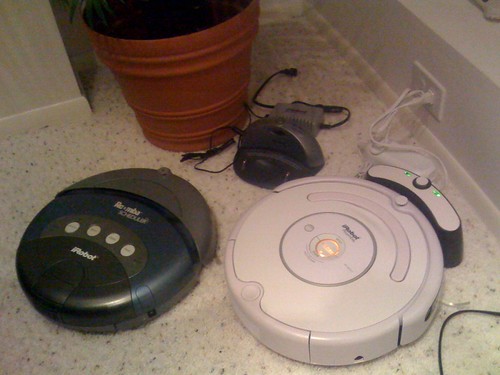
After several years our Roomba finally gave up the ghost, so we replaced it.
Somewhere along the lines, it got all mac-ified. Here's a before'n'after.
In other notes, it's pleasing tones have been accompanied by voice messages, but in third person. Such a disappointment. "Please clean the debris from Roomba's brushes" is so much more lame than "Help! My brushes are dirty! Clean them out and I will return to serving you, gracious overlord."
Thursday, October 1, 2009
Getting Hired
Monday, September 28, 2009
In the margins
- Korea is the future.[]
- Free to play with micro transactions is the one true business model.
- Client downloads are death.
- We must look beyond the core gamer audience and embrace more casual players.
- Women are 50% of the audience.
- ...
The most interesting things are in the margins.
Sunday, September 20, 2009
Four Pointers on the Future of Games
- Dan Cook's 'Flash Love Letter' series of posts (two so far: one, two. With more coming soon) on Flash games, the opportunity for premium flash games, how to monetize them, existing (flawed) feedback systems when distributing through portals, etc. His blog has always been gold, but this series of posts shows that he understands this space better than almost anyone who's writing about it. Much of it applies to all digital distribution and not just Flash games.
- Raph's liveblog of the AGDC panel on monetizing online games: Free-to-play biz model experts discuss successes and stats around different tweaks on the biz model and how it's evolving. I remember when I first worked in casual games, being surprised about how scientific (in the sense of hypothesize-->test-->measure-->analyze results) the business was compared to traditional big-budget retail games. This group takes it up a notch. A must-read.
- Alice's post on Smokescreen. Smokescreen is an online game that aims to educate teens about issues involved with their online activities, like identity, privacy, security, etc. By all means go play it - at least see the first mission through. It will challenge both what you think is possible in an 'educational' game, and in the quality of production possible in a publicly-commissioned game. On the latter note, I'm not sure what the budget was here, but its clearly NOT your $50k flash game. It's polished, rich, and deep. It doesn't take much to extrapolate a few years out and think about what it means when your games have to compete with free-to-play, $10M+ budget titles funded by your taxes.
- This GamesIndustry.biz post on Bobby Kotick's comments about 'untethered' Guitar Hero. Kotick has done his share of talking out of his rear, but this is not one of those cases. The idea of a stand-alone SKU of guitar hero, connected to a dedicated service, is not as ludicrous as you might first think. Music games are a phenomenon and there are still a lot of households without consoles. If some of the people who shelled out $250 for a Wii did so to buy 'the Wii sports machine', then I don't see why this wouldn't hold for people that want GH or Rockband but don't own one of the big 3 consoles. And if this is a route for publishers to connect directly to their customers without console holder as middleman? Hmm..
Tuesday, September 15, 2009
Creative Destruction
Good read.